Hurt by Johnny Cash
The meaning of Hurt Johnny Cash is not just sadness. It is a clear-eyed look at pain, memory, guilt, and the fear that a person may have damaged too much to fix. Because Johnny Cash recorded the song near the end of his life, his version feels less like a private breakdown and more like a final reckoning.
"Hurt" - Johnny Cash
To see if I still feel
I focus on the pain
Loading lyrics...
Unable to load lyrics
We're unable to display the lyrics at this time. Please try again later.
The song was originally written by Trent Reznor and released by Nine Inch Nails on The Downward Spiral in 1994. Cash later covered it on American IV: The Man Comes Around in 2002, produced by Rick Rubin. That history matters because the same words land very differently in Cash’s voice.
Why Cash’s Version Hits So Hard
Factually, this is a cover, not a Cash original. Reznor wrote the song, but Cash’s recording became one of his most celebrated late-career performances. Reznor later said Cash’s version felt deeply personal, even describing it as no longer entirely his own in spirit. That response helps explain why the cover carries such weight.
Cash was already a towering figure in American music, and by 2002 his voice sounded worn, fragile, and human. That vocal texture changes the emotional frame. Instead of youthful despair, listeners hear age, physical decline, and the burden of memory.
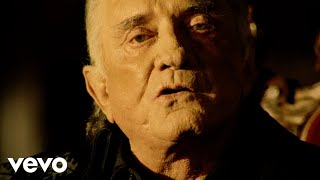
Watch the official Hurt
music video
The Song’s Core Meaning
At its center, the song is about someone testing whether they can still feel anything at all. The opening phrase, I hurt myself today
, does more than shock. It introduces a speaker who uses pain as proof of being alive.
From there, the song moves into emotional inventory. The speaker remembers damage, isolation, and the way suffering can become routine. The phrase the only thing that's real
suggests that pain has become more trustworthy than comfort, love, or success.
Interpretation: In Cash’s version, this does not sound like a passing mood. It sounds like a person measuring the ruins of a life and trying to speak honestly before time runs out.
A Voice Surrounded by Loss
One of the song’s strongest ideas is abandonment, whether caused by death, addiction, distance, or personal failure. When the singer says goes away in the end
, the point is not simply that people leave. It is that nothing can be held forever.
That line becomes even more powerful in Cash’s hands. His public image had long included themes of sin, redemption, grief, and survival. In this setting, the lyric feels almost universal: everyone loses people, and everyone eventually faces what remains when status and noise fall away.
The Chorus as Self-Accusation
The chorus is devastating because it turns outward. Instead of only describing private pain, the speaker admits they have hurt others too. The phrase empire of dirt
reduces everything they built to something temporary, dirty, and ready to collapse.
That image is one of the key clues to the song’s meaning. The singer seems to say that ambition, identity, and achievement are hollow if they sit on top of damage. The confession that follows is brutal because it refuses excuses.
Symbols That Carry the Song
Several images give the song its power:
- Physical pain stands in for emotional numbness.
- Decay suggests aging, memory, and mortality.
- A damaged kingdom, summed up by
empire of dirt
, points to the emptiness of power. - Religious imagery, especially
crown of thorns
, hints at suffering, guilt, and self-judgment.
None of these symbols are complicated on the surface. That simplicity is exactly why they work. The song uses plain, hard images to talk about inner collapse.
If I could start again
A million miles away
Those closing lines introduce a final shift. After all the self-knowledge and regret, the speaker imagines distance, reinvention, and a chance to keep a truer self intact.
How the Sound Deepens the Meaning
Cash’s recording is sparse and slow. The arrangement leaves space around the vocal, which makes every line feel exposed. Rather than hiding behind heavy production, the song lets silence and weakness become part of the message.
That choice matters. The fragile instrumentation, combined with Cash’s cracked delivery, makes the song feel like testimony. The performance is not polished in a flashy way. It is intimate, restrained, and almost severe.
Interpretation: That sonic restraint supports the lyric’s honesty. The production suggests there is nothing left to hide behind, only the voice and what it admits.
The Video Changed the Song’s Legacy
The music video, directed by Mark Romanek, is a major reason the song became such a cultural landmark. It pairs Cash’s performance with images of age, memory, religious symbolism, and the remains of fame. Viewers see not a character but a man confronting time.
That visual context shaped public understanding of the song in the United States. For many listeners, the meaning of Hurt Johnny Cash became inseparable from mortality itself. It came to represent not only suffering, but the act of looking back without illusions.
So What Is “Hurt” Really Saying?
The simplest answer is that the song is about a person facing the truth of pain and regret. In Johnny Cash’s version, that truth expands into something larger: a meditation on what remains when the body weakens, relationships fade, and success no longer protects anyone.
It is a song about damage, yes, but also about clarity. By the end, the wish to begin again does not erase the past. It only reveals how deeply the speaker understands what was lost.
Disclaimer: This interpretation combines widely known facts about the recording with critical reading of the lyrics and performance. Song meaning can remain open to different listeners.








