Why 'Sweet Bird' Sees Time Slipping Away
For listeners searching for the meaning of Sweet Bird Joni Mitchell, the song opens like a quiet meditation and then turns into something heavier. It is not just about a bird, or even just about aging. They present time itself as a living force: beautiful, elusive, and a little amused by human efforts to control it.
"Sweet Bird" - Joni Mitchell
Some mark of in between
I lay down golden, in time
Loading lyrics...
Unable to load lyrics
We're unable to display the lyrics at this time. Please try again later.
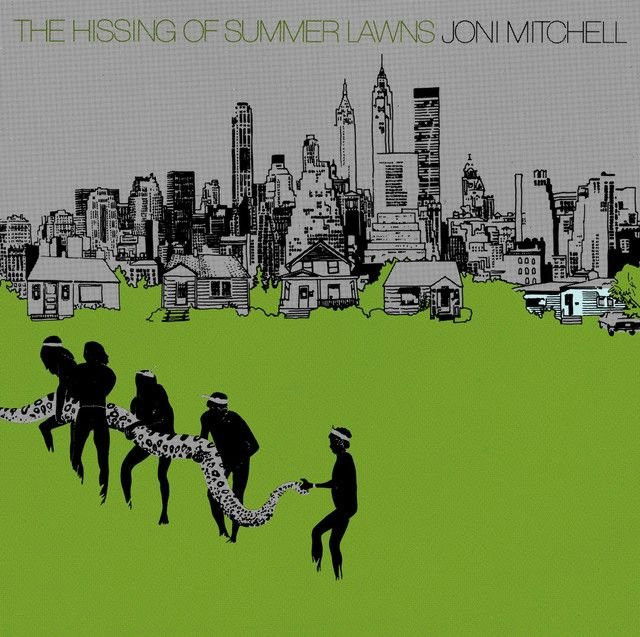
Joni Mitchell wrote “Sweet Bird” and released it on The Hissing of Summer Lawns in 1975, an album widely recognized as part of her mid-1970s creative peak. The record is credited to Mitchell as writer and producer, and it sits within the sophisticated art-rock and singer-songwriter world she was exploring at the time.[^1][^2]
A Song Standing on the Edge of Change
At the start, the singer seems to be on a boundary, a place of transition. The phrase some borderline
suggests they are neither fully in the past nor securely in the future. That unstable setting matters because the whole song is about living in between what was and what is disappearing.
When the narrator says they woke up vanishing, the idea is not literal. Interpretation: Mitchell appears to be describing the shock of realizing youth, certainty, or beauty has already begun to slip away. Time has not arrived dramatically; it has been working in the background all along.
That is why the song’s central image lands so hard. The sweet bird
is lovely, but it is also brief and untouchable. They can watch it pass, but they cannot keep it.

Watch the official Sweet Bird
music video
The Core Meaning of “Sweet Bird”
The clearest meaning of “Sweet Bird” is that human life is short, and every promise of permanence is fragile. The song keeps returning to beauty, ideals, and power, only to show that each of them fades.
Mitchell hints that people build systems to fight this truth. They make plans, keep calendars, and surround life with schedules and bargains. Yet the line about calendars of our lives
suggests that organizing time is not the same as understanding it. People mark the days, but they still cannot stop change.
This is where the song becomes more than personal reflection. It expands from one person’s fear of aging into a wider thought about civilization itself. Cities disappear, ideals weaken, and even grand human projects eventually sink into history.
Beauty, Ambition, and the Fear of Fading
One of the strongest ideas in the song is that beauty does not protect anyone from time. The image of beauty reduced to containers and surfaces suggests how fragile and commercialized it can be. Interpretation: Mitchell may be pushing back against the fantasy that appearance can defeat mortality.
The song also links beauty to power and ideals. That matters because it places private aging next to public decline. The same force that changes a face also changes nations, movements, and cultural dreams.
A brief multi-line passage captures that sweeping view:
Cities under the sand
Power, ideals and beauty
Fading in everyone's hands
The point is not simply that things end. It is that people hold them while they are already disappearing.
Why the Repetition Matters So Much
Near the end, the song becomes more insistent. The repeated idea of guesses at most
feels almost philosophical. Human beings observe life, make theories, and try to explain change, but their knowledge stays partial.
This ending is crucial to the meaning of Sweet Bird Joni Mitchell because it shifts the song from emotion to humility. They are not just sad that time passes. They are admitting that no one gets close enough to fully understand it.
That repeated language can feel hypnotic, even frustrating. But that seems intentional. The song traps the listener inside the same loop of thought: trying to know what cannot quite be known.
How the Music Supports the Lyrics
“Sweet Bird” works because its sound is as reflective as its words. On The Hissing of Summer Lawns, Mitchell favored textured arrangements and subtle rhythmic movement rather than simple folk sparseness.[^1][^2] In this track, the music carries a floating, suspended feeling that matches the lyric’s horizon imagery.
The performance does not rush toward a dramatic release. Instead, it drifts and circles, which mirrors a mind turning over the same hard truth. Her vocal delivery is calm but searching, as if they are thinking aloud while already aware that the answer will stay out of reach.
Interpretation: That restraint is part of the song’s meaning. If time is beyond control, then the music should not sound controlling. It should feel like something being observed as it passes.
Artist Context Makes the Song Deeper
By 1975, Mitchell had moved far beyond her early coffeehouse image. Albums like Court and Spark and The Hissing of Summer Lawns showed a writer interested in jazz harmony, complex characters, and social observation.[^1][^3] “Sweet Bird” fits that period because it blends intimate feeling with a larger cultural vision.
Instead of writing a straightforward breakup song or diary entry, they connect one person’s fading moment to the fate of cities and ideals. That ambition is part of what makes the song endure. It feels personal, but it thinks historically.
The Lasting Takeaway
So, what is the meaning of Sweet Bird Joni Mitchell? At its heart, the song says that time is beautiful, unsentimental, and impossible to hold. People can measure life, decorate it, and make promises around it, but they cannot bargain with change.
That is why “Sweet Bird” still feels haunting. It does not offer comfort through certainty. It offers honesty instead.
Disclaimer: This interpretation is based on the lyrics, musical context, and publicly available information. As with most Joni Mitchell songs, different listeners may hear different meanings.
[^1]: AllMusic – The Hissing of Summer Lawns [^2]: The Joni Mitchell official library [^3]: Britannica – Joni Mitchell







