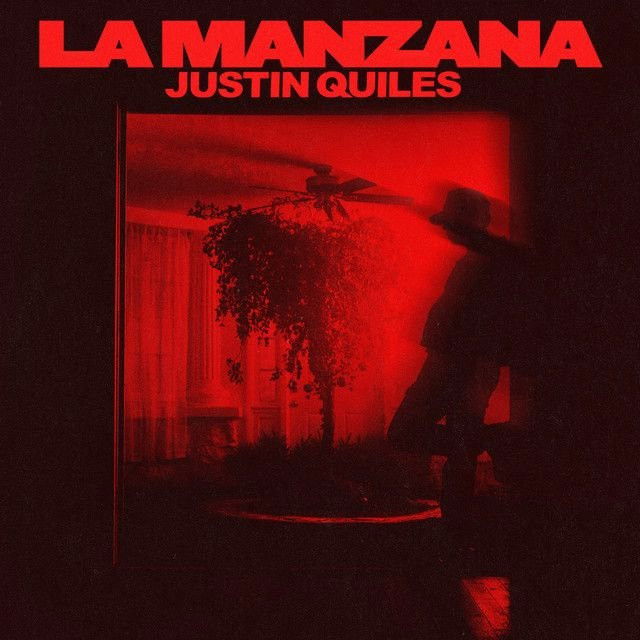
La Manzana by Justin Quiles
The meaning of La Manzana Justin Quiles centers on temptation. The song turns a sexual encounter into a symbol of desire that feels thrilling, secretive, and dangerous at the same time. Rather than describing romance as safe or stable, it presents attraction as something the narrator knows could hurt them, but they still move toward it.
"La Manzana" - Justin Quiles
No es por na', pero tú está' envenenada
El pantycito en la mañana
Loading lyrics...
Unable to load lyrics
We're unable to display the lyrics at this time. Please try again later.
That tension is what gives the track its hook. The title image of the apple immediately suggests forbidden desire. In this song, that symbol is not subtle: the person they want is framed as irresistible, but also toxic.
The Apple Is Pleasure With a Price
The clearest key to the song’s message is the repeated line about la manzana
. Justin Quiles links biting the apple with giving in again. Right after that image, the lyric calls the other person envenenada
, which shifts the mood from simple attraction to danger.
In plain terms, the song says this person is tempting because they are risky. The narrator is not confused about that. They understand the relationship is unhealthy, but desire keeps winning.
Interpretation: The apple image likely echoes the broader cultural idea of forbidden fruit. Whether listeners connect it to religion, morality, or just modern slang for temptation, the point is similar: this is a choice that feels good in the moment but carries consequences.
A Secret Relationship Sits at the Center
The verses make it clear that this is not just lust in a vacuum. The other person appears to be involved with someone else. When the narrator mentions a message saying tenemo' que hablar
, the song hints at an outside relationship already under stress.
That small detail matters. It changes the story from private fantasy into a triangle built on secrecy. The line about meeting a escondía'
reinforces that idea. They are not building a future together; they are hiding.
What the Story Seems to Be Saying
The song’s narrative moves in a simple arc:
- attraction sparks quickly
- the secrecy makes it more intense
- guilt appears, but does not stop the action
- obsession replaces any sense of balance
This is why the track feels darker than a standard club song. It is not only about chemistry. It is also about the thrill of crossing a line.
Desire and Self-Destruction Mix Together
One of the most revealing moments comes when the song describes the person as both bad and irresistible. Near the end, the narrator admits the bond feels like an addiction. That confession turns the song inward.
At first, the other person seems to be the danger. Later, the bigger issue becomes the narrator’s inability to walk away. The emotional core is not love. It is compulsion.
Tú eres veneno
yo te quiero, yo te odio
Those short lines capture the song’s central split. They want this person, resent this person, and keep returning anyway. In that sense, the track is about the cycle of wanting what they know is bad for them.
Sound and Mood: Why the Track Feels So Immediate
Justin Quiles has long worked in Latin urban music, especially reggaeton and melodic trap-adjacent styles, and that context helps explain why the song lands the way it does. Coverage of Latin hitmakers in major music outlets like Rolling Stone often notes how these songs balance catchy repetition with intimate late-night moods. “La Manzana” fits that lane well.
The production style suggested by the lyrics is direct and physical: a steady reggaeton pulse, a hypnotic chorus, and short repeated vocal phrases that make desire sound automatic. The repetition is important. It mirrors the story itself, where the narrator keeps going back to the same person and the same mistake.
The melody likely does some emotional work too. Even when the words are explicit, the hook structure softens them into something almost dreamy. That contrast matters because it makes the danger feel seductive instead of harsh.
Artist Context Helps the Meaning
The user-provided credits list Carlos Morales Williams, Jorge Valdes, and Justin Quiles as writers. That collaborative writing style is common in urbano music, where hooks are polished to be memorable and emotionally clear. In this case, the writing stays focused on one strong metaphor and keeps returning to it.
That is part of why the song is easy to read. It does not hide its theme behind abstract poetry. It takes a familiar image and uses it to frame a very modern situation: lust, secrecy, texting, and emotional confusion.
So What Is the Meaning of La Manzana Justin Quiles?
The meaning of La Manzana Justin Quiles is that temptation can feel most powerful when it is clearly wrong. The song portrays a hidden connection that thrives on danger, not stability. Its apple symbol represents desire that looks sweet on the surface but carries emotional poison underneath.
Interpretation: Some listeners may hear it as a pure lust song, while others may hear a warning about addiction to toxic relationships. Both readings fit the lyrics. The strongest evidence points to a song about craving someone they should avoid, then mistaking that intensity for something deeper.
In the end, “La Manzana” is less a love song than a song about surrender. It shows how people can recognize the risk, name the risk, and still choose it.
Disclaimer: This interpretation is based on the lyrics provided and publicly available artist context. Song meaning can remain open to different listener readings.







