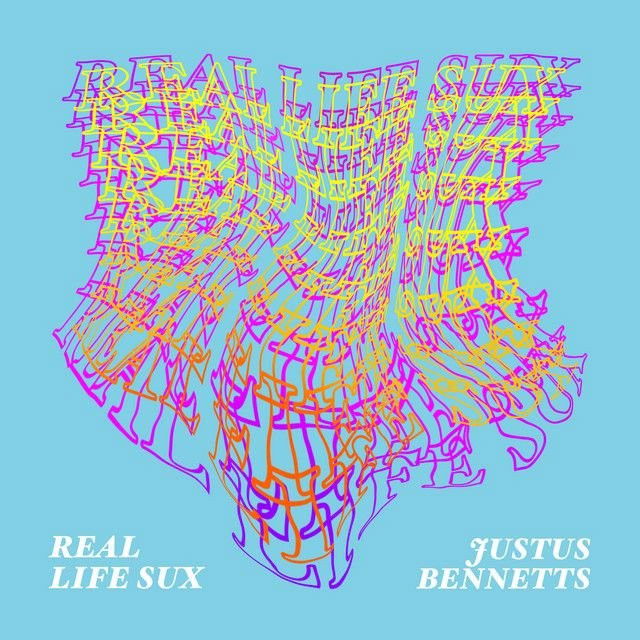
Why 'Real Life Sux' Hits So Hard
The meaning of Real Life Sux Justus Bennetts comes down to one sharp conflict: safety versus freedom. The song is about someone who feels crushed by low-paying work, bored by routine, and desperate to build a life that actually feels like their own.
"Real Life Sux" - Justus Bennetts
I tried a nine-to-five and I made five bucks
I might as well just take the whole year off
Loading lyrics...
Unable to load lyrics
We're unable to display the lyrics at this time. Please try again later.
Justus Bennetts makes that idea feel personal. According to Songfacts, they are a Raleigh, North Carolina–based singer-songwriter who left a car salesperson job to pursue music full time, and their songs Real Life Sux
and Nightstand
gained traction on TikTok. That background matters, because this track does not sound like a fake rebellion. It sounds like someone writing from lived frustration.
A Quarter-Life Crisis Turned Into an Anthem
At its core, the song is about hitting a breaking point. The narrator tries a normal work path, but the reward feels so small that the whole system starts to seem absurd. When they say nine-to-five
and made five bucks
, Bennetts is not giving a literal wage report so much as expressing how worthless the effort feels.
That exaggeration is important. It turns everyday burnout into a catchy, almost sarcastic slogan. Instead of describing depression in quiet terms, the song shouts it.
Interpretation: The hook is not only about hating work. It is about feeling that adulthood, as sold to young people, has failed to deliver on its promise.

Watch the official Real Life Sux
music video
The Real Enemy Is Feeling Stuck
The verses widen the message beyond one bad job. This is not just a workplace complaint. It is a fear of wasting years.
When the narrator reflects on where they have been all their life, the song suggests lost time and emotional drift. The image of waitin' tables
also works as a symbol. They are not only serving food; they are serving time, waiting for life to begin.
That is why the song’s rebellious lines land. The anger is not random. It grows from the terror of repeating the same day forever.
I'd rather live my dreams
'cause real life sucks
Those lines capture the whole emotional logic of the track. The choice is framed in extreme terms: dream life or dead life. That may be simplistic, but that simplicity is part of the song’s power.
Small-Town Pressure Hangs Over the Chorus
One of the song’s best details is the mention of old classmates. The narrator imagines their high school friends
resenting them after they leave town. That line gives the song a social setting, not just an emotional one.
Now the stakes become clearer:
- They are underpaid.
- They feel trapped in place.
- They believe other people expect them to stay ordinary.
This makes the song feel like a small-town escape anthem. Leaving is not only about money or career. It is about identity. If they stay, they risk becoming the version of themselves that everyone already expects.
Interpretation: The line about friends hating them may hide guilt as much as confidence. The narrator wants escape, but they also know that ambition can look like betrayal in a place where many people remain stuck.
Stubbornness Becomes Survival
The bridge is where the song reveals its deeper emotional core. The narrator would rather be called stubborn than broken by routine. They resist the idea of grabbing more shifts because, in their eyes, more effort inside a bad system only means more slow damage.
The strongest idea in this section is the refusal to bend. Bennetts presents rigidity not as a flaw, but as self-protection. If the job drains their spirit, quitting becomes an act of survival.
That is also where the song’s profanity does its real work. It is not there just for edge. It helps the narrator sound cornered, exhausted, and done pretending to be polite.
How the Sound Sells the Message
Even without heavy lyrical detail, the production likely explains why the song connected online. Bennetts' breakout style often blends pop-punk attitude, alt-pop melody, and punchy vocal delivery, which suits a song like this. The repeated chorus, blunt phrasing, and chant-like structure make it ideal for short-form platforms where one emotional hook has to hit fast.
The writing credits provided here—Justus Bennetts, Jesse Fink, Brandon Shoop, and Remy Gautreau—also suggest a collaborative pop approach built for immediacy. The song does not aim for poetic mystery. It aims for instant recognition.
That matters because the track’s sound likely mirrors its theme: loud enough to drown out doubt. Fast, direct songs often work like a pep talk when the lyrics describe fear. The bigger the hook, the more convincing the fantasy of escape becomes.
Why So Many Listeners Relate to It
Part of the meaning of Real Life Sux Justus Bennetts is generational. Many younger listeners know the gap between what they were told adulthood would be and what it actually feels like. Work can feel unstable, expensive, and emotionally flat. A song like this turns that disappointment into a simple battle cry.
It also fits Bennetts' larger persona. Songfacts notes that Bennetts left a conventional job to pursue music, and that history gives songs like this extra credibility. They are not just mocking routine from a distance. They seem to be writing from the moment of refusing it.
Final Take on the Song's Message
In the end, “Real Life Sux” is about more than quitting a job. It is about refusing a version of adulthood that feels spiritually empty. The song turns burnout into rebellion, and rebellion into hope.
Its message is messy, impulsive, and emotionally honest: if ordinary life feels like a slow death, taking a risk can feel more sane than staying put.
Disclaimer: This interpretation is based on the lyrics provided, public background information, and musical context. Like any song, it can support more than one meaning depending on the listener's experience.









