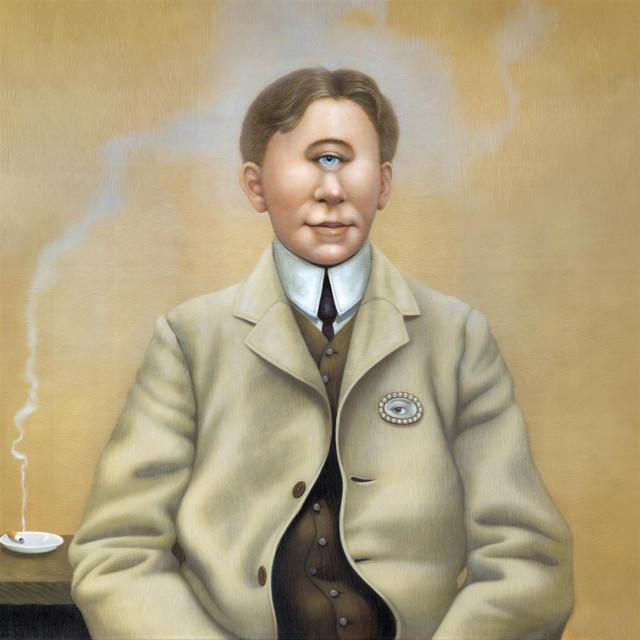
The Court of the Crimson King Meaning Explained
The meaning of The Court of the Crimson King King Crimson starts with a world that feels magical, but quickly turns uneasy. The song sounds like a fairy tale, yet its images point to power, manipulation, and a society trapped inside ritual.
"The Court of the Crimson King" - King Crimson
Are shattered by the sun
I walk a road, horizons change
Loading lyrics...
Unable to load lyrics
We're unable to display the lyrics at this time. Please try again later.
Released in 1969 on King Crimson’s debut album In the Court of the Crimson King, the track became one of the band’s defining statements. The album itself was issued on October 10, 1969 and is widely regarded as a landmark of progressive rock. Critics and historians often treat it as one of the records that shaped the genre’s scale and ambition.
A Fantasy Kingdom With Real-World Anxiety
On the surface, the lyric is full of vivid characters, strange ceremonies, and bright colors. They move through a symbolic kingdom where pipers play, queens chant, jesters pull strings, and wheels keep turning. That gives the song a medieval look, but the emotional tone is not playful. It is tense and observant.
Interpretation: the “court” works less like a literal palace and more like a stage for human systems of control. Each verse introduces another figure inside that system, and none of them feels fully free. The world is decorative, but also oppressive.
That is why the title image matters so much. The repeated return to the court of the crimson king
makes the setting feel all-powerful. Everything leads back there.

Watch the official The Court of the Crimson King
music video
How the Verses Build a World of Control
The song opens with release and motion. The image of rusted chains
being broken suggests escape, renewal, or awakening. But that freedom does not last long. The singer enters a shifting landscape where a “tournament” begins, and the journey starts to feel like a contest or ritual rather than true liberation.
In the next section, authority becomes more visible. The keeper of the city keys
shuts down dreams, which suggests gatekeeping, limits, and blocked imagination. Instead of open possibility, the song presents a system where access is controlled.
Later, the song gets even sharper. The line about the yellow jester
who quietly controls the action turns the court into a puppet show. He does not entertain in the usual sense; he manipulates. The smiling ruler is not always the one in charge. Sometimes the fool is the hidden engineer.
One of the clearest moments comes in this brief passage:
And smiles as the puppets dance
In the court of the crimson king
Here, the idea is simple but powerful: people move, perform, and obey while someone else enjoys the spectacle. The court becomes a symbol for institutions that keep people busy, distracted, and controlled.
The Symbols That Carry the Meaning
Peter Sinfield’s lyric does not explain itself in plain speech. Instead, it uses recurring symbols.
Color, ritual, and theatrical masks
Colors such as purple, black, and yellow give each figure an emblem-like identity. They make the court feel heraldic and ceremonial, but also artificial. Everyone seems dressed for a role.
That matters because the song is deeply interested in performance. Pipelines of music, funeral marches, bells, jugglers, orchestras, and puppets all suggest that public life can become theater.
Cycles that never stop
Another key image is the grinding wheel
. It gives the song a sense of endless repetition. Life in this court does not move toward justice or clarity. It turns and turns.
Interpretation: this can represent history, politics, or even daily social routines. People may believe they are moving forward, but the system keeps remaking itself.
Why the Sound Feels So Grand and So Unsettling
A big part of the song’s meaning comes from the arrangement. On the album, King Crimson combined rock with classical, jazz, and symphonic textures. For this track in particular, commentators often note its “medieval” atmosphere, built from flute, harpsichord-like color, drum rolls, and especially Ian McDonald’s layered Mellotron.
That production choice matters. The Mellotron gives the song an orchestral glow, as if the listener has stepped into a royal hall. But the richness also feels heavy, almost overripe. Beauty and dread arrive together.
The band produced the album themselves after earlier sessions were abandoned, and McDonald reportedly built up dense instrumental layers through repeated tape generations. That helps explain why the track feels huge, dreamlike, and slightly blurred at the edges. It sounds majestic, but not safe.
The Bigger Context Around the Song
King Crimson’s debut album has often been linked to themes of war, alienation, corrupt leadership, and human futility. In that wider setting, this song can be heard as the album’s closing pageant: a final vision of authority dressed up as myth.
That reading fits the record’s legacy. The album reached No. 5 in the UK and No. 28 in the US, later earning Gold certification from the RIAA. Its reputation has only grown, with Rolling Stone ranking it No. 2 on its list of the 50 greatest prog rock albums.
So when listeners ask about the meaning of The Court of the Crimson King King Crimson, the best answer is that the song turns fantasy into critique. It shows a dazzling kingdom where art, politics, religion, and performance blur together until power becomes both beautiful and sinister.
Final Take on the Crimson Throne
The song endures because it never locks itself into one simple message. They can hear it as a warning about rulers, a satire of public spectacle, or a portrait of people chasing truth inside a staged world.
What stays constant is the feeling: wonder mixed with distrust. The court shines, but something is wrong inside it.
Disclaimer: This interpretation combines documented context with informed reading of the lyrics and sound. As with many King Crimson songs, ambiguity is part of the art.







