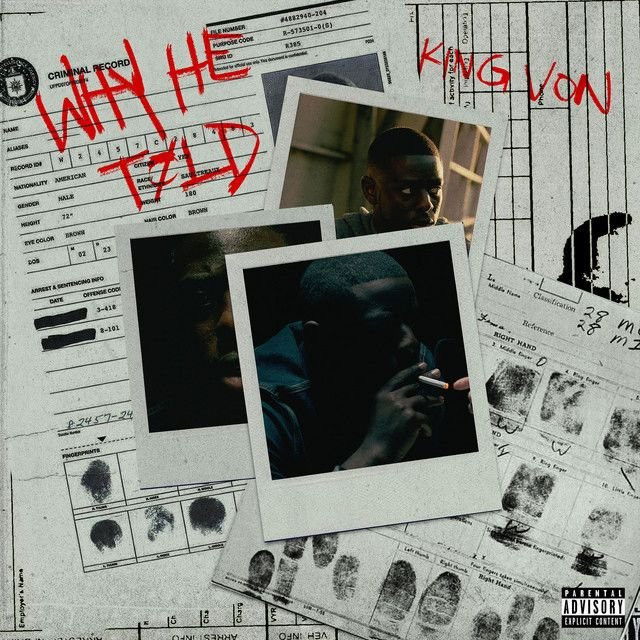
Why He Told by King Von
King Von’s “Why He Told” is one of their clearest songs about broken loyalty. For listeners searching for the meaning of Why He Told King Von, the core idea is simple but painful: they are reacting to a friend who gave information, then lied about it, and in doing so ruined a bond that once felt like family.
"Why He Told" - King Von
Von
Man, I don't know why he told (man, I don't know why)
Loading lyrics...
Unable to load lyrics
We're unable to display the lyrics at this time. Please try again later.
This is not just a song about street rules. It is about shock, grief, and the moment trust turns into distance.
A Betrayal Song Disguised as a Street Record
On the surface, the track speaks in the language of street politics. The hook circles around one question: why did someone talk when they could have stayed solid? But the emotional center is deeper than that. King Von does not only sound angry; they sound genuinely hurt.
When they repeat why he told
, it feels less like an accusation and more like disbelief. The song keeps returning to the same injury because the speaker cannot fully process it. Someone they saw as a brother has changed in a way that cannot be undone.
That is why lines about no longer answering the phone or pretending not to know the person matter so much. They show how betrayal spreads outward. It is no longer one bad choice. It changes the relationship, the memories, and the future.

Watch the official Why He Told
music video
The Emotional Story Inside the Verses
The verses lay out a clear emotional timeline:
- A trusted person gives information.
- They deny it when confronted.
- The speaker realizes the truth.
- Trust collapses.
- Fear replaces brotherhood.
That middle step is crucial. The song does not present betrayal as only the act itself. It becomes worse because the person lies about it. When King Von refers to being told nah, lil' bro
, the pain comes from false reassurance. They wanted honesty and got another wound instead.
Another key phrase is you had me cryin', bro
. That line strips away the tough image people may expect from drill rap. It shows mourning, not just rage. The speaker is grieving a living relationship that has effectively died.
Loyalty, Identity, and the Loss of a “Brother”
A major theme in the meaning of Why He Told King Von is that loyalty is tied to identity. The repeated idea that that was my brother
tells listeners this was not a casual friendship. In the song’s world, calling someone a brother means shared struggle, shared code, and shared survival.
So when that person “folds,” the damage is moral as well as personal. King Von presents betrayal as proof that the other person is no longer who they claimed to be. That is why the song keeps contrasting the past with the present: once real, now broken; once trusted, now dangerous.
Interpretation: The song suggests that betrayal does not just expose weakness. It rewrites memory. The speaker begins to question whether the bond was ever as real as it seemed.
The Most Revealing Section in the Song
The song’s clearest emotional turn comes when King Von imagines what they would have done to help. Instead of only condemning the person, they list the support they were ready to give.
I would've bonded you outYou could've stayed at my houseWe would've figured it out
This short passage matters because it reframes the whole track. The speaker is not only saying, “You broke the code.” They are also saying, “You did not have to.” Help was available. Loyalty was available. The person chose another path anyway.
That makes the betrayal feel more tragic. It was not inevitable. It was a decision.
Why the Song Also Sounds Paranoid
As the track moves forward, the pain turns into fear. The speaker no longer sees the former friend as only disloyal. They now see them as unsafe to be around.
This shift is important. In King Von’s storytelling, trust is often linked to survival. Once someone starts talking, they become unpredictable. The song treats that unpredictability as dangerous because private information, old ties, and present tensions all become exposed.
Interpretation: This is why the record feels so uneasy. It is not only about losing a friend. It is about what that loss may set in motion.
How the Production Sharpens the Meaning
King Von built a reputation through vivid, conversational drill storytelling, including on Grandson, Vol. 1. “Why He Told” fits that approach. The production is minimal and dark, with heavy drums and a cold melodic loop that leaves lots of room for the voice.
That space matters. It makes every repeated line hit harder. Instead of burying the emotion under a busy arrangement, the beat traps the listener inside the speaker’s thoughts. The tag DJ on the beat
signals a hard street record, but the vocal performance gives it its real weight: part confrontation, part heartbreak.
King Von was widely recognized for turning personal-feeling details into gripping rap narratives, as noted in Rolling Stone. This song shows that strength clearly. Even without a complex plot, they make one emotional conflict feel immediate and lived-in.
Final Reading: What “Why He Told” Really Means
The best way to understand the meaning of Why He Told King Von is to hear it as a song about disbelief after betrayal. Yes, it speaks from a drill perspective, and yes, it is rooted in street codes. But its strongest feeling is heartbreak.
The track asks what happens when someone they trusted chooses self-protection, dishonesty, and distance over loyalty. King Von’s answer is harsh but clear: once that bond breaks, the person is not just gone. They become a threat, a memory, and a source of grief all at once.
That mix of anger, sadness, and suspicion is what gives the song its force.
Disclaimer: This interpretation is based on the lyrics, performance, and publicly available context. Like many rap songs, it may blend direct experience, persona, and artistic storytelling.








