Why “Down the Road” Feels So Easy to Love
The meaning of Down the Road Lester Flatt & Earl Scruggs starts with something simple: a young man keeps heading to see the girl he loves. But like many great bluegrass songs, its plain language hides a lot of charm. It is a courtship song, a travel song, and a portrait of rural life all at once.
"Down the Road" - Lester Flatt & Earl Scruggs
Lives a little girl named Pearly Blue
About so high and her hair is brown
Loading lyrics...
Unable to load lyrics
We're unable to display the lyrics at this time. Please try again later.
Lester Flatt and Earl Scruggs built their reputation on music that sounded direct and lived-in. As Earl Scruggs became famous for his three-finger banjo style, the duo helped define bluegrass for a national audience. That matters here, because “Down the Road” is not trying to be mysterious. Its power comes from movement, repetition, and affection.
A love song measured in miles
At its core, the song is about devotion made visible through routine. The narrator does not talk about grand speeches or impossible heartbreak. Instead, he marks love by the fact that he keeps going back, literally down the road, to see Pearly Blue.
The opening introduces her in a fond, almost storybook way, using details like Pearly Blue
and hair is brown
. Those details are small, but that is the point. He loves her as a real person in a real place, not as a distant fantasy.
Interpretation: the song suggests that true feeling does not need dramatic language. It can live in habits, local geography, and the excitement of knowing exactly where the heart is headed.
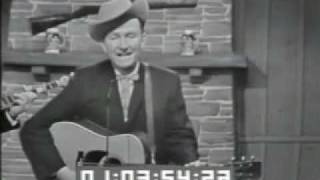
Watch the official Down the Road
music video
The road is more than a road
The repeated trip down the road
works as the song’s main symbol. On the surface, it is just a short journey to visit a girlfriend. Underneath, it stands for desire, certainty, and emotional direction.
Whenever the narrator is asked where he is going, the answer is already set. That makes the road feel less like a physical path and more like a personal compass. He does not wander. He returns.
This is why the hook feels so strong. In many country and bluegrass songs, roads suggest restlessness or escape. Here, the road means the opposite. It leads toward attachment, comfort, and a chosen future.
A narrator who wears his feelings lightly
One appealing part of the song is its voice. The narrator is clearly smitten, but he is not heavy or tragic about it. Even when he admits I get the blues
, the feeling does not become despair. Instead, he walks, wears out his shoes, and keeps moving toward the person who steadies him.
That balance gives the lyric its warmth. He is vulnerable enough to confess that love has gotten under his skin, yet casual enough to make it sound natural. The phrase love her so
lands because it is plainspoken.
A quick story in four beats
The song unfolds in a neat, folk-style sequence:
- He introduces the girl and her place in town.
- He explains that he is often on his way to see her.
- He shows that this visit is part of daily life, even before dawn.
- He ends by admitting that his feelings are strong and hard to explain.
That structure makes the song easy to sing and easy to remember, which is a big part of why it has endured.
Rural life frames the romance
The lyric also places this romance inside a working countryside world. Roosters crow, farms matter, and people are known by name and role. The verse about old man Flatt
adds a playful, homespun detail that broadens the setting beyond the love story itself.
Rather than interrupting the romance, those images ground it. This is not abstract love floating in space. It happens in a community with barns, chores, roads, and local characters. The song’s emotional honesty depends on that setting.
Interpretation: the farm imagery helps present love as part of everyday life, not separate from it. In this world, romance fits beside labor, family, and routine.
Why the sound carries the message
“Down the Road” works because the performance style matches the lyric’s forward motion. Flatt and Scruggs were central architects of bluegrass after forming their duo in 1948, and they recorded more than 50 albums and 75 singles together, helping bring the style to a wide audience. Their band sound relied on drive: guitar rhythm, tight harmonies, and Scruggs’s banjo rolling underneath and around the melody.
That banjo approach is crucial. Scruggs popularized the three-finger style that turned the banjo into a lead instrument, giving bluegrass its bright, propulsive pulse. In a song about constantly heading somewhere, that musical momentum feels almost literal. The picking sounds like feet in motion.
Flatt’s singing matters too. He delivers lines with ease rather than strain, which keeps the song friendly and unforced. Nothing is overplayed. The arrangement trusts the tune, the groove, and the plain truth of the words.
For listeners, that creates a special effect: the song feels cheerful even when it mentions the blues. The music says that love may trouble him, but it also energizes him.
What the song may really be saying
The most likely reading is straightforward: this is a joyful rural love song about loyalty and young desire. Still, there is a little more inside it.
Interpretation: “Down the Road” also celebrates constancy. The narrator’s repeated trip shows that love is not just emotion; it is action. He proves what he feels by showing up.
A second reading is that the song captures an older ideal of local belonging. Love happens close to home, within known roads and familiar people. That gives the song a sweet sense of stability that many later country songs, full of drifting and loss, do not have.
Why it still connects
The meaning of Down the Road Lester Flatt & Earl Scruggs lasts because it is so clear. It knows that a strong song does not always need complicated poetry. Sometimes it only needs a person, a place, and a reason to keep going.
In the end, “Down the Road” turns a short trip into a full emotional world. Its romance is modest, but never small. Through simple words and bluegrass momentum, Flatt and Scruggs make devotion sound bright, grounded, and completely alive.
Disclaimer: This interpretation is based on the released lyrics, performance, and documented artist context. As with any song, listeners may hear meanings that differ from this reading.







