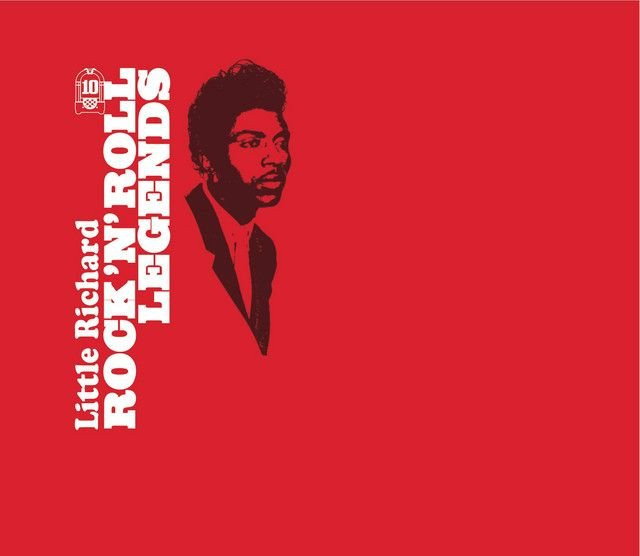
Good Golly, Miss Molly by Little Richard
The spark at the heart of the song
The meaning of Good Golly, Miss Molly Little Richard is pretty direct on the surface: it is a blast of admiration for a woman who seems impossible to contain. Miss Molly is not presented as shy or quiet. She is all movement, confidence, and trouble, and the singer sounds thrilled by it.
"Good Golly, Miss Molly" - Little Richard
Good golly, Miss Molly, sure like to ball
When you're rockin' and a-rollin', can't hear your momma call
Loading lyrics...
Unable to load lyrics
We're unable to display the lyrics at this time. Please try again later.
The famous hook, Good golly, Miss Molly
, works like an exclamation before it works like a story. It tells listeners that this person has such force that ordinary language is not enough. Right after that, the song gives her defining trait with sure like to ball
, a line that in 1950s rock could suggest partying, dancing, and possibly something more adult.
Watch the official Good Golly, Miss Molly
music video
More than a party record
On one level, this is a dance song. It celebrates the rush of rock and roll and the way music can make people forget rules, time, and even family voices. When the lyric says rockin' and a-rollin'
, it ties Molly to the new teenage culture that scared some adults and thrilled young listeners.
Interpretation: the song is also about freedom pushing against control. The line about not hearing a parent call suggests that once the music starts, authority fades into the background. That does not make the song deeply political, but it does make it rebellious in a very 1950s way.
How the verses build Miss Molly
The verses do not give a detailed backstory. Instead, they sketch a vivid type. She is active from morning to night, and the singer catches her in a nightlife setting linked to excitement and heat. That quick approach matters. Rather than explain Molly, the song lets her feel larger than life.
One short passage shows how simple the writing is:
From the early, early mornin'
till the early, early night
Even in two brief lines, the idea is clear: her energy does not switch off. The repetition of "early" gives the impression of constant motion, like a beat hammering forward.
Another verse shifts to the parents, with warnings to watch one’s step. That comic turn is important. It places the romance inside a familiar rock and roll frame: adults are cautious, the young are drawn to excitement, and the music keeps winning.
A singer caught between awe and desire
The narrator is not detached. They are pulled into Molly’s orbit almost immediately. By the end, the song turns toward romance and fantasy, with talk of buying a ring and asking for affection. That jump tells listeners that Molly is not just a dancer in a crowd. She has become an obsession.
Interpretation: this quick leap from watching to wanting may be the point. Rock and roll often compresses attraction into a lightning strike. The singer sees energy, mistakes it for destiny, and rushes ahead.
Why Little Richard’s performance matters so much
A big part of the meaning of Good Golly, Miss Molly Little Richard comes from the performance, not only the words. Little Richard recorded the song in New Orleans at J&M Studio, and the released version came out in January 1958, later appearing on the album Little Richard. According to Wikipedia, it reached No. 4 in the U.S. and became one of his signature hits.
The arrangement is pure propulsion. Little Richard’s piano hits hard from the start, the saxophones punch around him, and Earl Palmer’s drums keep the whole thing charging ahead. Little Richard later recalled that the piano lead-in was inspired by Ike Turner’s "Rocket 88," a detail noted in the song’s Wikipedia entry. That connection matters because it places the track in a line of early rock records built on speed, swagger, and rhythm first.
His voice is the real engine, though. He does not merely sing about excitement; he sounds possessed by it. The shouts, growls, and bursts of joy make Molly seem less like one woman and more like the spirit of rock and roll itself.
Suggestion, slang, and 1950s tension
The song’s most discussed line is the repeated phrase about liking to ball. In modern ears, that can sound plainly sexual. In its original context, it also carried meanings tied to dancing and partying. Early rock often thrived on that blur. It could sound innocent enough for radio while still giving teenagers and adult listeners a wink.
That double edge helps explain the song’s power. It is not subtle, but it is clever in how it packs boldness into simple slang. Little Richard was a master of this style: turning repetition, rhythm, and playful shock into mainstream excitement.
Why the song lasted
This record lasts just over two minutes, yet it became a standard covered by hundreds of artists and was ranked among Rolling Stone's greatest songs. The reason is not lyrical complexity. It is concentration. Every part of the track serves the same idea: energy so strong it breaks social boundaries.
Miss Molly represents motion, temptation, youth, and the thrill of saying yes to the beat. The singer represents everyone watching in amazement. Together, they create one of rock’s clearest early statements that music is not just entertainment. It is a force that changes behavior.
The lasting takeaway
So what is the meaning of Good Golly, Miss Molly Little Richard? Factually, it is a fast, funny, flirtatious rock and roll hit about a magnetic woman and the chaos around her. Interpretation: at a deeper level, it turns that woman into a symbol of the music itself—loud, unruly, sexy, and impossible to ignore.
That is why the song still works. It does not ask listeners to study it for hidden puzzles. It hits, runs, shouts, and leaves behind the feeling that life got bigger for two minutes.
Disclaimer: This interpretation is based on the lyrics, recording history, and cultural context, but song meanings can remain open to individual listeners.







