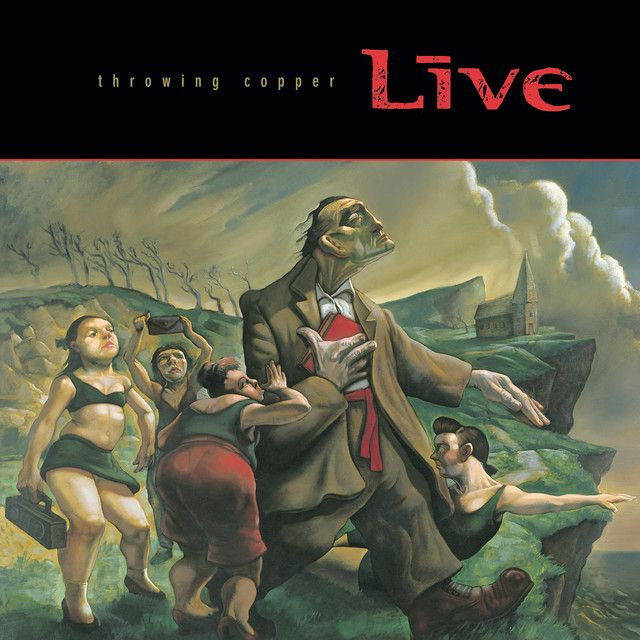
What "I Alone" by Live Really Means
A huge rock chorus made this song famous, but its real pull comes from how it blurs love, temptation, and spiritual doubt.
"I Alone" - Live
Provided by LyricFindIt's easier not to be wise
And measure these things by your brains
I sank into Eden with youLoading...Loading lyrics...
Unable to load lyrics
We're unable to display the lyrics at this time. Please try again later.
Why the song still hits so hard
The meaning of I Alone Live is not one clean message. That is part of why the song lasts. Released on Throwing Copper in 1994, it arrived during Live's breakout era and helped set up the even bigger success of later singles from the album. Throwing Copper eventually reached No. 1 in the United States and became the band's commercial peak, making songs like this central to their story.
Factually, the song is tied to singer Ed Kowalczyk's interest in spirituality, and commentary collected by Songfacts notes references to Eden and a storm-at-sea Bible image. Kowalczyk also described the lyric writing as a collage of ideas rather than a strict story. That matters, because listeners should not expect a neat plot here.
Watch the official I Alone
music video
The core idea: love mixed with danger
At the center of the song is a voice that sounds both devoted and unsettling. The chorus repeats I alone love you
and I alone tempt you
. Put simply, the speaker claims to be the one source of comfort and the one source of danger.
That double claim is what gives the song its power. It is not just a love song. It is a song about what happens when affection, control, faith, and ego start to overlap.
Interpretation: The speaker may be a lover, but they may also represent a spiritual force, inner desire, or even the self talking to itself. The song leaves that open on purpose.
The verses build a spiritual montage
Eden, church, and the sea
The opening ideas point toward humility. When the song says It's easier not to be wise
, it sounds like a surrender. Instead of pretending to have answers, the speaker admits how hard wisdom really is.
From there, the imagery moves quickly: Eden, a church, a boat at sea, an anchor pulled up. These are not random symbols. Eden suggests innocence and temptation. Church suggests meditation, ritual, and the search for truth. The boat image suggests a person who has lost stability and is drifting.
When the lyric says your boat is at sea
, the message is not about sailing. It is about vulnerability. Someone is unmoored, afraid, and exposed to forces larger than them.
A teacher who does not rescue
One of the song's darker ideas is that guidance may fail. The mention of a great teacher leaving someone chained to fate
turns spiritual comfort into something harsher. The song seems to ask whether wisdom traditions actually save people, or whether they simply describe human struggle.
Interpretation: This could be heard as a critique of authority, whether romantic, religious, or philosophical. The person in need may still have to face fear alone.
How the chorus changes the meaning
The chorus does not solve the mystery. It deepens it. After verses full of searching images, the repeated "I alone" lands like a demand for total attention.
There is one especially important line: Fear is not the end
. That shifts the song away from despair. Even if the speaker sounds possessive, the song still hints that fear can be survived.
I alone love you
I alone tempt you
Fear is not the end of this
This small section captures the song's emotional knot. Love is not pure safety here. Temptation is not separate from tenderness. And fear is not the final word.
The sound carries the message
A big part of the meaning of I Alone Live comes from how it sounds. The verses feel tense and inward, while the chorus bursts open with a louder, more physical force. That contrast mirrors the lyrics: contemplation in the verses, emotional overwhelm in the hook.
Songfacts quotes Kowalczyk saying the verse-to-chorus movement felt spontaneous and almost like two songs joined together. That unusual structure helps explain why the song feels unstable in a good way. It keeps shifting between thought and release.
Musically, Live leaned into a 1990s alternative rock style that could sound spiritual without becoming soft. The guitars push hard, the rhythm section keeps the song grounded, and Kowalczyk's vocal delivery makes every line sound urgent. Even listeners who do not parse the symbols can feel the conflict.
More than one valid reading
There are at least three strong ways to hear the song:
- A relationship song: One person loves another but also knows they can hurt or seduce them.
- A spiritual song: The lyrics explore faith, temptation, and the limits of religious certainty.
- An inner conflict song: The speaker is split between their higher ideals and their more selfish impulses.
These readings do not cancel each other out. In fact, they strengthen the song. Its symbols are broad enough to hold all three.
Why it mattered for Live
"I Alone" was one of the songs that established Live as a major rock band in the mid-1990s. It received strong MTV exposure, was performed in major live settings, and helped pave the way for "Lightning Crashes," another Throwing Copper single that expanded the band's audience even further.
That context helps explain why the track still feels important. It is not just a hit. It is one of the clearest examples of Live's early identity: earnest, intense, spiritual, and a little confrontational.
The lasting takeaway
The best way to understand the meaning of I Alone Live is to hear it as a song about closeness that never feels completely safe. It reaches for truth, but it never claims to fully possess it.
That is why the song still resonates. It knows that love can guide, tempt, comfort, and unsettle all at once.
Disclaimer: This interpretation blends documented context with informed reading of the lyrics. Because the song is intentionally open-ended, other interpretations can also be valid.








