
Why ‘Stoned at the Nail Salon’ Feels Like Growing Up
They spend four minutes watching time move. Lorde’s 2021 single sits at the heart of Solar Power, a sun-bleached pause between youth’s rush and adult calm. The hook turns doubt into a mantra, asking whether second thoughts are wisdom—or just a mood passing by.
"Stoned at the Nail Salon" - Lorde
Just in case I wake up and realize I've chosen wrong
I love this life that I have, the vine hangin' over the door
Loading lyrics...
Unable to load lyrics
We're unable to display the lyrics at this time. Please try again later.
The meaning of Stoned at the Nail Salon Lorde, in short
The song weighs two truths: contentment with a slower, homey life and the fear of missing out on other selves. She loves the simple rhythms of domesticity, yet wonders if the door to risk and reinvention is closing. The refrain’s soft shrug—Maybe I'm just stoned
—keeps her skepticism in check. It’s not self-loathing; it’s a reality test.
Factual context supports this read: Lorde described the track around release as a meditation on aging, settling down, and doubt. Released July 22, 2021 as Solar Power’s second single, it arrived as a quieter counterpoint to the breezy title track.
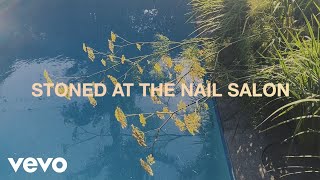
Watch the official Stoned at the Nail Salon
music video
Between comfort and doubt: who’s speaking?
The narrator is Lorde’s first-person voice addressing herself and, at times, a former partner. She recalls a wilder past and a relationship born in chaos, then turns to quieter images of home. Lines about hot blood's been burnin'
admit that impulsive streak still lives in her. But maturity whispers back: it’s time to cool it down
.
Interpretation: They’re not rejecting youth; they’re learning to metabolize it. The past isn’t denied—it’s reframed as a reference point, not a destination.
The chorus as a grounding refrain
The line Maybe I'm just stoned
works like a handbrake. Interpretation: it’s a way to question spiraling thoughts before they harden into life choices. Instead of declaring regret, the chorus asks if the anxiety is just a vibe—like a salon-day haze—rather than a true signal. The doubt becomes manageable when named.
Symbols of time, beauty, and cooling down
- Roses and beauty: When she notes things
fade like the roses
, she is facing time’s blunt math—bodies, trends, even identities wither. The point isn’t despair; it’s acceptance. - Teenage taste: The idea that
music you loved at sixteen
won’t always fit becomes a metaphor for self-shedding. We outgrow sounds, scenes, and versions of ourselves. - Seasons and restraint: The wish to
cool it down
after long summers suggests moving from heat to balance. It’s not winter; it’s shade. - A quiet plea: The repeated
make it good
is a modest prayer for meaning in ordinary days—chores, family dinners, unglamorous love.
Interpretation: These motifs build a map from thrill-seeking to considered joy. Beauty still matters, but durability matters more.
How the production deepens the mood
Musically, it’s spare and intimate: a psychedelic-folk ballad in D major around 60 bpm. Jack Antonoff’s gentle acoustic and electric 6-strings lay a soft bed for Lorde’s low, breathy lead. Subtle textures (Mellotron, light piano) hover without crowding her voice. The mix leaves air for the words to land.
Harmonies from Phoebe Bridgers, Clairo, Marlon Williams, and Lawrence Arabia float in like passing thoughts—present, then gone. That communal whisper supports the theme: other versions of the self brush by, but the core voice stays calm. The restraint matches the lyric’s project of stepping back from impulse.
Context, reception, and alternate readings
The single followed “Solar Power” and previewed the album’s reflective core. Critics were mixed: many praised its eloquent hush, while some found it too low-key. It charted in New Zealand, Australia, Ireland, the U.K., and reached the U.S. Hot Rock & Alternative Songs top 20. In her catalog, it sits closer to Pure Heroine and Melodrama’s introspection than to the sun-burst of “Solar Power.”
An alternate angle hears it as a breakup aftermath—glimpses of past chaos now partitioned into memory and paperwork. Another reading treats it as a fame diary, with the salon as a neutral space where a global star can think without performance. Both fit the song’s open, conversational frame.
A useful clue comes from the Māori-language version (“Mata Kohore”) on her Te Ao Mārama EP, whose translation has been explained as “blurry eyes” or unclear vision. That aligns with the idea of overthinking in a hazy, ordinary moment rather than literal intoxication.
Takeaway and listener note
The meaning of Stoned at the Nail Salon Lorde offers isn’t bleak. It’s the courage to pause: to love what’s here, forgive what’s gone, and question every panic before it rules the day. If growing up feels like losing an edge, the song replies: cool it down, keep the edge you need, and let the rest fade like the roses.
Disclaimer: Song meanings are interpretive. This article reflects one informed reading based on lyrics, production, and public context.
Sources
- https://en.wikipedia.org/wiki/Stoned_at_the_Nail_Salon
- https://www.rollingstone.com/music/music-news/lorde-stoned-at-the-nail-salon-1194480/
- https://www.billboard.com/music/pop/lorde-stoned-at-the-nail-salon-9607038/
- https://www.complex.com/music/lorde-new-song-zane-lowe-interview-stoned-at-the-nail-salon
- https://listen.tidal.com/album/190923770/credits








