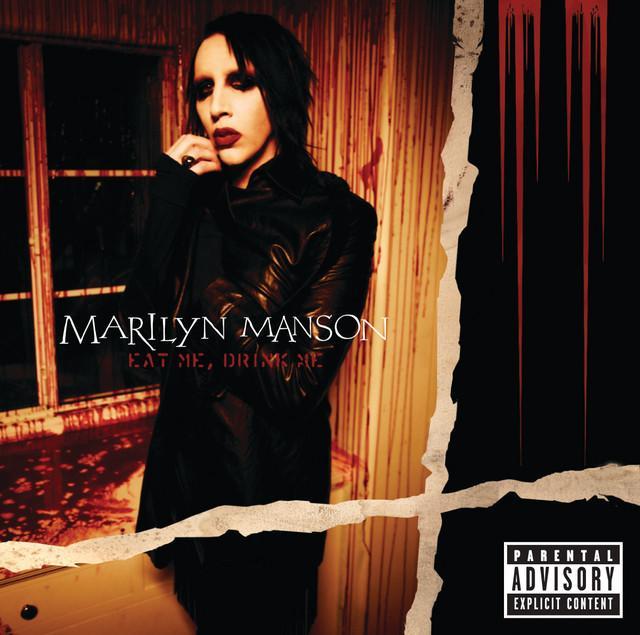
Putting Holes In Happiness by Marilyn Manson
The meaning of Putting Holes In Happiness Marilyn Manson comes down to one dark idea: love can feel beautiful and poisonous at the same time. In this song, they frame romance as a place where desire, decay, fantasy, and emotional damage all live together.
"Putting Holes In Happiness" - Marilyn Manson
I could have buried all my dead up in her cemetery head
She had dirty word witchcraft; I was in the deep end of her skin
Loading lyrics...
Unable to load lyrics
We're unable to display the lyrics at this time. Please try again later.
Released as the second single from Eat Me, Drink Me in 2007, the track was written by Marilyn Manson and Tim Sköld, who also produced it, and it is commonly classified as gothic rock. It runs 4:31 and arrived during a period when Manson's music leaned more toward wounded, personal melodrama than pure shock imagery (Wikipedia).
A Love Song With a Funeral Shadow
On the surface, the song sounds like a twisted love song. But it quickly becomes clear that this is not stable devotion. The speaker sees the relationship as thrilling, seductive, and already falling apart.
Early images mix beauty and harm. A line about a bright day turning into something cruel sets the tone immediately. From there, the lover becomes a place where the speaker could bury pain, hide grief, and lose themselves. When they describe a cemetery head
, the image suggests that even attraction is tied to death and memory.
Interpretation: the song treats romance as emotional self-destruction. The lover is not just desired; they are almost worshipped as a dangerous force.

Watch the official Putting Holes In Happiness
music video
Why the Chorus Feels So Bitter
The chorus is where the song’s meaning sharpens. Instead of celebrating love, it tears into the idea of happiness itself. The title phrase, Put holes in happiness
, sounds like an attack on joy, but it also suggests that joy was fragile to begin with.
The song keeps pairing sweetness with collapse. A phrase like taste like Valentine's
brings candy-heart romance into the same space as crying, death wishes, and loss. That contrast matters. It shows how the track turns familiar love-song symbols into signs of disappointment.
Blow out the candles
On my Frankensteins
This brief moment is especially revealing. Birthdays and candles usually point to celebration, but Frankenstein imagery turns that ritual into something stitched together, unnatural, and half-dead. Interpretation: the speaker may be admitting that their idea of love is artificial, built from broken parts, and doomed from the start.
The Speaker’s Voice: Addicted, Not Safe
The narrator does not sound calm or reliable. They sound overwhelmed. They are pulled toward someone they know is destructive, yet they keep romanticizing the danger.
That is why phrases like Bonnie
and Clyde
matter. The song borrows the image of a famous outlaw couple to suggest unity through crime, rebellion, or mutual ruin. In other words, love here is not healing. It is a pact.
There is also a strong sense of emotional dependency. The speaker seems unable to separate desire from annihilation. Even when they notice warning signs, they move closer instead of away. The line about seeing all of your snakes
suggests betrayal or corruption, but the attraction remains.
Symbols That Build the Song’s World
Several recurring motifs deepen the song’s gothic mood:
- Birthdays and candles: symbols of life twisted into reminders of mortality
- Valentine imagery: romance presented as sugary but empty
- Black color imagery: emotional collapse, mourning, and anti-romantic beauty
- Hell and assassination: love imagined as mutual doom rather than comfort
- Ruins and graves: the relationship feels damaged before it can fully live
These images are not random shock tactics. They all support the same theme: happiness is temporary, and passion may actively destroy it.
How the Sound Carries the Meaning
Musically, the song helps sell this push-pull between beauty and damage. Eat Me, Drink Me marked a more melodic and guitar-forward phase for Manson, shaped heavily by Tim Sköld’s writing and production. In “Putting Holes in Happiness,” the tune has a strong hook, but the mood stays cold and haunted.
The guitar work gives the song lift, almost like an anthem, while the vocal delivery keeps it bruised and unstable. That matters because the song is not pure rage. It is wounded, dramatic, and strangely tender. The production creates the feeling of reaching for romance while already knowing it will end badly.
That balance also explains why the song got multiple remixes, including versions by Boys Noize and Nick Zinner, and why it fit the era’s crossover between industrial darkness and big alt-rock choruses (Wikipedia).
Where It Fits in Marilyn Manson’s Career
Context helps explain the song’s tone. Eat Me, Drink Me came after the broader satire and theatrical attack of earlier Manson records. This era felt more inward-looking. Instead of targeting culture at large, songs often focused on obsession, heartbreak, identity, and private collapse.
“Putting Holes in Happiness” was reportedly written on Manson’s birthday, January 5, 2007, and released as a single on October 19, 2007 (Wikipedia). That detail fits the song’s use of birthday imagery, though the lyrics clearly turn that symbol into something much darker than celebration.
The music video, directed by Philippe Grandrieux, also leans into disorientation and uneasy intimacy, reinforcing the song’s dreamlike menace (Wikipedia).
The Best Way to Read the Song
The best reading is that this track is about a relationship so intense that happiness cannot survive inside it. Love becomes a theater for death wishes, jealousy, fantasy, and emotional collapse. The speaker is not rejecting romance; they are showing what happens when romance becomes inseparable from destruction.
That is the real meaning of Putting Holes In Happiness Marilyn Manson: joy is punctured from within by obsession. The song is catchy, but its heart is tragic.
Disclaimer: This interpretation is based on the lyrics, recording context, and public release information. Song meaning can remain open, and listeners may hear different emotional truths in it.