Love Never Felt so Good by Michael Jackson, Justin Timberlake
They press play and are greeted by pure sparkle: a piano bounce, handclaps, and Michael Jackson’s buoyant voice. For anyone searching the meaning of Love Never Felt so Good Michael Jackson, Justin Timberlake, this track isn’t just happy—it’s happiness with a catch. The song floats on joy while admitting love’s uncertainty.
"Love Never Felt so Good" - Michael Jackson, Justin Timberlake
Let me see you move, come on
Dancin'
Loading lyrics...
Unable to load lyrics
We're unable to display the lyrics at this time. Please try again later.
Two Eras, One Groove: How This Record Came Together
Jackson co-wrote the song with Paul Anka in 1983, during the Thriller-era glow. Decades later, the estate revived the demo for the 2014 album Xscape, releasing both a solo version and a contemporary duet with Justin Timberlake. Producers updated the sound while keeping the core melody, rhythm, and feel intact.
The duet connected Jackson’s classic pop-R&B sensibility with Timberlake’s modern sheen, creating a time-bridging moment. It also became a late-career celebration for Jackson’s catalog, landing in the Billboard Hot 100 top 10 and reintroducing his dance-floor magic to a new generation. The iHeartRadio Music Awards debut featured an Usher-led tribute performance, underscoring how performance and movement are central to the song’s spirit.
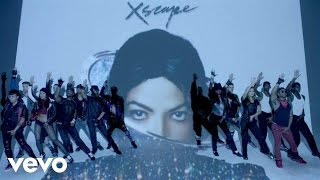
Watch the official Love Never Felt so Good
music video
Euphoria with Edges: What the Words Are Really Saying
At its core, the lyric is a confession of joy: love never felt so good
. But it isn’t simple. The narrator keeps measuring the magic against doubt. When they sing not like you hold me
, they praise a specific, physical closeness that no one else has matched.
Yet the bliss is interrupted by a pattern of absence—in and out of my life
. The push-pull suggests a romance that thrills in the moment but struggles with consistency. The song’s emotional engine is that tension: the more intoxicating the connection feels, the more it hurts when it vanishes.
Who’s Speaking—and What Do They Want?
This is a first-person plea to a partner who lights them up but won’t always commit. The narrator asks, tell me, if you really love me
, reaching for reassurance. It’s not a cold demand; it’s a hopeful request, asked over a sunny groove that makes honesty feel possible.
There’s also a second audience: the crowd. When Jackson calls, let me see you move
, he’s not only hyping the room; he’s inviting listeners to embody the feeling. The dance floor becomes a space to test the promise of love in real time.
Motion as Meaning: Night, Flight, and Release
Movement is the song’s main metaphor. The narrator declares gotta fly, gotta see
, which frames love as forward motion—new sights, new chances, no time to stall. Night imagery promises possibility, not danger; in this world, after-hours equals freedom.
Interpretation: The kinetic language mirrors the emotional stakes. If the partner keeps slipping away, the only choice is to keep moving—toward them, or toward a future where love finally “feels so good” without the crash. Dance is both celebration and coping strategy.
How the Sound Carries the Feeling
Musically, the track blends disco-pop gloss with R&B warmth. Piano stabs, offbeat handclaps, bright strings, and a buoyant bass line set a confident stride. Jackson’s elastic tenor glides across the groove, stacking harmonies that sparkle on the chorus. In the duet, Timberlake’s airy tone interlocks with Jackson’s phrasing, creating call-and-response moments that underline the theme of togetherness.
Production choices sharpen the message. The rhythm section stays light and propulsive, keeping the focus on joy. Minimal tension in the chords lets the vocal do the emotional heavy lifting—where the doubts live in the words, not in dark harmonies. The result is classic MJ optimism with modern polish, a sound that says the feeling is real and worth chasing.
Two Readings, One Hook That Wins
Interpretation 1: It’s a love song about a partner who’s thrilling but unreliable. The narrator begs for clarity because the highs are too good to give up. That friction—ecstasy versus doubt—keeps the chorus exploding every time.
Interpretation 2: It’s also a love letter to music and performance. The crowd callouts, the groove-first production, and the emphasis on dance hint that the “you” could be the stage itself. In that view, the song is Jackson—joined by Timberlake—reclaiming joy through the simple act of moving.
Why It Still Clicks Today
By blending a timeless melody with crisp, contemporary production, the track lets listeners feel uncomplicated happiness while acknowledging real-life messiness. It’s a party with a pulse, a dance record that admits the heart sometimes stumbles. That honesty, paired with a sky-bright groove, explains why the song still fills floors and playlists.
Takeaway You Can Feel
The meaning of Love Never Felt so Good Michael Jackson, Justin Timberlake comes down to this: joy is loud, doubt is quiet, and both can live in the same song. They know love is risky—but when it’s right, it’s worth the dance.
Disclaimer: Song meanings are interpretive and may vary by listener; lyrics are quoted for analysis only.
Sources
- https://en.wikipedia.org/wiki/Love_Never_Felt_So_Good
- https://www.billboard.com/music/rb-hip-hop/michael-jackson-justin-timberlake-love-never-felt-so-good-6077379/
- https://www.rollingstone.com/music/music-news/michael-jacksons-love-never-felt-so-good-drops-101357/
- https://www.riaa.com/gold-platinum/









