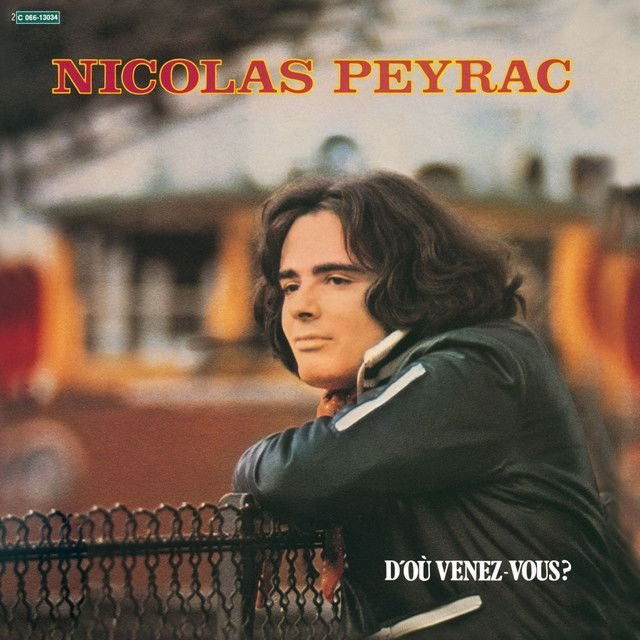
Why "So Far Away From L.A." Feels Haunted
The meaning of So Far Away From L.A. Nicolas Peyrac comes from a striking contrast: California should feel bright, modern, and cinematic, yet the song makes it feel cold, distant, and ghostly. Nicolas Peyrac uses famous American places and names not to celebrate them, but to show how memory can turn even glamorous landscapes into spaces of grief.
"So Far Away From L.A." - Nicolas Peyrac
L'étrange fille aux cheveux d'or
Dans ma mémoire, traîne encore
Loading lyrics...
Unable to load lyrics
We're unable to display the lyrics at this time. Please try again later.
Rather than telling one clear plot, the song drifts through scenes. Airports, San Francisco, Alcatraz, Beverly Hills, and Hollywood history all appear like snapshots in a fading film. The result is less a travel song than a mood piece about dislocation.
A California Dream Seen Through Fog
At the core, the song is about emotional distance. The chorus says it plainly with the repeated So far away from L.A.
and So far ago from Frisco
. Even before those lines, the verses suggest a speaker wandering through memory, not through a stable present.
That is why the opening image matters. An airport glow and a mysterious woman with golden hair do not lead to romance. They lead to a lingering impression that stays in memory but never becomes whole. The feeling is unfinished, almost suspended.
Interpretation: Peyrac seems less interested in California itself than in what California represents: myth, distance, and the sadness of things that cannot be held onto.

Watch the official So Far Away From L.A.
music video
The Chorus Turns Place Into Isolation
The key emotional line is I'm no one but a shadow
. Before and after that phrase, the song frames the speaker as someone moving through famous places without belonging to them. They are there, but only partially.
That image of a shadow changes the whole song. Los Angeles and San Francisco are usually symbols of presence—cinema, fame, movement, youth. Here, they become proof of absence. The farther the song travels into iconic places, the less solid the speaker feels.
This is why the refrain is so effective. It is simple, but it keeps translating geography into psychology. “Far away” is not just mileage. It is alienation.
History Lingers in the Background
One of the song’s strongest moves is how it mixes private feeling with public memory. Alcatraz is not just a landmark. It carries the pain of punishment, with the song evoking prison-colored sobs. Then Peyrac mentions Caryl Chessman, the convicted criminal whose execution became a major debate about justice in the United States; his case remains historically controversial, as summarized by major reference sources such as Encyclopaedia Britannica.
The point is not to argue the case in detail. The point is doubt. The song asks whether he was right or wrong, and that uncertainty spreads across the whole lyric. California is no longer a postcard. It becomes a place where moral clarity breaks down.
Later, the line about Pauvre Madame Polanski
points toward Sharon Tate, whose murder in 1969 shocked Hollywood and the wider public, a tragedy documented by sources including Britannica. Peyrac’s phrasing stresses not scandal, but forgetting. The song wonders who still remembers.
Glamour, Ruin, and the Old Hollywood Spell
The middle section shifts toward luxury and faded celebrity. The Queen Mary appears as a hotel, Beverly Hills hovers offshore, and the hills remember the age of Garbo and Bogart. That cluster of images matters because it turns Hollywood into a museum of echoes.
Instead of celebrating stars, the song suggests that glamour survives mostly as residue. Grandeur is still visible, but it belongs to another era. In that sense, California becomes an archive of vanished power.
Interpretation: This may be the song’s sharpest idea. American myth is not attacked directly. It is shown as already decaying under the weight of memory.
Why the Sound Fits the Lyric
Peyrac wrote the song himself, and his style often leans toward melodic storytelling rather than theatrical excess. That matters here. The arrangement supports the lyric’s drifting sadness with a smooth, restrained feel rather than dramatic bursts. The music lets the images float by like passing lights.
That approach places the song closer to the French chanson tradition, where narrative, atmosphere, and emotional shading carry great weight. For broader context, chanson’s emphasis on expressive text can be seen in artists such as Jacques Brel, whose importance to the form is widely recognized by reference overviews like Wikipedia’s biography. Peyrac is not copying Brel’s intensity, but he works in a tradition where words shape the emotional architecture.
Because of that, the English chorus lands with special force. It sounds international and modern, but also strangely empty, as if borrowed language itself adds to the feeling of disconnection.
A Few Symbols That Unlock the Song
Several recurring motifs tie the song together:
- Winter in San Francisco: emotional coldness in a place people imagine as desirable.
- Airports and distance: movement without arrival.
- Prisons and crime: guilt, judgment, and uncertainty.
- Old Hollywood: glamour fading into memory.
- Shadow imagery: a self that feels thinned out or erased.
There is also a final pull toward Colorado. In the song, that far-off edge sounds like a place of rest, maybe even escape. Whether that rest is literal or emotional remains unclear.
The Best Way to Read It
The meaning of So Far Away From L.A. Nicolas Peyrac is not simply homesickness or travel nostalgia. It is a song about what happens when famous places lose their shine and become containers for loneliness, doubt, and public sorrow. Peyrac turns California into a map of modern melancholy.
That is why the song still stands out. It looks at America from afar, but what it really sees is the fragile self moving through memory like a shadow
.
Disclaimer: This interpretation separates clear lyrical details from critical inference. As with most songs, listeners may hear different meanings in the same images.







