Why MHA's Big 3 Hit So Hard
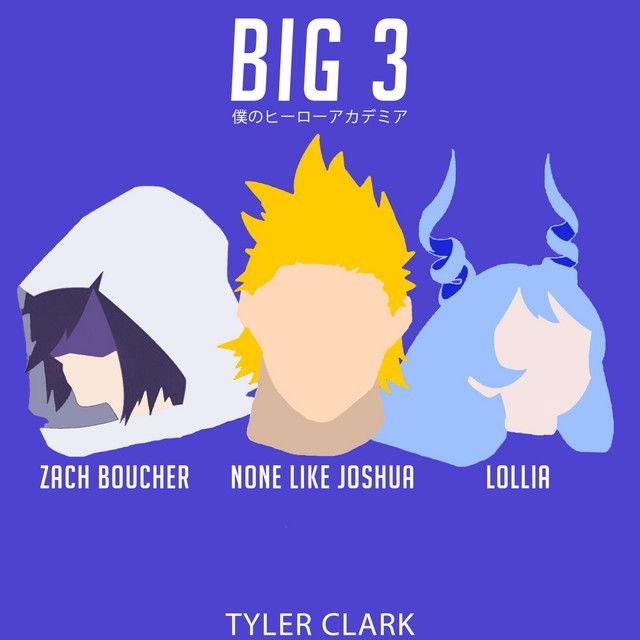
The meaning of Big 3 (My Hero Academia) None Like Joshua, Zach Boucher, Lollia, Tyler Clark is bigger than a simple anime tribute. The song celebrates the three elite U.A. students—Mirio Togata, Tamaki Amajiki, and Nejire Hado—while also showing that each one carries a different version of heroism. Instead of treating them like flat power fantasies, it gives each character a voice, a weakness, and a reason to fight.
"Big 3 (My Hero Academia)" - None Like Joshua ft. Zach Boucher, Lollia, Tyler Clark
But you don't need to be fearing though
Unless you're a villain, of course
Loading lyrics...
Unable to load lyrics
We're unable to display the lyrics at this time. Please try again later.
Factually, the song is a fan-made anime rap tied to My Hero Academia, a series built around what makes a “true hero” rather than just a strong fighter. That core idea matches how the franchise presents U.A.'s top students in the original manga and anime, where the “Big 3” are framed as near-pro-level examples for younger students.
More Than Hype: What the Song Is Really Saying
At its core, the track argues that greatness is earned through growth. The hook centers that message with We the Big 3
and from the bottom, now we've grown
. Those lines are simple, but they matter because they turn rank into a story. These heroes were not born finished; they became who they are through pressure, setbacks, and training.
That matters in a My Hero Academia context. The series often links hero work to character, not just talent. This song follows that model by giving all three members a different emotional burden. Mirio carries responsibility, Tamaki carries fear, and Nejire carries the frustration of being underestimated.
Interpretation: The song's real subject is not status. It is the process of becoming worthy of status.

Watch the official Big 3 (My Hero Academia)
music video
Three Voices, Three Forms of Strength
Mirio as the ideal hero in motion
Mirio opens with swagger, jokes, and force. References to phasing, speed, and battle confidence fit his quirk and personality. But his verse does more than brag. When he mentions Eri and the hope that she can smile, the song shifts from combat skill to emotional purpose.
That is why his section lands. Even lines that sound flashy point back to service. He is not fighting just to win; he is fighting to protect and inspire. The phrase one in a million
helps connect Eri's value to Mirio's moral center.
Interpretation: Mirio represents the heroic ideal the other two are still trying to fully trust in themselves.
Tamaki as fear turned into power
Tamaki's verse is the emotional center of the song. He admits weakness directly, including feeling mentally weak
and struggling to believe in himself. That honesty makes his later power feel earned rather than automatic.
His imagery blends insecurity with monster-like force. He sounds withdrawn, then suddenly dangerous. That switch mirrors his character in the anime: shy in social spaces, overwhelming in battle. When he says he can unleash what is underneath, the song turns anxiety into stored energy.
This section also broadens the definition of heroism. Not every hero is loud or naturally confident. Some are brave because they act despite dread.
Nejire as energy, intelligence, and persistence
Nejire's verse changes the song's texture. She sounds bright, fast, and restless, which fits a character driven by curiosity and stamina. Her section pushes back against shallow readings of her. She notes that others confuse her questions for flirtation, but she makes clear that her attention is serious, not silly.
The line not for the beauty pageant
is especially important. It rejects the idea that her presence is decorative. She trained for strength, mastery, and impact. In a song full of force, Nejire's verse adds a needed statement about being underestimated.
Why the Chorus Matters So Much
The chorus is not just a catchy reset. It reframes the solo verses as a group identity. After each member reveals a different struggle, the repeated claim of being the Big 3 sounds less like ego and more like proof.
We'll show them all
What we're made of
This brief refrain works because it unites all three perspectives. Mirio's confidence, Tamaki's fear, and Nejire's drive all lead to the same promise: heroism must be demonstrated.
Interpretation: The chorus suggests that reputation is incomplete until tested in public action.
Sound, Structure, and the Anime-Rap Appeal
Production-wise, the track uses a high-energy rap format with alternating verses and a chant-like chorus. That structure helps each character feel distinct while keeping the song accessible for fans who want both storytelling and adrenaline.
Mirio's section fits punchy boasts and forward momentum. Tamaki's verse leans into heavier emotional writing, which creates contrast. Nejire's part feels quicker and lighter on the surface, but the pacing also communicates stamina and mental speed. The beat supports all of this by leaving enough room for character-driven delivery rather than burying the voices under constant noise.
That is one reason anime rap can connect so strongly with listeners. It translates visual storytelling into vocal performance. Here, delivery becomes characterization.
The Bigger Meaning for My Hero Academia Fans
The meaning of Big 3 (My Hero Academia) None Like Joshua, Zach Boucher, Lollia, Tyler Clark is ultimately about earned identity. The song says that being exceptional does not mean being flawless. It means pushing through whatever would stop someone from becoming useful to others.
For Mirio, that obstacle is loss and duty. For Tamaki, it is self-doubt. For Nejire, it is being misread. Together, they form a balanced picture of heroism: heart, humility, and effort.
That is why the song works beyond fan service. It understands that My Hero Academia is not just about quirks. It is about what people choose to do with their gifts once fear, pain, and expectations start closing in.
Disclaimer: This interpretation is based on the lyrics provided and publicly known character context. As with most songs, some meanings remain open to listener interpretation.








