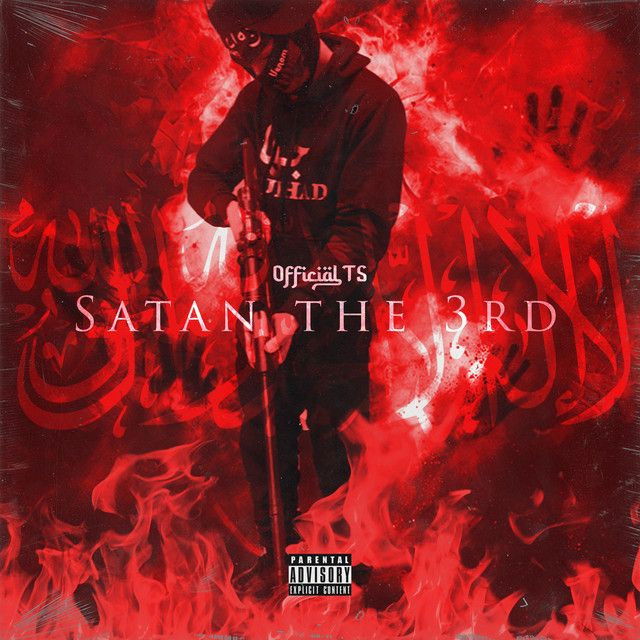
Why "Satan The 3rd" Sounds Like a Warning
The meaning of Satan The 3rd Official TS comes through as a mix of threat, religious argument, and shock performance. On the surface, the song sounds like a pure attack track. But under the graphic language, it is also trying to separate “real” spiritual danger from what the rapper sees as fake demon talk.
"Satan The 3rd" - Official TS
Its just the jinn thats makin
You look like a faggot you blew your own cover venom
Loading lyrics...
Unable to load lyrics
We're unable to display the lyrics at this time. Please try again later.
Because the provided material includes only lyrics and a writing credit, the safest factual claim is limited: the song is credited here to Official TS as writer. Everything beyond that is best read as interpretation, especially when discussing motive, persona, or intent.
More Than Horror Rap
At its center, the track is about contempt for people the speaker sees as frauds. They mock rivals for claiming dark knowledge while, in the song’s view, knowing nothing real about jinn, magic, or religious law. That is why the lyrics keep returning to ideas like false boasting, punishment, and judgment.
A key line of attack is the idea that others only perform evil for attention. When the song sneers at people who talk like parrots
, it suggests they are repeating images they do not understand. In plain terms, the narrator thinks these people are copying dangerous language for status.

Watch the official Satan The 3rd
music video
The Voice Behind the Mask
A character built to intimidate
The repeated phrase Its Satan the 3rd
sounds less like autobiography and more like a mask. Interpretation: the speaker adopts a monster-like title to amplify fear and dominate the track. That persona lets them move between street threats, occult references, and end-times warning without softening the message.
This matters because the song does not only want to insult. It wants to overwhelm. The first-person voice keeps bragging, warning, and taunting, making the narrator feel larger than life.
Religion, Jinn, and Fake Power
One of the strongest themes in the song is spiritual authenticity. The lyrics argue that rivals misunderstand or misuse religious and occult language. Terms tied to jinn, sihr, and judgment are used not just for atmosphere, but to draw a line between real belief and fake performance.
The clearest example is the religious citation near the end:
Didnt i create then men and jinn
so that they can only worship me
The song uses that scriptural idea to claim authority. In paraphrase, the speaker argues that human beings and jinn exist under divine rule, so anyone turning dark spiritual talk into entertainment is already lost. Interpretation: this gives the track a strange double energy. It sounds sinful and blasphemous in one moment, then moralizing in the next.
How the Violent Imagery Works
The most disturbing lines are packed with gore, graves, knives, and bodies returning to dirt. Those details are not subtle, and they are clearly designed to shock. But they also support the song’s larger obsession with consequence.
When the narrator describes people rottin in the dirt
, the point is not only cruelty. It is mortality. The song keeps reminding enemies that death strips away ego, reputation, and clout. That fits with later lines about everyone being held to account.
Another short phrase, grave loves men woman girls and kids
, turns death into something universal and unstoppable. That is one reason the song feels bigger than a normal diss track. Its threats are personal, but its frame is cosmic.
Street Threats Meet End-Times Fear
The song also blends drill-style aggression with religious panic. There are references to weapons, old violence, and gang-coded toughness, but those sit next to warnings about judgment, deception, and the future arrival of evil figures. That combination makes the record feel like a collision between local street conflict and spiritual warfare.
Interpretation: this is where the meaning of Satan The 3rd Official TS becomes clearest. The song argues that fake darkness is still dangerous, because even pretending to serve evil stains the soul. So the speaker attacks both the behavior and the image around it.
Sound and Delivery Carry the Message
No official production credits were provided, so it is not possible to verify beatmakers or studio details. Still, the lyrics strongly suggest a harsh, repetitive performance style. The hook repeats in a chant-like way, which likely helps the song feel ritualistic and relentless.
That repetition matters. A phrase like make it hurt
is simple, but in a drill or horror-rap setting, simplicity increases force. Short commands hit harder than complex lines. The likely effect is a pounding, circular mood where menace feels constant rather than occasional.
The dense rhyme clusters and rapid threats also create momentum. Even when individual images are extreme, the flow seems designed to keep pressure on the listener, not to pause for reflection.
A Useful Way to Read the Song
For most listeners, the best reading is not “what crimes are being admitted here?” but “what identity is being built?” The speaker presents themself as someone who knows hidden truths, hates hypocrisy, and welcomes fear as a weapon.
That is why the song keeps circling back to ideas of knowledge, punishment, and exposure. When it says Knowledge is power
, it frames the whole performance as authority talk. The narrator wants the last word on what is real, what is fake, and who will pay.
Final Take
So, what is the meaning of Satan The 3rd Official TS? It is a dark performance about fake demon posturing, spiritual corruption, and violent control. The song uses horror images and religious references to make its speaker sound both terrifying and certain.
Interpretation disclaimer: this article reads the song as art and persona, not as proof of literal beliefs or actions. With limited verified context beyond the provided lyrics and writing credit, some conclusions remain interpretive rather than factual.








