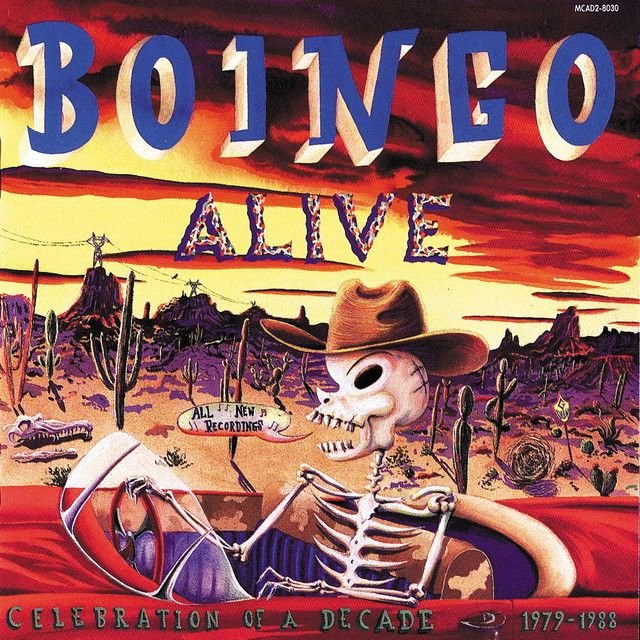
Private Life by Oingo Boingo
Why the meaning of Private Life Oingo Boingo still hits
The meaning of Private Life Oingo Boingo centers on a person who wants distance from the world but also suffers inside that distance. The song presents privacy as both protection and prison. That contradiction gives it emotional weight.
"Private Life" - Oingo Boingo
I have no friends to fear
I've got no problems no cross to bear
Loading lyrics...
Unable to load lyrics
We're unable to display the lyrics at this time. Please try again later.
Written by Danny Elfman, the track fits the band's larger interest in alienation, anxiety, and the strange performance of everyday life. Critics have often noted Elfman's gift for turning discomfort into vivid, theatrical songwriting, especially across Oingo Boingo's darker material, as seen in a retrospective by PopMatters (https://www.popmatters.com/oingoboingo-dark-2496020179.html).

Watch the official Private Life
music video
A room becomes a state of mind
At the surface level, the narrator describes a personal space: a room, a bed, a few possessions, and a view of the outside world through shaded windows. But these details are not just scene-setting. They show a person trying to control what can be seen, touched, or judged.
The repeated line private life
sounds like a boundary. They seem to be saying: this space is off-limits, and outsiders do not belong here. Yet the song keeps undercutting that firmness. The speaker also asks someone to get me out of here
, which changes the mood from self-protection to quiet desperation.
That shift is the key to the song. Privacy is not presented as peace. It feels more like hiding.
The narrator is alone, but not calm
Watching the world without joining it
One of the most revealing parts of the song is the image of the narrator observing people outside while staying unseen behind window shades. They can look out, but others cannot look in. This creates a one-way relationship with the world.
Interpretation: that image suggests emotional withdrawal. The narrator still cares about what is happening beyond the room, but they do not know how to take part in it. They are close enough to witness other lives, yet too cut off to feel included.
The line about having no friends to fear
is especially sharp. It sounds defensive and bitter at the same time. Friendship usually brings comfort, but here even closeness feels threatening. That hints at distrust, disappointment, or social exhaustion.
Private objects, public shame
The song also lists personal belongings, including embarrassing and conflicting items. The mix of taboo images and sacred objects suggests a messy inner life rather than a neat identity. The room holds secrets, contradictions, and evidence of a self the narrator does not fully want exposed.
This matters because the song is not simply about being introverted. It is about the fear that other people might see everything at once: desire, guilt, loneliness, confusion. When the speaker points to private things
, they are really pointing to the parts of themselves they cannot organize into one clean story.
This is my private life
There's something dangerous I like
Those lines briefly connect secrecy with temptation. Privacy is not only shelter; it is also a place where risky thoughts can grow. The song never fully explains that danger, which makes it more unsettling.
How the chorus changes its meaning
At first, the chorus seems like a declaration of independence. Repetition can sound strong, even stubborn. But as the song goes on, the same phrase starts to feel trapped inside itself.
That is one of the smartest parts of the writing. Every return to private life
makes the space smaller. By the final repetition, the phrase feels less like ownership and more like a label stuck on a locked door.
Interpretation: the chorus shows how people can use self-containment as armor until the armor becomes isolation. The narrator may think they are preserving freedom, but they are actually describing confinement.
The production mirrors the tension
Oingo Boingo built much of their identity on nervous rhythms, angular new wave energy, and theatrical vocals. Danny Elfman's delivery often sharpened a song's emotional unease, turning inner panic into something almost visual. That broader style is well documented in coverage of the band and Elfman's songwriting career, including the PopMatters assessment noted above.
In this song, the arrangement likely matters as much as the words. The clipped, repetitive structure reinforces obsession. The band's tense groove makes the room feel active rather than restful. Instead of sounding like a quiet retreat, the track feels like a mind pacing indoors.
That musical tension supports the lyric about staring at a bulb on the ceiling and waiting for escape. Even when the narrator is physically still, the song does not feel still.
A bigger theme in Elfman's writing
Danny Elfman often wrote characters who are at odds with themselves. In that sense, "Private Life" fits a larger pattern: people who feel exposed, absurd, boxed in, or emotionally split. The song is simple on the page, but its emotional design is complex.
They want to be left alone. They also want to be rescued. They reject others, then wonder what life is like outside. They claim control, yet ask whether things have always been this way
. That final question opens the song outward. It suggests the problem is not just one bad night. It may be a whole way of living.
Final takeaway on Private Life
The meaning of Private Life Oingo Boingo is not that privacy is bad. It is that privacy can become a mask for hurt, fear, or disconnection. The song captures the moment when solitude stops feeling chosen and starts feeling imposed.
That is why it remains effective. It turns a bedroom into a portrait of emotional exile.
Disclaimer: This interpretation is based on the released lyrics, Oingo Boingo's broader artistic style, and available commentary on Danny Elfman's songwriting. Like most songs, it can support more than one reading.








