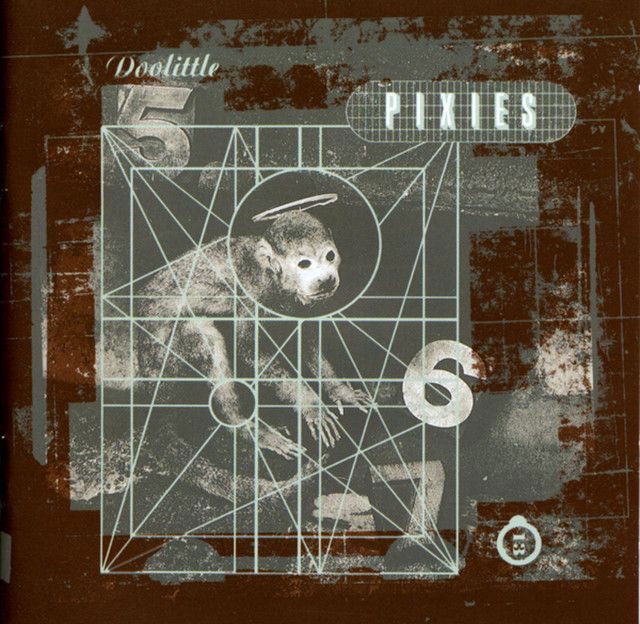
Monkey Gone to Heaven by Pixies
Why This Pixies Song Still Feels So Big
The meaning of Monkey Gone to Heaven Pixies starts with a simple idea: people are damaging the natural world, and they may not fully understand their place in it. Released in 1989 as a single from Doolittle, the song turns pollution, religion, and evolution into something strange but memorable. It does not preach in a direct way. Instead, it uses surreal images that feel like a fable.
"Monkey Gone to Heaven" - Pixies
An underwater god who controlled the sea
Got killed by ten million pounds of sludge
Loading lyrics...
Unable to load lyrics
We're unable to display the lyrics at this time. Please try again later.
Factually, the song was written by Black Francis, produced by Gil Norton, and appeared on Doolittle after being recorded in late 1988. According to Wikipedia, it was also the first Pixies song to include guest string players, which matters because the sound helps sell the song’s mix of beauty and dread.

Watch the official Monkey Gone to Heaven
music video
A Warning Hidden Inside a Nursery Rhyme
At the center of the lyric is environmental damage. One verse imagines a sea god destroyed by industrial waste. Another points to damage in the sky, suggesting a world where nature has been torn open and heat will follow. The images are cartoonish on purpose, but the point is serious: humans act as if the planet can absorb anything.
That is why the repeated line this monkey's gone to heaven
lands so hard. In plain terms, the song seems to compare humanity to an animal that wants to think of itself as holy. Interpretation: the phrase can sound both tragic and mocking. It may suggest spiritual hope, but it also hints that people are still just creatures making a mess of their home.
Black Francis later described the song as being loosely about the human dilemma of survival as a race. In a brief 2022 comment cited by Wikipedia, he said it mixed biblical ideas with folk-like imagery rather than pushing a strict agenda. That helps explain why the lyric feels open instead of didactic.
The Story Moves From Ocean to Sky
The song has a loose storyline, even if it does not read like a normal narrative. It moves in stages:
- A mythic sea ruler is ruined by human pollution.
- A sky creature is swallowed by a hole above the earth.
- The planet heats up, and everybody shares the consequences.
- The chorus turns all of that into one haunting image.
This movement from water to air makes the song feel global. Nothing is local or small. When the lyric mentions ten million pounds of sludge
, it gives the fantasy a real-world weight. The pollution is not abstract; it is heavy, ugly, and man-made.
Then the song shifts to the atmosphere. The image of a hole in the sky
points to ecological imbalance. Whether listeners take that literally as ozone damage or more broadly as a broken natural order, the result is the same: the earth is no longer stable.
The Numbers Matter More Than They Seem
The most famous section is the count upward from man to devil to God. The lyric says Man is five
, then moves to six and seven. Black Francis has said this came from a loose idea of biblical or Hebrew numerology, not from a deep scholarly study.
Then the Devil is six
Then God is seven
Paraphrased, the song builds a ladder of value and power. Humanity sits below the divine and close to corruption. Interpretation: that can be heard as a joke, a chant, or a serious ranking of existence. It shrinks human pride. People are not at the top here. They are stuck in the middle, dangerous enough to do harm but not wise enough to control the outcome.
The counting also sounds almost childish, which is part of what makes it unsettling. A sing-song pattern carries ideas about sin, order, and doom. The contrast is classic Pixies: playful surface, disturbing core.
How the Sound Carries the Meaning
The production is a big reason the song endures. It begins with the band’s lean rock setup, then lets strings creep in around the edges. Those cello and violin parts do not soften the song so much as make it feel eerier. They add lift, but also tension, as if something heavenly is trying to appear inside a damaged world.
The arrangement mirrors the lyric’s themes. The verses feel tight and stalking. The chorus opens wider, almost like a ritual chant. Joey Santiago’s guitar lines are sharp and minimal, while Kim Deal’s backing vocal helps the hook feel less like one person’s thought and more like a public warning.
When the song reaches the number chant, the backing gets barer before building again. That rise gives the final section a near-apocalyptic force. It sounds like revelation delivered through college rock.
Reception and Why It Became So Important
Critics heard the ambition right away. Rolling Stone called it a brief meditation on God and garbage, which is still one of the clearest summaries of the song’s blend of sacred and filthy imagery. It also performed well enough to become one of the band’s defining singles, reaching No. 5 on the U.S. Modern Rock chart.
Its lasting power comes from how many doors it opens at once:
- an environmental protest song
- a satire of human self-importance
- a myth about fallen creation
- a catchy alt-rock single with art-song ambition
That balance is why the meaning of Monkey Gone to Heaven Pixies still attracts listeners. They do not need to decode every symbol to feel its pressure.
The Best Way to Read the Chorus
The chorus works because it simplifies everything into one unforgettable image. A monkey is close enough to a human to feel like a mirror. Heaven suggests innocence, judgment, reward, or escape. Put together, the phrase becomes absurd and moving at the same time.
Interpretation: the song may be asking whether humanity thinks it deserves transcendence while behaving destructively on earth. It may also suggest that the spiritual story people tell about themselves cannot erase their animal nature.
Final Take on Its Meaning
In the end, “Monkey Gone to Heaven” is about environmental ruin, human arrogance, and the uneasy gap between the animal and the divine. Pixies package those ideas in a compact song that sounds catchy, funny, and ominous all at once.
That mix is why the song still feels fresh. It is not a clean message song. It is a weird parable about what happens when people damage the world and still expect salvation.
Disclaimer: This interpretation combines documented artist comments, recording context, and critical readings. Like many Pixies songs, its imagery stays deliberately open to more than one meaning.







