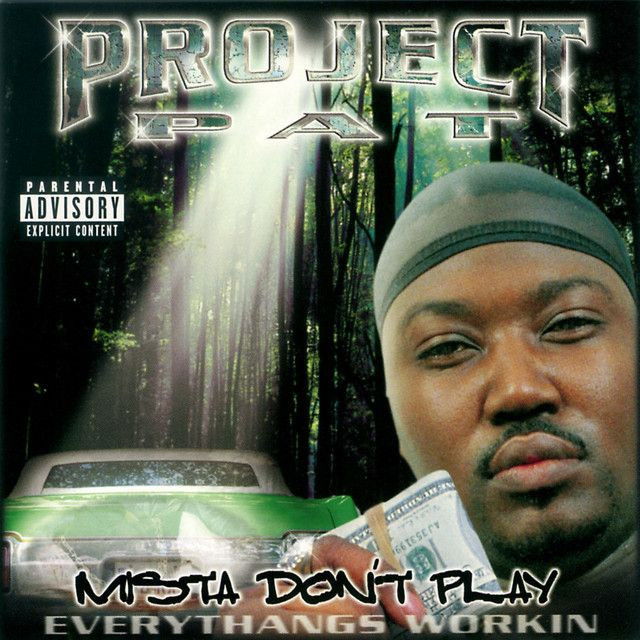
Why 'If You Ain't From My Hood' Hits So Hard
The meaning of If You Ain't From My Hood Project Pat, Juicy J, DJ Paul starts with a simple idea: trust is scarce, reputation matters, and outsiders are not welcome in a world shaped by betrayal. The song is aggressive on the surface, but beneath that anger is a survival code. They present the neighborhood not just as a place, but as a boundary line between the real and the fake.
"If You Ain't From My Hood" - Project Pat ft. Juicy J, DJ Paul
I-I-I-I-I don't know
If you ain't from my hood, you can get from 'round here
Loading lyrics...
Unable to load lyrics
We're unable to display the lyrics at this time. Please try again later.
Project Pat, Juicy J, and DJ Paul came out of Memphis rap, with Juicy J and DJ Paul building Three 6 Mafia into one of the South’s most influential groups, a fact widely documented by sources like the Rock & Roll Hall of Fame and GRAMMY. That context matters because this song fits the group’s long-running themes: paranoia, street credibility, loyalty, and regional pride.
The Hook Draws a Hard Border
The chorus says the song’s main point in blunt language. When they repeat If you ain't from my hood
, they are not making a polite local-pride statement. They are drawing a line around their space and warning anyone untrusted to stay out.
That same idea is reinforced by the repeated claim I don't know them
. In plain terms, they reject association with people who move suspiciously, gossip, or pretend to belong. The repetition matters. It sounds less like conversation and more like a rule being shouted over and over until nobody can miss it.
Watch the official If You Ain't From My Hood
music video
More Than Geography, It Is About Authenticity
On one level, the song is about defending a neighborhood identity. On another, it is about spotting impostors. Project Pat spends much of the first verse attacking people who falsely claim ties to his area, spread stories, or try to involve law enforcement.
When he warns others not to claim my hood
, the message is bigger than a street address. They treat the hood as earned identity. In this world, belonging comes from lived experience, shared risk, and history. People cannot simply say they are part of it; they have to prove it.
This is why the song keeps returning to fake toughness. They see enemies who talk loudly but fold under pressure. The diss is not only that these people are weak. It is that they perform a life they have not lived.
The Story Inside the Verses
The verses build a rough narrative of conflict and memory:
- They accuse rivals of gossiping, watching, and trying to set them up.
- They separate true affiliates from people who suddenly want local status.
- They contrast present power with past hardship.
- They end by restating that fake allies are as dangerous as open enemies.
A key moment comes when Project Pat brings up poverty and jail time. He recalls having little money, rough clothes, and time locked up. That detail gives the song weight. Their anger is not floating in empty bravado; it is tied to a past that they believe outsiders have not earned.
No fresh clothes
real poor
I was locked up
That brief stretch matters because it turns the song from pure threat into testimony. They are saying: this background made them who they are, and anyone copying the image without the pain is fraudulent.
Memphis Pride Drives the Meaning
The song also works as a regional defense anthem. They mention Memphis directly and frame themselves as part of a Southern rap identity that had to fight for respect. Juicy J and DJ Paul even use the track to assert status, with references to Three 6 as a major force in Southern hip-hop.
That matters historically. Three 6 Mafia helped shape the eerie, bass-heavy, chant-driven sound that later influenced crunk, trap, and much of modern rap, as noted by outlets like NPR and Pitchfork. So when they defend the hood, they are also defending a scene, a city, and a sound.
How the Production Sells the Threat
A big part of the meaning comes from how the record sounds. DJ Paul and Juicy J, credited here alongside Project Pat as writers through the names Paul Beauregard, Jordan Houston, and Patrick Houston, build the song around a cold, repetitive structure. The beat feels stripped down and confrontational rather than flashy.
That production choice supports the lyrics in three ways:
- Looped chanting makes the warning feel unavoidable.
- Heavy low end gives the record physical force.
- Sparse melody keeps the mood tense and suspicious.
Instead of softening the message, the beat traps the listener inside it. Their vocal delivery adds even more pressure. They sound less reflective than alert, like they are scanning the room while speaking.
Two Strong Readings of the Song
Interpretation: It Is a Street Code Anthem
The clearest reading is that this is a song about territorial loyalty and defense. Outsiders, informants, and false friends are all treated as threats. In this reading, the hook is a direct statement of social rules: trust only those with proven ties.
Interpretation: It Is Also About Fame Paranoia
There is another layer too. Once artists become known, more people want access, credit, or proximity. Some want to be seen with them; others may spread rumors or switch sides. From that angle, the song is not only about the block. It is also about how success makes it harder to know who is genuine.
The line about smiling in someone’s face while hiding bad intent points in that direction. They are not just guarding territory. They are guarding themselves from betrayal.
Why the Song Still Connects
Part of the reason this track lasts is that its emotional core is easy to grasp, even for listeners far from Memphis. Most people understand the feeling of protecting their circle, doubting people with mixed motives, and resenting those who copy struggle as style.
The song expresses that feeling in an extreme way, but the fear underneath is recognizable: if identity was built through pain, then fraud feels personal.
Final Take on the Message
The meaning of If You Ain't From My Hood Project Pat, Juicy J, DJ Paul is ultimately about boundaries, earned identity, and deep distrust. The song turns neighborhood pride into a larger statement about authenticity: do not fake history, do not borrow struggle, and do not expect welcome without proof.
Their delivery is harsh because the worldview is harsh. In their telling, survival depends on recognizing who belongs, who pretends, and who might turn on them.
Disclaimer: This interpretation is based on the lyrics, performance, and known artist context. As with any song, listeners may hear different meanings in different lines.







