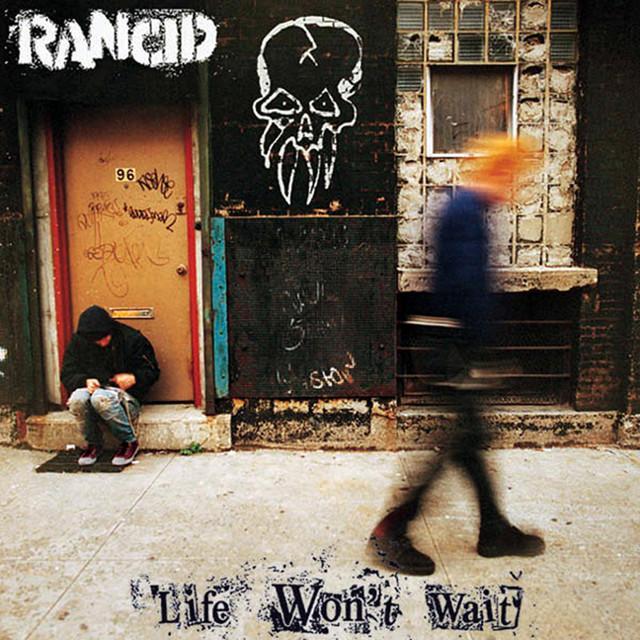
Why "Life Won't Wait" Hits So Hard
The meaning of Life Won't Wait Rancid comes down to a sharp warning: power thrives when people are scared, split apart, and too distracted to act. On the title track from Rancid's 1998 album Life Won't Wait, they turn that idea into a fast, tense protest song that says time is running out.
"Life Won't Wait" - Rancid
Religious self-prestigious keep the quest for the holy grail
The eye atop the pyramid is open and awake
Loading lyrics...
Unable to load lyrics
We're unable to display the lyrics at this time. Please try again later.
The track is part of Rancid's fourth studio album, released June 30, 1998, a record widely seen as their most stylistically ambitious, blending punk with ska, reggae, and dub. It was produced by Tim Armstrong, Lars Frederiksen, and the band, with the title song co-written by Armstrong, Frederiksen, Vic Ruggiero, and Buju Banton. The album itself was recorded partly in Kingston, Jamaica, and the title track features Buju Banton, which helps explain its looser reggae pulse and wider political lens.
A Protest Song About Division as Control
At its core, the song argues that ordinary people are pushed into conflict while larger systems benefit. The repeated line Division is the new world order
is the key. Before and after that hook, the verses stack up images of religion, war, surveillance, propaganda, and poverty.
Their point is not subtle: people are told what to fear, whom to blame, and what side to pick. Meanwhile, the weak and poor carry the cost. When the song mentions the force of war riding on them, it frames war as something planned above and suffered below.
Interpretation: They are not just attacking one government or one era. They seem to be describing a repeating pattern in modern politics: create enemies, deepen mistrust, and keep the public too divided to unite.
Watch the official Life Won't Wait
music video
How the Verses Build That Message
The opening is crowded with symbols. There are references to Jesus, pagans, the holy grail, and the eye on the pyramid. Rather than making one clear religious argument, the song seems to use these images to show how myth, faith, and power often get mixed together.
That matters because the song quickly moves from spiritual symbols to state violence. Lines about the weak and the poor
make the target plain. This is a class-conscious song. It says the people with the least power are the ones who bleed when leaders fight big man's wars
.
Later verses widen the frame even more. They suggest that the public conscience cannot stay asleep forever and hint at intelligence agencies, fear campaigns, and manipulated history. Even without naming one exact event, the song paints a world where official stories are suspect.
Life won't wait
Life won't wait
Oh, life won't wait
That brief refrain changes the song from analysis into command. It says awareness alone is not enough.
What the Chorus Really Means
The chorus is blunt because the band wants the listener to remember it. The phrase new world order
can sound conspiratorial in other contexts, but here it works more like punk shorthand. They use it to describe a social system built on separation.
They also direct that message outward: tell a sister and brother. That makes the chorus communal, not private. Instead of a lone singer complaining, the song imagines a network of people waking each other up.
Interpretation: The song's deepest anger is not only about war. It is about isolation. If division is the weapon, solidarity is the answer.
Why the Sound Matters as Much as the Words
One reason the meaning of Life Won't Wait Rancid lands so well is the arrangement. This is not straight-ahead street punk. The title track leans into reggae and dub, with a groove that feels heavy but not rushed. That musical choice matters.
Punk often delivers outrage by speeding everything up. Here, the band uses space and rhythm to make the warning feel broader and more global. The Jamaican influence on the album is well documented, and two songs, including this one, were recorded in Kingston. Buju Banton's presence adds authenticity and expands the song beyond a purely East Bay punk frame.
The result is a track that feels like a street-corner chant, a protest march, and a late-night political argument all at once. The bass carries pressure, the groove gives the lyrics room, and the vocal trade-offs make the message feel collective.
Artist Context Makes the Song Bigger
This track works even better when heard inside the album's context. Critics and later retrospectives often describe Life Won't Wait as Rancid's most worldly record, the one where they came closest to pushing beyond punk's usual borders. That fits the song exactly.
Lars Frederiksen once said their scope had broadened because they had traveled so much. That wider view shows here. Instead of focusing only on local scenes or personal survival, the song connects neighborhood pain to global power.
It also fits Rancid's long-running interest in working-class struggle and anti-authoritarian politics. What changes on this song is scale. They are still speaking for people at the bottom, but now they are doing it with a more international sound and a bigger political map.
Final Take on the Song's Meaning
So, what is the meaning of Life Won't Wait Rancid? It is a call to reject fear, question systems that profit from conflict, and act before time runs out. The song says division is manufactured, suffering is unequal, and silence helps the cycle continue.
That is why the title matters so much. Life does not pause while people sort out politics, pride, or ideology. The cost of delay is real.
Disclaimer: This interpretation is based on the song's lyrics, sound, and documented album context. As with any art, listeners may hear different meanings in it.








