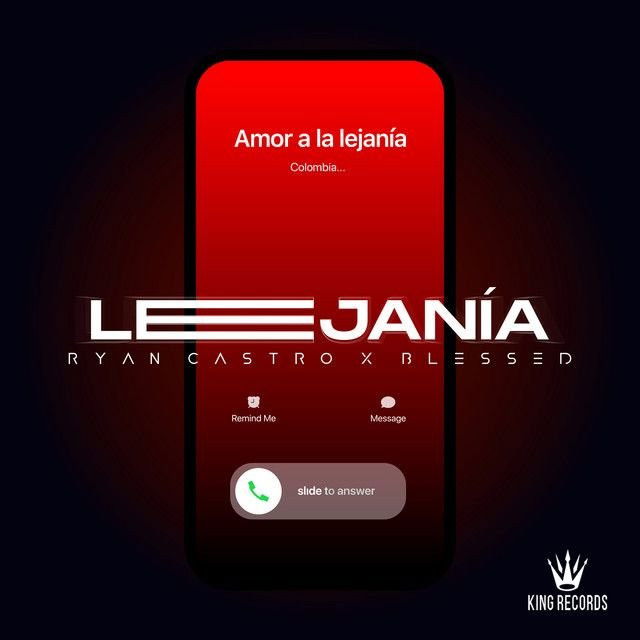
Why 'Lejanía' Hurts Even Through a Screen
Ryan Castro and Blessd build "Lejanía" around a simple problem: two people still feel emotionally tied, but distance has turned love into frustration. The meaning of Lejanía Ryan Castro, Blessd comes from that push and pull. They describe a bond that survives through calls, jealousy, memories, and social media, yet still feels incomplete because the physical relationship is gone.
"Lejanía" - Ryan Castro, Blessd
Solamente estoy (esto es pa' ti)
A ser cantante del ghetto (tú sabes quien)
Loading lyrics...
Unable to load lyrics
We're unable to display the lyrics at this time. Please try again later.
The song is not just about missing someone. It is about how modern connection can keep desire alive while making separation feel worse. FaceTime, Instagram, and late-night thoughts all become reminders that closeness is possible in theory, but not in real life.
A Long-Distance Love That Refuses to End
At its core, the track presents a narrator who cannot let go. Even after time apart, they still feel attached to the woman they address. The chorus makes that clear with the phrase amor en la lejanía
, which frames the whole song as a romance defined by distance rather than reunion.
That idea matters because the song never sounds fully resolved. Instead of acceptance, they circle around longing. When the singer admits te pienso
even after days without seeing her, the point is not just memory. It suggests obsession, habit, and emotional dependence.
Interpretation: the song treats distance as both proof of love and a trap. If the feeling were weak, it would fade. Because it remains strong, it keeps both people stuck.

Watch the official Lejanía
music video
Screens, Jealousy, and the New Shape of Heartbreak
One of the most interesting parts of the meaning of Lejanía Ryan Castro, Blessd is how digital life keeps the relationship active. The opening image of a FaceTime call shows that the connection is ongoing. They are not strangers. They still check in, question each other, and react emotionally.
That makes the jealousy in the song feel believable. A line about being called on FaceTime
is paired with confusion about why she is still possessive after so much time apart. This is a very current kind of heartbreak: the relationship is broken or weakened, but neither person has fully logged off emotionally.
The Instagram section pushes that idea further. He can see her posts, like them, and imagine closeness, but he cannot touch her or repair what is broken. Social media gives access without comfort. It feeds longing instead of healing.
What the Verses Reveal About the Relationship
The verses move between tenderness, regret, and ego. On one hand, there is real sadness. The narrator remembers warmth and intimacy and believes the connection was deeper than what she has now. On the other hand, there is pride in the way he compares himself to another man.
This mix is important. "Lejanía" is not a pure love song. It is also a wounded song. The speaker wants affection, but they also want confirmation that they still matter most. That is why the repeated desire to reconnect feels both romantic and possessive.
Si me llamas yo voyIn this brief moment, they present devotion as immediate and unconditional, showing how quickly distance could disappear emotionally, even if it remains real in daily life.
Interpretation: that promise may sound loyal, but it also reveals imbalance. The narrator seems ready to return before any real problem has been solved.
Blessd and Ryan Castro as Complementary Voices
Ryan Castro and Blessd come from Medellín’s hit-making urban scene, and both artists often mix melodic reggaetón with street-rooted directness. Their collaboration helps the song feel conversational rather than abstract. One voice leans into yearning; the other adds edge and restlessness.
The credited writers are Bryan Castro Sosa, Santiago Orrego Gallego, and Stiven Mesa Londoño, which matches the song’s dual feel: emotional, but still built for memorability. The hook is simple, repetitive, and easy to sing back, which mirrors the loop in the narrator’s mind. He keeps returning to the same feelings because he has not moved on.
How the Sound Carries the Message
Production-wise, "Lejanía" works because it does not overwhelm the subject. The beat sits in a smooth reggaetón lane, letting the melody do most of the emotional work. Instead of sounding explosive, the track feels steady and slightly hazy, which fits a story about absence and replayed thoughts.
That restraint matters. If the instrumental were too aggressive, the sadness would feel less believable. The softer melodic approach creates space for yearning, while the rhythm keeps the song from sinking completely into despair. In other words, they make heartbreak sound catchy.
For listeners in the United States who know Latin urban music, this balance is familiar: club-ready rhythm carrying private pain. That tension is one reason the song connects so easily.
The Song’s Biggest Themes
Several themes shape the meaning of Lejanía Ryan Castro, Blessd:
- Distance as emotional pressure: being apart intensifies every feeling.
- Digital intimacy: calls and social media simulate closeness without replacing it.
- Jealousy after separation: the bond remains active even when the relationship is unstable.
- Desire versus healing: they want contact more than closure.
- Romance mixed with control: tenderness and possessiveness sit side by side.
A phrase like no es saludable
is especially revealing because the song briefly becomes self-aware. They know this kind of love is damaging, but knowledge does not stop desire.
Final Take on "Lejanía"
What makes "Lejanía" effective is its honesty about half-ended love. Ryan Castro and Blessd do not describe a clean breakup or a happy reunion. They capture the messy middle, where two people still feel connected, still watch each other, and still imagine coming back, even when the relationship no longer feels stable.
That is the real meaning of Lejanía Ryan Castro, Blessd: distance does not always kill love. Sometimes it preserves it in an unhealthy form, turning memory, jealousy, and digital contact into a cycle that is hard to escape.
Disclaimer: This interpretation is based on the lyrics, performance, and available song context. As with any song, listeners may hear different meanings in the same lines.








