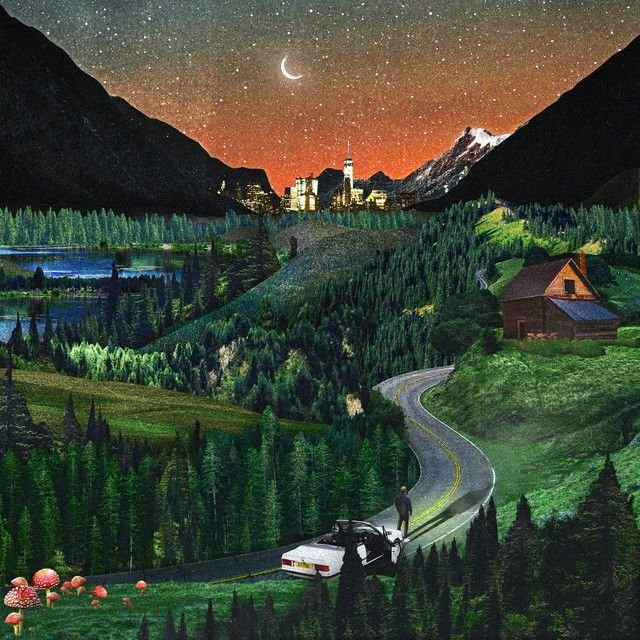
Traingazing by Sam Wills, Honey Mooncie
A quiet train, two strangers, and a rush of “what if.” That’s the heart of Traingazing, a duet that turns a single commute into a soft-focus daydream. For readers searching for the meaning of Traingazing Sam Wills, Honey Mooncie, this breakdown follows how imagery, arrangement, and point of view work together to build a tender fantasy—and why it resonates.
"Traingazing" - Sam Wills, Honey Mooncie
But still I'm filled with fascination
And as the platform falls away
Loading lyrics...
Unable to load lyrics
We're unable to display the lyrics at this time. Please try again later.
Strangers, Daydreams, and the Liminal Train Car
The song’s core idea is the beauty and ache of imagined connection. When the narrator admits Maybe I'll never know your name
, they open the door to fantasy in place of action. They picture a life with the person across from them, not because it’s likely, but because the setting invites it.
Trains are liminal spaces—between stops, between choices. The verses float in that space, where a glance can spiral into a full story. The music echoes this with a relaxed pocket and warm textures that feel like late afternoon light sliding over a window seat.

Watch the official Traingazing
music video
Who’s Talking, and What Do They Want?
The song uses first-person voice to address an unnamed stranger, and the second voice adds a mirror—two interior monologues in gentle conversation. Lines like I don't know who you are
underline the distance, while details such as on an empty train
heighten the intimacy of a shared, quiet car.
They want possibility without risk. Instead of speaking, they hold the idea of a future together in their heads. Interpretation: the singers aren’t chasing a person as much as they’re protecting a feeling—safety wrapped in romance.
A Moment Becomes a Movie
The narrative is simple and linear:
- A stranger inspires fascination.
- The train departs; imagination takes over.
- A chorus reframes the moment as an “alternate timeline.”
- The ride ends with the crush unsaid, but not unfelt.
The chorus is the hinge. It zooms out from the carriage to a life they’ll never share:
But maybe we, in another life
Could fall in love, have it all
And chase our daydreams
By placing this fantasy against the soft reality of the carriage, the song captures how people build whole worlds from a few seconds of eye contact.
Symbols on the Track: Trains, Platforms, Coffee
The platform suggests departure and the last chance to act. The train implies motion that can’t be paused; once the doors close, choices narrow. Coffee and sunrise sketch a soft, everyday intimacy—the kind of domestic scene we project when we like someone from afar.
Phrases like getting lost in thought
and lead my mind astray
show how quickly curiosity becomes narrative. Interpretation: the train is not only a setting; it’s a metaphor for time itself moving forward, carrying them past the moment when a simple hello could have changed everything.
How the Sound Mirrors the Motion
The arrangement glides like rail lines: mid-tempo drums, rounded bass, and pillowy keys that feel like a Rhodes or warm electric piano. The vocal blend is soft and breathy, with close harmonies that create a hush—like speaking under the hum of the carriage.
Production choices keep the fantasy grounded. There’s space in the mix, a restrained groove, and no big drop. That restraint serves the lyric; the music makes room for contemplation rather than climax. It’s the sonic version of watching scenery blur while your thoughts sharpen.
The Chorus’s Gentle Refrain
The refrain repeats the same emotional gamble: keep the fantasy, skip the risk. A small phrase like in another life
does a lot of work—it protects them from rejection while letting them touch hope. Interpretation: the chorus is a permission slip to feel deeply without changing anything in the real world.
Alternate Readings: Projection or Permission to Feel?
- Interpretation 1: It’s a portrait of modern city life, where proximity doesn’t equal connection. We ride together but stay strangers, so we invent kinder worlds.
- Interpretation 2: It’s about imaginative play as self-care. The crush is a safe spark that brightens a routine commute, even if nothing happens after the final stop.
Both readings fit because the song never forces a confession scene. The point is the inward turn, not the outcome.
Takeaway: Why This Quiet Crush Connects
Traingazing lingers because it treats small feelings with seriousness. By framing a silent moment as a complete story, it honors how private hopes can be both fragile and full.
In the end, they step off with the memory, not the number. The fantasy is intact, the risk avoided, and the listener is left holding that same tender maybe. As with all art, interpretation can vary; listeners may hear it differently.








