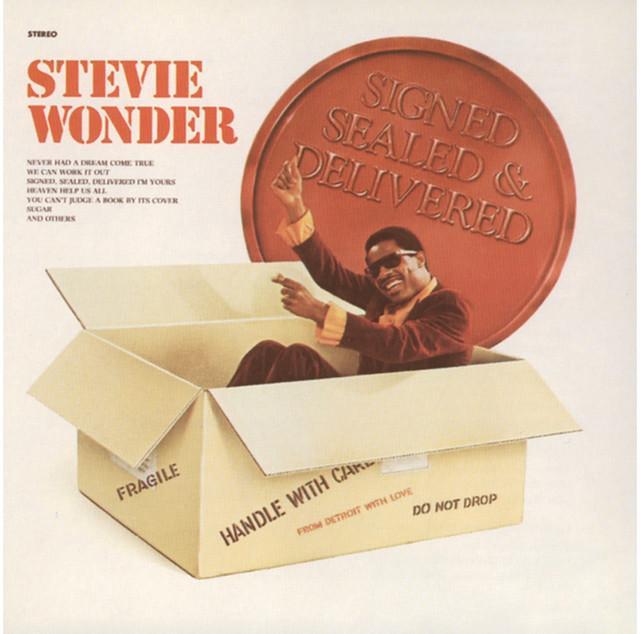
We Can Work It Out by Stevie Wonder
A cover that turns compromise into groove
The meaning of We Can Work It Out Stevie Wonder starts with a simple idea: a relationship is under stress, but it is not beyond repair. The singer is frustrated, even a little stubborn, yet they still believe honest effort can save the bond.
"We Can Work It Out" - Stevie Wonder
Do I have to keep on talking till I can't go on
While you see it your way
Loading lyrics...
Unable to load lyrics
We're unable to display the lyrics at this time. Please try again later.
Stevie Wonder did not write the song; it was written by Paul McCartney and John Lennon and first released by the Beatles in 1965. Wonder later recorded his version for Signed, Sealed & Delivered and issued it as a single in 1971. His cover reached No. 13 on the Billboard Hot 100 and No. 3 on the soul chart, showing how strongly his version connected with listeners.
What makes Wonder's recording special is that he shifts the song's center of gravity. The Beatles' version can feel like a tense conversation. Wonder's version still keeps that tension, but he adds bounce, body, and soul. The result is less like a private argument and more like a plea delivered through motion.
Watch the official We Can Work It Out
music video
The heart of the song: two people stuck in their own view
At the lyric level, the song is about a couple trapped in a familiar problem: each person wants to be understood first. The opening thought asks the other person to see things my way
, but it immediately admits that the other side is doing the same thing.
That is the key conflict. Both people believe they are being reasonable. Both think time is running out. The repeated hook, we can work it out
, sounds hopeful, but it also sounds urgent. It is not calm advice. It is a final push before the relationship slips away.
Interpretation: The song is not really about perfect agreement. It is about choosing dialogue over pride. Even when the singer sounds forceful, the deeper message is that love requires flexibility.
Why the verses feel tense
The verses are built on a back-and-forth pattern. One line argues for patience; the next line hints that the relationship may not survive. Phrases like think of what you're saying
show that the speaker feels misunderstood and maybe judged.
There is a subtle contradiction here. The singer asks for empathy, but they also speak with authority, almost as if they already know the answer. That tension gives the song its realism. In many arguments, people ask for peace while still trying to win.
A short section near the middle captures the warning underneath the song's optimism:
Life is very short
no timefor fighting, my friend
Even in this brief passage, the song turns from debate to perspective. It reminds the listener that ego is wasting precious time.
Stevie Wonder's voice changes the meaning
Wonder's performance matters as much as the words. Where the Beatles used close harmony and a lightly clipped pop-rock structure, Wonder brings a warmer but more physical style. He sings with conviction, and the rhythmic feel makes the plea sound active rather than reflective.
That choice changes how the message lands. In Wonder's hands, the song becomes less about polite negotiation and more about emotional urgency. When he leans into lines about being right or wrong, they do not sound like abstract philosophy. They sound lived-in.
His version was produced by Wonder himself, and contemporary reception noticed its energy. Cash Box called it a "spectacular dance track," a useful phrase because it points to the central twist of the cover: he makes conflict danceable without making it trivial.
How the production supports the theme
Rhythm, soul, and movement
The arrangement is crucial to the meaning of We Can Work It Out Stevie Wonder. The beat is firmer, funkier, and more outward-facing than the Beatles' original. That stronger groove suggests determination. Instead of sitting inside the argument, the song pushes through it.
The harmonica is especially important. Wonder was one of pop and soul's great harmonica players, and the instrument acts almost like another voice. It does not simply decorate the track. It sharpens the sense of urgency and release.
From folk-pop tension to soul insistence
The Beatles' 1965 recording is famous for its structural contrast, including the distinct middle section that John Lennon described as more impatient in tone. George Harrison also helped shape the arrangement idea on the original. Wonder keeps the song's emotional split, but he translates it into soul language.
That means the core message stays the same while the emotional emphasis changes:
- The Beatles version stresses conversation.
- Wonder's version stresses conviction.
- Both versions warn that love can fail if pride wins.
A broader reading of the song
On its surface, this is plainly a love song about a couple trying not to break apart. The lines about differing views, exhaustion, and possible separation all support that reading.
Interpretation: Still, the song can also be heard more broadly as a statement about conflict itself. The repeated push to work through disagreement can apply to friendships, families, and even social division. Some critics have linked the original song's mood to the mid-1960s climate of argument and unrest. Wonder's 1971 version arrives in a moment when soul music often carried emotional and social weight, so that wider reading feels natural, even if it is not the song's only meaning.
Why this cover lasts
Stevie Wonder's cover lasts because it keeps the original song's sharp idea but makes it feel new. He does not soften the disagreement. He turns it into motion, turning a debate into a groove and a warning into a singalong.
In the end, the song says that love survives when people stop keeping score long enough to listen. That is why the chorus remains so strong: it is hopeful, but not naive. It knows relationships can fail. It just refuses to give up too early.
For many listeners, that is the lasting meaning of We Can Work It Out Stevie Wonder: compromise is hard, pride is loud, and time is short.
Disclaimer: This interpretation blends documented song history with critical reading of the lyrics and performance. Meaning can vary from listener to listener.








