Why 'Ruler of Everything' Feels Bigger Than Pop
The meaning of Ruler of Everything Tally Hall often comes down to one big idea: human beings want control, but time keeps proving otherwise. That tension is what gives the song its strange power. It sounds playful, but underneath the humor and speed, it keeps circling mortality, ego, and the limits of understanding.
"Ruler of Everything" - Tally Hall
So he shot at the sun with a gun
Shot at the sun with a gun
Loading lyrics...
Unable to load lyrics
We're unable to display the lyrics at this time. Please try again later.
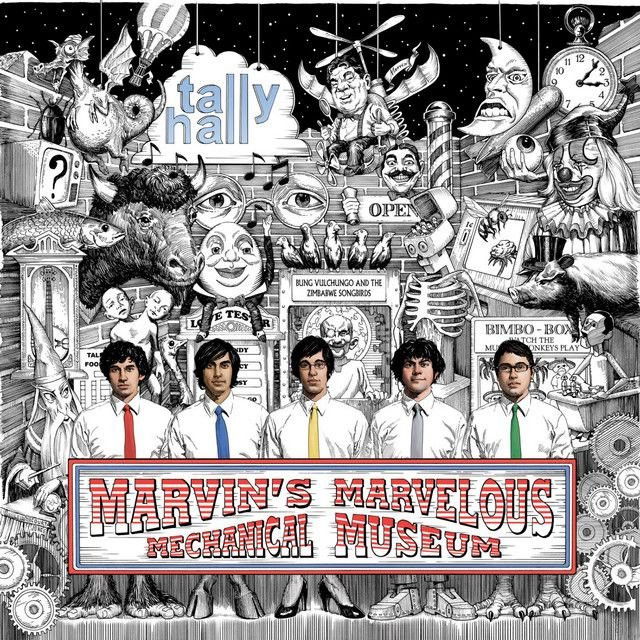
Tally Hall released the song on Marvin's Marvelous Mechanical Museum, the band’s 2005 debut album, later reissued in 2008. The group became known for art-pop songs that mixed rock, theater, and comedy into something hard to pin down. “Ruler of Everything” is one of their clearest examples of that style.
A Song About Time Wearing a Human Mask
On the surface, the lyrics jump from mythic images to everyday insecurity. A line about Juno shooting at the sun opens the song like a fable gone wrong. Then it moves into vanity, panic, performance, and a chorus about mechanical hands
ruling everything.
Interpretation: those hands seem to point to clock hands. That makes the title ironic. No person is really the ruler here. Time is.
That reading helps connect the song’s wild images. The speaker brags, performs, and judges, yet every boast sits beside decay and impermanence. Even when the voice sounds powerful, the song keeps hinting that power is temporary.

Watch the official Ruler of Everything
music video
How the Verses Turn Confidence Into Fear
One of the smartest things in the song is how quickly it shifts from swagger to collapse. The speaker asks, Do you like how I dance?
and piles on flashy details, almost like they are selling a persona. They sound desperate for approval.
A few lines later, that image cracks. The face can fall apart, the mirror does not confirm greatness, and identity starts to look like costume. The phrase facade is a scam
sums up that feeling in a blunt way. The song suggests that performance can hide anxiety, but not fix it.
Interpretation: this section can be heard as satire about ego. The speaker acts larger than life because they are afraid of how small and temporary life really is.
Juno, the Sun, and the Myth of Control
The opening image is one of the song’s most memorable. Juno is angry, feels betrayed, and lashes out at the sun. That action is impossible, which is the point. The song starts by showing someone trying to attack a force far beyond them.
That fits the rest of the track. Whether the target is fate, time, truth, or mortality, the speaker keeps running into something that cannot be mastered. The lyric about every end becoming another beginning adds a cycle to the song’s worldview. Life keeps moving. Human outrage changes very little.
A Compact Story Beat Map
- A figure rebels against a cosmic power.
- The song widens from one person to all human life.
- A boastful voice performs identity and status.
- Panic breaks through in rapid-fire language.
- The chorus reframes everything under time’s rule.
Why the Chorus Hits So Hard
The hook is simple enough to remember, but deep enough to haunt the rest of the song. When the track returns to ruler of everything
, it sounds less like a victory chant than a grim joke.
That is why the chorus matters. It takes all the verse-level chaos and gives it one center: people may talk big, but clocks keep moving. The repeated mention of endings reinforces that no amount of style, work, or self-myth can stop time.
Do you hear the clock stop
when you reach the end?
That short moment asks the song’s hardest question. The answer, implied by the next lines, is no. Time does not stop just because a person wants resolution.
Sound Design That Mirrors the Message
Musically, the track helps sell its ideas. It swings between bouncy pop, theatrical phrasing, and breathless speed. The arrangement feels almost mechanical in places, then suddenly human and messy in others.
That contrast matters. The tight rhythmic pulse resembles the order of a clock, while the vocals wobble between confidence and unraveling. The rapid section built around flibbity-jibbity-jibber-jabber
sounds comic, but it also feels like information overload. The mind is racing, trying to talk its way out of a truth it cannot beat.
This is one reason fans often hear the song as both funny and unsettling. Its production lets absurdity and dread live in the same room.
Artist Context Makes the Weirdness Make Sense
Tally Hall often wrote songs that sounded bright while carrying darker or more philosophical ideas. Their style blended pop hooks with surreal writing, which gave listeners room to read songs in more than one way. “Ruler of Everything” fits that approach perfectly: accessible on first listen, complicated after that.
The credited writers are Andrew Horowitz, Joe Hawley, Rob Cantor, Ross Federman, and Zubin Sedghi. That group dynamic also helps explain the song’s layered feel. It does not move in a straight line because it is built more like a collage of ideas than a diary entry.
The Best Way to Read the Ending
Near the end, the song lifts into an image of gliding through the sky, but it does not feel like pure freedom. It feels off-balance, almost cartoonish. Even escape sounds awkward.
Interpretation: the ending may suggest that humans keep searching for transcendence, yet they remain clumsy and finite. The song never fully resolves that problem. Instead, it smiles at the absurdity of being alive inside time.
For many listeners, that is the real meaning of "Ruler of Everything" by Tally Hall. It is not just a quirky song about random images. It is a clever, catchy meditation on how people build identities, chase control, and finally meet the one ruler they cannot outtalk.
Disclaimer: This interpretation mixes widely accepted themes with informed reading of the lyrics and sound. Because the song is intentionally surreal, other interpretations are possible.









