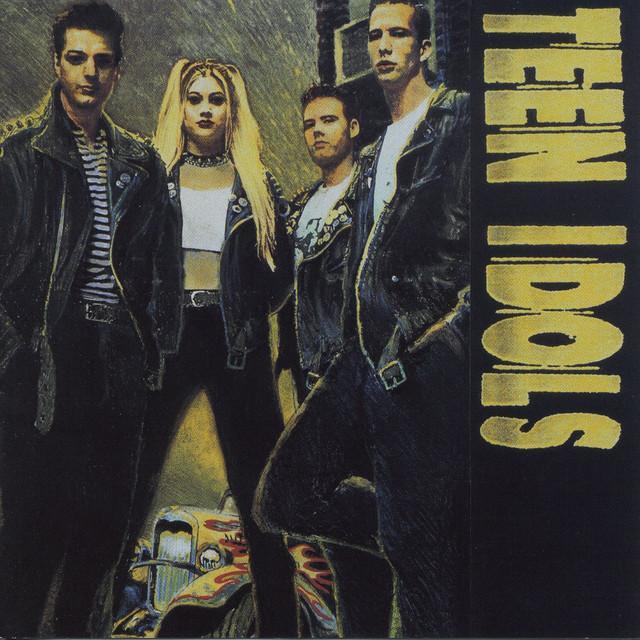
Why 'Come Dance with Me' Feels So Hostile
The meaning of Come Dance with Me Teen Idols is not sweet, romantic, or even especially social. It is a punk song that turns the idea of dancing into a form of provocation. Instead of inviting closeness, the speaker uses movement, noise, and aggression to blow off boredom and anger.
"Come Dance with Me" - Teen Idols
I'm watchin' a band that's way too slow
I'm feelin' fine from beer and whine
Loading lyrics...
Unable to load lyrics
We're unable to display the lyrics at this time. Please try again later.
That contrast is what gives the track its bite. A title that sounds old-fashioned and charming gets dropped into a messy club scene, where irritation and reckless energy take over.
A Dance Song With a Sneer
At its core, the song is about a person standing in a live-music space and feeling trapped in the wrong mood, the wrong crowd, and the wrong tempo. Early lines paint that picture fast: they are at a punk show, but the band is way too slow
. That complaint matters because it frames the entire song as a reaction against boredom.
The speaker is not searching for connection. They are searching for stimulation. The repeated invitation, Come dance with me
, sounds less like flirtation and more like a dare.
Interpretation: the song treats dancing as a rough, chaotic outlet. In punk culture, physical motion on the floor can mean release, confrontation, and anti-polished fun. Here, that feeling gets pushed to an ugly extreme.

Watch the official Come Dance with Me
music video
What the Narrator Wants
The character in the song sounds intoxicated, restless, and eager to turn inner chaos into outer action. When they say the place is a waste of my time
, the room becomes an enemy. The solution is not to leave quietly. It is to force some kind of explosion.
That is why the chorus lands so hard. The phrase lost my mind
does more than describe excitement. It tells listeners the speaker is crossing into a reckless state where self-control no longer matters.
Not romance, but confrontation
A normal dance song says, join me. This one says, keep up with my damage. Even the profanity in the refrain turns the hook into a hostile joke. The invitation and the insult happen at the same time.
How the Verses Build the Scene
The song’s story is simple but effective:
- The speaker is stuck at a disappointing show.
- Alcohol and frustration feed their mood.
- They decide to create their own action.
- “Dancing” turns into rough physical contact.
That shift is the point. In the second verse, the speaker becomes more openly threatening, describing grabbing a partner and throwing them around. The word getting obscene
signals that the song wants to be vulgar and transgressive, which fits punk’s long history of testing limits.
Interpretation: this is likely less a realistic confession than a performance of scene chaos. Punk songs often use exaggeration, black humor, and shock language to capture a feeling rather than offer a moral lesson.
Why the Hook Feels So Ironic
The smartest thing about the track may be its title and chorus. “Come Dance with Me” echoes the language of older pop standards, including the well-known Sammy Cahn and Jimmy Van Heusen song of the same name, written in 1959 and popularized by Frank Sinatra. Cahn and Van Heusen are widely documented as major songwriters from that era, closely tied to the polished world of classic American pop and Sinatra recordings.
That cultural echo matters. The phrase carries baggage from a cleaner, smoother musical tradition. Pop history often sold youth-friendly images through carefully managed stars, a pattern seen across decades of “teen idol” culture, from television-era heartthrobs to MTV and social-media stars. Broad histories of teen-idol marketing describe how acts are often packaged to seem appealing and non-threatening to young audiences.
Teen Idols flip that script here. They take a phrase associated with elegance and turn it into something rude, unstable, and abrasive.
Come dance with me
Fuck you!
Come dance with me
That tiny exchange captures the whole song. It offers invitation and rejection in one breath.
How the Sound Carries the Meaning
Even without a complex plot, the production idea is easy to imagine from the lyrics alone: fast, blunt, and stripped down. The song belongs to an alternative or punk mode, where raw guitars, shouted vocals, and a hard-driving rhythm can make a simple lyric feel more dangerous.
That matters for meaning. If the band at the show is too slow, then the song itself becomes the correction. It gives the speed and violence the speaker wants. In that sense, the track is self-solving: the narrator hates dead energy, so the music creates a louder, meaner substitute.
Performance as attitude
The likely vocal approach is as important as the words. This is not the kind of lyric that works sung sweetly. It needs a sneer, bark, or drunken shout. That delivery would turn the chorus into a group chant, making listeners feel the thrill of release while also exposing the ugliness behind it.
The Bigger Themes Beneath the Chaos
The meaning of Come Dance with Me Teen Idols works on a few levels:
- Boredom turning violent: the speaker cannot stand passive entertainment.
- Punk as release: movement becomes a way to break social order.
- Irony as weapon: a polite phrase gets turned into a threat.
- Loss of control: the song presents recklessness as both exciting and ugly.
There is also a scene-specific angle here. Punk has often defined itself against slick professionalism, safe behavior, and polished mainstream culture. This song acts out that rejection in miniature. It hears something too slow, too dull, too lifeless, and answers with chaos.
Final Read on the Song
In the end, this is a short song with a blunt mission: turn frustration into impact. Its “dance” is not about grace or romance. It is about collision, mockery, and the thrill of a mind tipping past restraint.
That is why the song sticks. It takes a familiar invitation and makes it sound dangerous.
Disclaimer: This interpretation is based on the lyrics provided and general musical context. As with many punk songs, exaggeration, persona, and irony may shape the meaning as much as literal storytelling.







