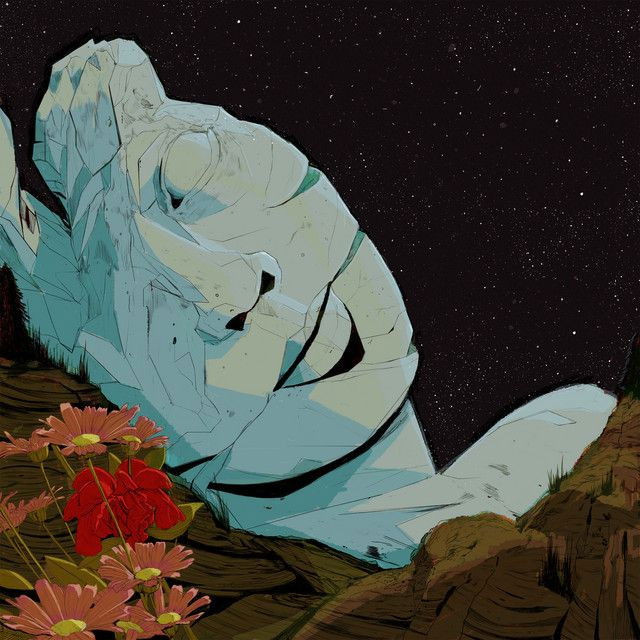
Why "Falling Down The Stairs Of Your Smile" Feels Dizzy
The meaning of Falling Down The Stairs Of Your Smile The New Pornographers starts with a contradiction. The song sounds bright, fast, and catchy, but its words are full of unease. They build a world where glamour looks cheap, success feels unstable, and attraction can make a person lose their footing.
"Falling Down The Stairs Of Your Smile" - The New Pornographers
That is not like a star
And it looked good on paper
Loading lyrics...
Unable to load lyrics
We're unable to display the lyrics at this time. Please try again later.
That tension is the key to the track. Written by A.C. Newman and performed by The New Pornographers, the song turns a romantic image into something slippery. A smile should feel safe. Here, it becomes a staircase, and the speaker tumbles down it.
The Main Idea Hiding Inside the Hook
At its core, the song seems to be about being overwhelmed by someone’s charm while also seeing the false surfaces around them. The title phrase falling down the stairs
mixes comedy, danger, and desire. It suggests a sudden loss of control.
Interpretation: they are describing infatuation as a physical accident. The person at the center is magnetic, but that pull does not lead to peace. It leads to imbalance, vertigo, and a kind of emotional bruising.
The song keeps tying attraction to status and image. The line about room at the top
sounds like ambition, but the next thought undercuts it. The view is cheap, and the height causes a drop. In other words, what looks glamorous from a distance may be hollow once someone gets there.

Watch the official Falling Down The Stairs Of Your Smile
music video
Stardom, Imitation, and a World of Copies
The opening verse introduces a person who looks like a creator of stars, yet is not like a star
. That is a sharp distinction. The song is not praising real brilliance. It is looking at packaging, imitation, and industry polish.
This fits The New Pornographers’ long-running interest in pop itself: how it dazzles, how it sells dreams, and how it can feel both sincere and artificial at once. The lyric about things looking good on paper suggests plans, branding, or idealized relationships that fail in real life.
The verses pile up emptiness on purpose
Midway through, the song uses a list of mismatches: too much dress-up, not enough play; too many speeches, not enough music; too many wrecks, not enough rescue. The point is clear even without quoting it all. The world of the song is crowded with performance and shortage at the same time.
Too many dress ups, not enough child's play
Too many stopped clocks, not enough time saved
That brief section works like a diagnosis. Adult life has become overdesigned and underlived. There is costume, noise, and posture, but not enough innocence, time, or feeling.
What the Chorus Means Emotionally
The chorus is where the song’s emotional logic becomes vivid. The image of a vertigo drop
turns love into altitude sickness. Attraction is not steady; it tilts the skyline. The speaker trips, flies for a moment, then falls.
That little switch from falling to flying matters. It captures the rush of desire. They are not only hurt by this person. They are briefly lifted by them too. That is why the chorus lands so hard: it admits that pleasure and danger are mixed together.
Interpretation: the song is not simply about heartbreak. It is about seduction by beauty, charisma, or fantasy, even when the speaker knows better.
Smile vs. Love: Why the Song Changes One Word
Near the end, the title phrase shifts from smile to love. That is a small change with a big effect. A smile is surface. Love is deeper, or at least claims to be. By repeating both versions, the song asks whether there is any real difference between appearance and feeling in this relationship.
If they fall down the stairs of a smile, they are undone by charm. If they fall down the stairs of love, they are undone by what that charm becomes. The song never fully separates the two.
How the Sound Carries the Meaning
The New Pornographers are known for power-pop that feels huge, melodic, and slightly chaotic, and this track uses that style well. Billboard Canada noted that when Neko Case takes the lead and the guitars surge in, the result is “viscerally thrilling.” That description matches the song’s emotional design. The arrangement does not merely decorate the lyrics; it enacts them.
The beat pushes forward, the guitars brighten the edges, and the vocals make the fall feel exciting instead of purely sad. That is important. If the song were slower or darker, it might sound like simple regret. Instead, it sounds like someone getting swept up again even while recognizing the trap.
Artist Context Helps Explain the Song
The New Pornographers emerged from Vancouver and have long been described as a supergroup, with A.C. Newman, Neko Case, and Dan Bejar among the core creative forces. Newman wrote this song, and their catalog often blends clever wordplay with big pop architecture. That history matters because this track does not read like a diary confession. It reads like crafted pop poetry.
So when the song talks about lookalikes, design, and replacement, it may also reflect a wider anxiety about fame, trend cycles, and identity inside pop culture. Interpretation: they may be using romance as the doorway into a bigger idea about modern life, where everything can be copied and sold.
Final Reading: A Beautiful Loss of Balance
The best way to hear the meaning of Falling Down The Stairs Of Your Smile The New Pornographers is as a song about unstable attraction in an artificial world. Its images of stars, copies, height, and falling all point to the same problem: beauty can pull a person in even when it is shallow or dangerous.
That is why the song feels so alive. It understands that people do not only fall for what is good for them. Sometimes they fall for what glitters, what sways, and what makes the skyline go crooked.
Disclaimer: This interpretation is based on the released lyrics, known credits, and public reporting on the song’s performance context. As with most art, other readings are possible.








