Why “Complexity” Hurts So Good
The meaning of Complexity The Roots, Jill Scott comes down to one hard truth: love can feel deep, real, and still be exhausting. In this song, they present a relationship where chemistry is strong, but emotional balance is weak. One person is present in body, yet not fully present in mind, and that gap turns affection into confusion.
"Complexity" - The Roots ft. Jill Scott
I've been wondering about the complexity
Of what we have it shouldn't be
Loading lyrics...
Unable to load lyrics
We're unable to display the lyrics at this time. Please try again later.
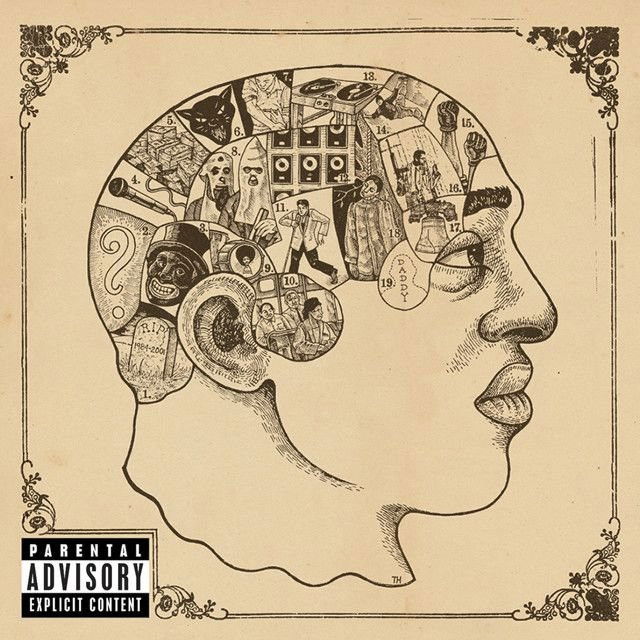
Released on Phrenology, The Roots’ 2002 album, “Complexity” sits inside a project known for blending hip-hop, soul, and experimental textures. That matters because the song itself sounds like emotional push and pull. Jill Scott’s chorus softens the edges, while Black Thought’s verses map out the stress of trying to love someone who keeps shifting.
The Heart of the Song Is Emotional Mismatch
At its core, the song is about two people who care for each other but cannot stay aligned. The chorus circles around the word complexity
to show that the problem is not a lack of feeling. It is the opposite. There is so much feeling that the relationship becomes tangled.
Black Thought makes that tension plain early on when he questions whether a couple can reach peace if one person is there physically but not mentally. That idea gives the whole track its center. The relationship is not empty; it is unstable.
Interpretation: the song argues that romance becomes painful when desire and commitment move at different speeds. They may want each other, but they are not building the same thing at the same time.

Watch the official Complexity
music video
Black Thought’s Verses Tell a Story of Attachment
The first verse shows why it is so hard for the speaker to walk away. He describes seeing this person everywhere, almost as if attraction has rewritten his vision. A short phrase like your likeness
suggests that memory and desire keep replacing the outside world.
That section also shows how fast the mood changes. One minute things are calm, the next they are irritating and fragile. He describes being on good terms and then suddenly on his last nerves
. In simple terms, the song captures a relationship that swings between comfort and friction.
There is also a bodily quality to the writing. He talks about stress through aches, tight shoes, and heart strings being pulled. Those details matter because they turn emotional confusion into something physical. Love here is not abstract. It lives in the nerves.
The Chorus Makes the Conflict Feel Circular
Jill Scott’s hook is brief, but it does a lot. When she keeps returning to the idea that it shouldn’t be
this hard, she voices the frustration many people feel in uneven relationships. If two people clearly connect, why does every step forward lead to another problem?
That repetition matters. Rather than solving the issue, the chorus keeps reopening it. The song feels trapped in a loop, which mirrors an on-and-off bond that never fully breaks and never fully settles.
“I’ve been wondering about the complexity
Of what we have it shouldn’t be
More
Just can’t see”
Even in this short refrain, the emotional fog is clear. They know something is wrong, but they cannot fully name it or fix it.
A Love Triangle, or Just Bad Timing?
The second verse widens the story. There is a mention of another boyfriend, which adds pressure and possible jealousy. But the song does not become a simple rivalry story. Instead, it stays focused on mixed signals, crossed communication, and the need for space.
Black Thought suggests that maybe their signal’s getting crossed
. That phrase is important because it frames the conflict less as betrayal and more as misalignment. They may care deeply, but they are receiving each other badly.
Interpretation: this verse can be heard in two ways:
- as a literal romantic triangle
- as an unstable situationship where boundaries were never clear
Either reading fits the song’s bigger theme: uncertainty is its own form of pain.
The Final Verse Adds Hope Without Removing Doubt
The last verse shifts tone. Instead of focusing only on conflict, the speaker explains his loyalty. He remembers being shy, wanting a real partner, and believing he found that person here. He promises care, time, and effort.
This matters because it stops the song from sounding bitter. He is frustrated, but he is not cold. He still believes the relationship might work if both people face their doubts honestly.
That hope gives “Complexity” its emotional richness. It is not a breakup anthem and not a love song in the easy sense either. It lives in the middle, where commitment and weariness exist together.
How the Music Carries the Meaning
“Complexity” features Jill Scott and appears on Phrenology, the Roots album released on November 26, 2002. The track is credited to Ahmir Thompson, Leonard Hubbard, Tariq Trotter, Kamal Gray, Jill Scott, and Omar Edwards, and it was produced by The Grand Wizzards with Questlove and Omar the Scholar as co-producers, according to the album’s documented credits and personnel on Wikipedia.
The sound supports the lyrics beautifully. The Roots were known for live-band hip-hop, and Phrenology pushed further into neo-soul and experimental rap. Here, the groove feels smooth enough to suggest intimacy, but the rhythm also has a subtle restlessness. Jill Scott’s vocal brings warmth and patience, while Black Thought’s delivery stays controlled, observant, and slightly worn down.
That contrast is the song’s secret. The music sounds seductive, but the words describe strain. So listeners feel the same contradiction the couple feels.
Why the Song Still Connects
Part of the meaning of Complexity The Roots, Jill Scott is that adult relationships are often messy in ways pop songs oversimplify. This track does not offer a villain or an easy lesson. It recognizes that two decent people can still hurt each other through inconsistency, poor timing, and emotional half-presence.
It also fits Phrenology well. Critics praised the album’s musical ambition and layered writing, and “Complexity” brings that ambition into a personal setting. Instead of talking about social systems, it shows confusion at the level of one bond, one voice, one repeating question.
Final takeaway
“Complexity” is about loving someone who feels right and difficult at the same time. The Roots and Jill Scott turn that contradiction into a song that is tender, frustrated, and very human.
Interpretation note: song meaning is never completely fixed, and this reading is an informed interpretation based on the lyrics, credits, and album context.








