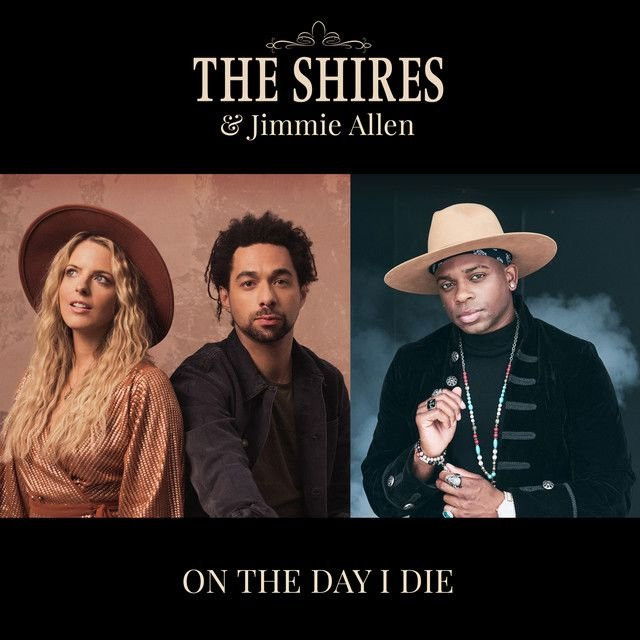
Why 'On the Day I Die' Feels So Life-Affirming
The meaning of On the Day I Die The Shires, Jimmie Allen starts with a surprise: this is a song about death that mostly feels like a song about living well. Instead of asking for mourning, the narrator asks for movement, music, and memory. The title sounds heavy, but the message is gentle.
"On the Day I Die" - The Shires, Jimmie Allen
You better dance, don't cry
Baby, I'll be leaving on a high
Loading lyrics...
Unable to load lyrics
We're unable to display the lyrics at this time. Please try again later.
The duet turns a hard subject into something warm and human. They frame loss not as the end of love, but as a test of how fully that love was shared while both people were still here.
A Farewell Song That Refuses Despair
At its core, the song is about preparing a loved one for grief by softening it with gratitude. The central request is simple: when death eventually comes, do not let sorrow erase joy. That idea appears in the short line dance, don't cry
, which acts like the song's emotional compass.
This does not mean the song denies pain. Instead, it argues that the best response to deep love is honest remembrance. The narrator wants their partner to remember the good years, the rituals they shared, and the way music held their relationship together.
Interpretation: The song suggests that real devotion includes planning for absence. Saying these things out loud is an act of care, not gloom.

Watch the official On the Day I Die
music video
Who They Are Singing To
The song speaks directly to a romantic partner. That becomes clear when the narrator says you and I
were the thing they got right. In plain terms, the relationship is presented as the greatest success of their life.
There is also urgency in the verse about leaving nothing unsaid. The narrator does not want love to be assumed; they want it spoken clearly now. That gives the song a present-tense tenderness. Even while imagining a future death, they keep pulling the listener back to the value of this moment.
Love Said Before It Is Too Late
One of the song's strongest ideas is that people should not wait for a crisis to express what matters. The narrator openly says they cannot depend on hope alone. They want their partner to hear the truth while they can still hold hands and share a slow dance.
That choice makes the song less like a eulogy and more like a vow renewed in advance.
The Story Hidden Inside the Verses
The lyrics follow a clear emotional timeline:
- The narrator imagines their death and asks for celebration instead of collapse.
- They link memory to specific shared habits, like taking the old car out and turning music up.
- They pause to say the most important thing directly: loving this person gave life its meaning.
- They return to the present and insist those feelings should be spoken now, not guessed later.
The image of the old car
matters because it is ordinary. This is not grand poetry about heaven first; it is a concrete object from daily life. That grounded detail makes the emotion believable.
Why Cars, Roads, and Songs Matter So Much
Several recurring motifs carry the song's meaning.
Motion as a Sign of Survival
When the narrator imagines a drive with the windows down and the stereo loud, they are really imagining grief in motion. The partner should keep going. Even getting lost or taking the wrong road becomes a loving tribute, because those imperfect moments reflect the life they shared.
Music as Memory
The instruction to play it loud all night
gives music a special role. Songs become a bridge between presence and absence. What cannot be physically held can still be heard, sung, and felt.
Height and Heaven
The brief phrase up above you
introduces a spiritual note. It is not developed into a detailed religious statement. Instead, it works as reassurance: love continues in some form beyond visible life.
Interpretation: Listeners may hear this as faith, metaphor, or simply emotional comfort.
How the Chorus Changes the Entire Song
The chorus is where the emotional thesis becomes unmistakable. It says that if the narrator did one thing right, it was this relationship. That is a huge claim, and it gives the song its heart.
Because of that line, every image in the verses starts to read differently. The car, the dancing, the late-night music, even the request not to cry too long all become proof that love was not abstract. It was lived.
This is also where the duet format matters most. The presence of The Shires and Jimmie Allen gives the song a conversational warmth. Rather than sounding like one person lecturing from beyond the grave, it feels like a shared understanding built between two people.
How the Sound Supports the Message
The production style is in step with contemporary country-pop: open-hearted vocals, a strong singalong chorus, and instrumentation that favors warmth over darkness. Even without unpacking every studio detail, listeners can hear how the arrangement avoids funeral heaviness.
Instead, the melody lifts at the key emotional moments. That upward feeling mirrors the lyric idea of leaving on a high
. The result is a song that treats mortality seriously without sounding defeated.
For artists like The Shires and Jimmie Allen, that blend of country storytelling and pop accessibility makes sense. Their vocal styles help the track land as intimate but broad enough for communal listening.
Final Take on the Song's Meaning
The meaning of On the Day I Die The Shires, Jimmie Allen is not really about dying well alone. It is about loving so clearly that, when loss finally comes, the surviving person still has joy to hold onto. The song asks them to remember through motion, music, and gratitude instead of silence.
In that way, it becomes a gentle challenge: say what matters now, cherish ordinary rituals, and let love be the thing that outlives fear.
Disclaimer: This interpretation is based on the song's lyrics, performance, and musical framing. As with any song, individual listeners may hear meanings that differ from this reading.








