
What 'Your Daddy Don’t Know' Is Really Saying
The meaning of Your Daddy Don't Know Toronto starts with a hook that sounds playful, but the song works because it also feels a little risky. Released in 1982 on Get It on Credit, the track became Toronto’s biggest hit, reaching No. 5 in Canada and No. 77 on the U.S. Billboard chart, according to widely cited chart histories. It was written by Geoffrey Iwamoto and Michael Roth and produced by Steve Smith.
"Your Daddy Don't Know" - Toronto
You come down fast as lightning
Crossing the stage
Loading lyrics...
Unable to load lyrics
We're unable to display the lyrics at this time. Please try again later.
At the center of the song is a scene of excitement, secrecy, and performance. Someone bursts into view, the room wakes up, and everybody senses that something bold is about to happen. The lyric never fully explains the situation, which is why listeners have kept debating it for decades.
The Core Idea Behind the Hook
On the surface, the song describes a woman entering a charged nighttime space and taking control of it. The opening motion is fast and dramatic, with the image of coming down fast as lightning
. That phrase does not just describe movement; it creates instant intensity.
Then the chorus shifts the song into gossip and suspense. The repeated line Your daddy don't know
suggests hidden behavior and a split between public order and private desire. The father figure in the lyric stands for authority, rules, or maybe just the person left in the dark.
Interpretation: The song is less about one literal family than about forbidden freedom. It turns secrecy into a thrill.
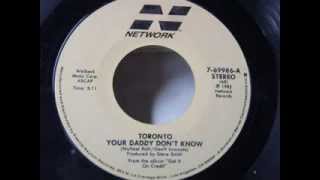
Watch the official Your Daddy Don't Know
music video
A Story About Performance, Not Just Romance
One reason the track remains interesting is that its verses sound like a stage entrance. The lyric mentions crossing the stage
, which points to show business language more than ordinary flirting. That is why many listeners have heard the song as describing a dancer or stripper rather than simply a cheating spouse.
That reading is not confirmed in the lyric, but it is supported by the song’s imagery: entrance, crowd energy, learned steps, and physical command. The woman in the song seems to know exactly how to work a room.
Once you learn the steps
it's something you'll never forget
Those lines can be read literally as dance instruction. They can also suggest initiation into adult experience: once someone enters this world of desire, temptation, or nightlife, they cannot really go back to innocence.
Why the Chorus Feels So Sharp
The chorus is catchy because it sounds almost teasing, but its emotional effect is sharper than that. The song pairs pleasure with betrayal. While the groove pushes forward, the lyric hints that somebody is being fooled.
The mention of what your mama's gonna do
makes the mother figure the force of surprise and rebellion. She is not passive. She is the one with a plan, and the song builds tension by keeping that plan just offscreen.
Interpretation: This is why the chorus sticks. It turns family roles upside down. Instead of the father holding power, he becomes the one who does not know. The mother becomes the unpredictable center of the night.
Sound, Tempo, and the Feeling of Danger
Musically, the song sits between hard rock and pop rock, a blend often noted in reference works. That balance matters. The guitars and drums give it punch, while the chorus is built for sing-along appeal.
The production helps sell the lyric’s tension. The beat feels urgent rather than dreamy. The repeated command shake it up
acts like both dance instruction and emotional ignition. It pushes the song away from storytelling alone and into bodily reaction.
Toronto were known for muscular rock songs, and this track uses that energy in a very commercial way. The result is clean, bright, and immediate. Even listeners who do not focus on the words can feel the message: something exciting and possibly reckless is happening right now.
Context From Toronto’s Career
The song holds a special place in Toronto’s catalog because it was their biggest commercial success and later appeared on their Greatest Hits collection. It was also nominated at the 1983 Juno Awards in major categories tied to sales and songwriting. That success matters when thinking about meaning, because the song clearly connected beyond Canada.
It also had a life in pop culture, including use in a Labatt Blue commercial, a later cover by the New Pornographers featuring Neko Case, and even a lip-sync performance on Canada’s Drag Race: Canada vs. the World. Those later uses highlight what the original always had: campy fun, glam attitude, and a little scandal.
An interesting detail from the song’s history is that keyboardist Scott Kreyer reportedly said he did not know exactly what it was about. That uncertainty actually fits the song well. Its power comes from suggestion, not explanation.
Two Strong Readings of the Song
There are two main ways to hear the meaning of Your Daddy Don't Know Toronto:
Reading One: A nightlife performance song
In this version, the lyric is about a performer commanding a stage and thrilling a crowd. The family terms become a cheeky way of framing sexual tension and social judgment.
Reading Two: A cheating-and-secrecy song
In this reading, the song is about a wife planning to deceive her husband. The father and mother figures are literal enough to make the hook sting. The excitement then comes from forbidden behavior.
Both readings work because the song keeps its details broad. It gives listeners just enough plot to feel the danger, but not enough to lock the story down.
Why It Still Connects
The song lasts because it mixes three things very well:
- A huge, memorable chorus
- Ambiguity that invites interpretation
- A sound that turns tension into fun
That mix helps explain why people still revisit it. They do not need a complete plot. They just need the feeling of a secret about to break open.
Final Take on the Meaning
The meaning of Your Daddy Don't Know Toronto is about hidden desire turned into pop-rock theater. Whether listeners hear a stage performance, a planned betrayal, or a broader act of female rebellion, the song presents secrecy as power and excitement as spectacle.
That is why the track still lands. It is catchy on the outside, but underneath it is built on instability: someone is watching, someone is acting, and someone else has no idea.
Disclaimer: This interpretation is based on the released lyrics, the song’s musical presentation, and published background. As with many pop songs, some meanings remain open to listener interpretation.







