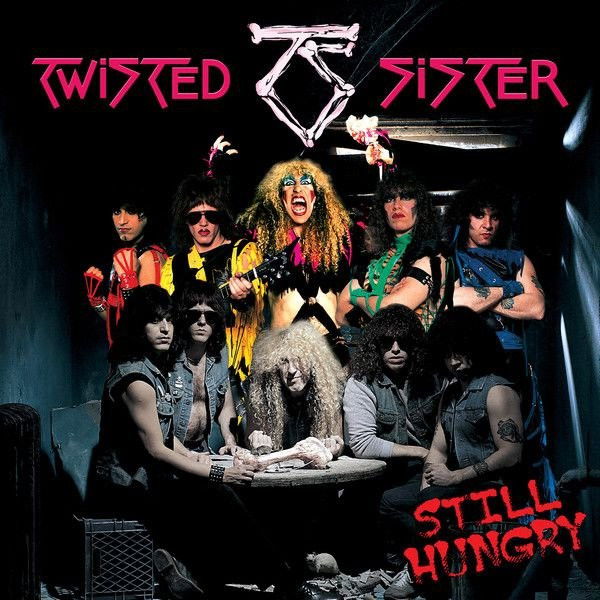
Why “S.M.F.” Became Twisted Sister’s Fan Anthem
The meaning of S.M.F. Twisted Sister starts with a simple idea: this is a song for outsiders who find strength in each other. On the surface, it sounds loud, rude, and confrontational. Underneath, it is really about loyalty, identity, and the thrill of joining a crowd that finally feels like home.
"S.M.F." - Twisted Sister
Separate from the others, failing all their tests
Can't they see you're different, so hungry and so lean
Loading lyrics...
Unable to load lyrics
We're unable to display the lyrics at this time. Please try again later.
Twisted Sister released “S.M.F.” on Stay Hungry in 1984, the same album that carried them into the mainstream with “We’re Not Gonna Take It” and “I Wanna Rock.” According to Songfacts, Dee Snider described it as a song for the band’s real longtime supporters, especially the fans who were there before the MTV breakthrough. That context matters: they were not writing a radio-friendly single. They were saluting the people who built the scene with them.
The Core Message Hiding Behind the Shock
At heart, the song tells alienated listeners that being different is not a flaw. The opening lines frame the listener as the rejected kid, the one treated like a failure or oddball. Short phrases like black sheep of the family
and metal machine
turn that rejection into a badge of honor.
That shift is the key to the song’s meaning. What begins as social judgment becomes self-definition. The people on the outside are not broken; they are simply refusing to fit into someone else’s rules.
Interpretation: The song’s insult-heavy style works like a defense mechanism. Twisted Sister take language meant to shame and flip it into group pride. Instead of asking for approval, they make approval irrelevant.
Watch the official S.M.F.
music video
Where “S.M.F.” Comes From
Factually, “S.M.F.” is tied to Twisted Sister’s fan culture from their club years. Songfacts reports that the initials stand for “Sick Mother F--ker,” and related fan-clanded versions existed before the song became an album track. By the time Stay Hungry arrived on May 10, 1984, Twisted Sister had already spent years building a devoted following in clubs, a history also reflected in widely documented band histories.
That history explains why the chorus feels less like storytelling and more like initiation. It is a label, a chant, and a rallying cry all at once. When the band repeats you’re an S.M.F.
, they are not just naming a type of person. They are welcoming listeners into a tribe.
How the Verses Build the Outsider Story
The verses contrast two ways of living. One side is cautious, proper, and obsessed with what other people think. The other side is immediate, expressive, and loud. A phrase like living for today
captures that split clearly.
The song argues that so-called respectable people are missing the point of life. They are stuck in routine and anxiety, while the misfits are actually experiencing freedom. That is why the lyrics mock worry and celebrate instinct.
Know what you are, be proudScream it loud
Those two brief lines summarize the entire track. The point is not subtle self-improvement. The point is public self-acceptance.
The Chorus Turns Identity Into Community
A lot of hard rock choruses celebrate rebellion, but this one does something more specific: it gives rebellion a membership card. The refrain is repetitive on purpose. It sounds like a concert chant because it was built for collective release.
That matters for the meaning of S.M.F. Twisted Sister. The song is not only saying, “Be yourself.” It is saying, “There are others like you.” For listeners who felt weird, mocked, or out of place, that second message may have mattered more.
Interpretation: This is why the song still connects with fans. Its identity politics are small-scale and personal, not abstract. It is about the relief of finding one’s people.
Why the Music Sells the Idea
Musically, “S.M.F.” fits Twisted Sister’s 1984 peak: big drums, sharp guitar riffs, gang-style chorus energy, and Dee Snider’s forceful vocal attack. The sound is not polished in a soft way; it is built to feel physical and communal.
The guitars hit with a stomp rather than a graceful glide, which supports the song’s us-against-them posture. The rhythm section keeps everything driving forward, giving the track a marching quality. That makes the chorus feel like a crowd surging together, not just a singer making a statement.
Snider’s voice is especially important. He sounds less like a narrator and more like a ringleader. That delivery turns the song from commentary into participation. They are not watching outsiders from a distance; they are calling them into the room.
The Bigger 1980s Context
In 1984 and 1985, Twisted Sister were visible enough to become part of America’s culture-war debates around rock lyrics and youth identity. During the PMRC hearings in 1985, Dee Snider publicly explained the meaning of “S.M.F.” in a famous exchange noted by Songfacts. That moment helped fix the song’s reputation as provocative.
But the controversy can distract from the deeper point. Yes, the initials are intentionally offensive. Still, the song’s emotional engine is not vulgarity for its own sake. It is solidarity. The profanity is part of the uniform, not the whole message.
Final Take on the Song’s Meaning
So, what is the meaning of S.M.F. Twisted Sister? It is a celebration of misfits who stop apologizing for who they are. The song takes social rejection, hardens it into attitude, and then transforms that attitude into belonging.
Its lasting power comes from that mix of defiance and warmth. “S.M.F.” sounds aggressive, but its heart is welcoming. It tells the listener that if the world sees them as too loud, too strange, or too much, there is still a place where those traits make perfect sense.
Disclaimer: This interpretation separates documented background from critical reading. Meanings can vary by listener, and songs often stay powerful because they allow more than one personal connection.