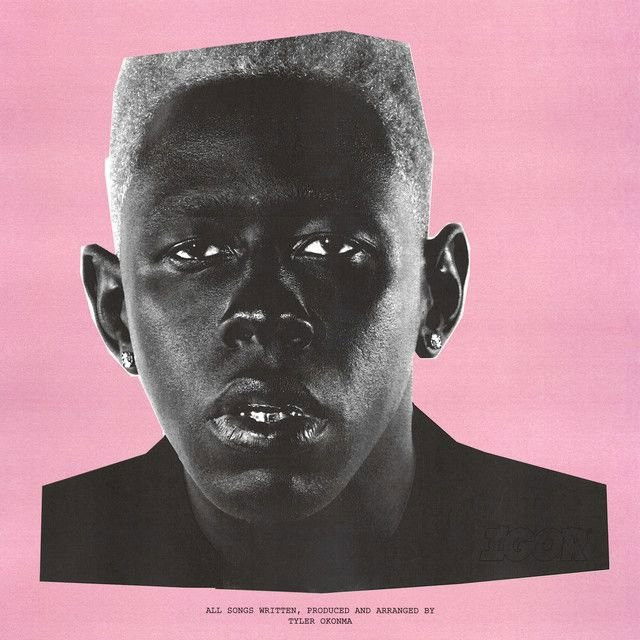
Why ‘I THINK’ Feels Like Love on the Edge
Love hits like a strobe here: bright, thrilling, a little blinding. If you’re searching for the meaning of I THINK Tyler, the Creator, this track is the jittery moment when a crush turns serious—and scary.
"I THINK" - Tyler, the Creator
(Skate, four)
(Skate, four)
Loading lyrics...
Unable to load lyrics
We're unable to display the lyrics at this time. Please try again later.
A rush of feelings, then doubt: the heartbeat of the song
Tyler’s narrator throws himself into honesty and risk at once:
I don’t know where I’m going
But I know what I’m showing
Feelings, that’s what I’m pouring
He admits he’s unsure of the future, but he’s choosing to show up emotionally. That tension—open-hearted and off-balance—is the song’s engine.
Watch the official I THINK
music video
IGOR’s voice: confident look, fragile core
On IGOR, Tyler performs as a character who looks bold but sounds unsure. In this track, they clock the other person’s mixed signals and protest with You are such a distraction
. The complaint masks a truth: the distraction works because they’re already hooked.
They also confess a power problem with I’m your puppet
. That image makes the dynamic clear. The crush pulls the strings; the narrator dances for attention, which feeds anxiety and deepens attachment at the same time.
What happens, in four quick beats
- Spark and exposure: they dive in, showing feelings fast, while questioning the other person’s motives.
- Tilt into infatuation: the hook declares certainty, even as the word “think” betrays doubt.
- Control gives way: the puppet line signals a lopsided relationship.
- Need becomes strategy: pleas like
I need your attention
show love morphing into a campaign to be seen.
These steps sketch the “too real, too soon” arc: euphoria meets fear, then slides toward obsession.
A chorus that spins with certainty and nerves
The hook I think I’m falling in love
sounds ecstatic, but that first word keeps a foot on the brake. It’s a safety hedge: they’re convincing themselves as much as anyone else.
When they repeat How can I tell you?
, it’s not just a question—it’s a communication block. They want to confess, but they don’t trust the timing, or the response. The refrain turns the dance-floor chant into a private worry.
Symbols and references that sharpen the picture
The “puppet” image signals surrender to someone else’s tempo, and it echoes the album’s larger theme of control versus devotion. The nod to a famous “call me by your name” idea hints at desire for total merging—romance as identity swap. That wish is romantic, but it also doubles as erasure: if they become the other person, where do their needs go?
Sound design that mirrors the wobble
The track draws on post-disco and funk textures: a rubbery bassline, crisp drums, and synth pads that glow rather than glare. Tyler self-produces with a dancer’s sense of momentum—four-on-the-floor urgency—but keeps the mix slightly hazy, like feelings coming in hot.
He recorded the song in Lake Como, Italy, and folded in additional vocals from Solange, whose light harmonies soften the edges. The groove borrows its feel and key ideas from early ’80s Nigerian funk, including elements that trace to Bibi Mascel’s “Special Lady” and Nkono Teles’s work. That lineage matters: the sample DNA gives the chorus its instant-hook warmth, making the confession feel classic and inevitable.
Where it lands in IGOR’s story
As the album’s third track, this is the infatuation peak before jealousy and collapse. Earlier, the spark is playful; later, the tone darkens. Here, the narrator is still choosing love despite warning signs, which makes the song both triumphant and tragic in hindsight.
Alternate angles worth considering
- Interpretation: It’s the vertigo of queer desire in a messy triangle. The puppet image and the plea for attention point to a crush who won’t fully commit, possibly because of an ex, which the album later confronts.
- Interpretation: It’s about performance as love. The narrator turns themselves into a show—style, charm, devotion—hoping the spectacle secures commitment. The dance-floor setting becomes a metaphor for that performance loop.
Takeaway: glitter, nerves, and a leap
“I THINK” bottles the moment when certainty and fear collide. They’re ecstatic enough to shout the hook, anxious enough to add “think.” That mix—rhythmic joy and lyrical doubt—is why the song hits both the head and the feet.
Disclaimer: Song meanings are interpretive and may differ from the artist’s intent or listeners’ personal readings.








