
No Pizza by William Bonney
The meaning of No Pizza William Bonney starts with emotional exhaustion. The song presents a speaker trapped in grief, anxiety, and isolation after a relationship has ended or gone cold. Instead of offering a dramatic plot, it shows how sadness settles into everyday life: waking up, staring out a window, lying awake, and feeling haunted by someone’s absence.
"No Pizza" - William Bonney
Lots of grey and anxious fear
Who am I to suggest things change?
Loading lyrics...
Unable to load lyrics
We're unable to display the lyrics at this time. Please try again later.
What makes the song hit so hard is how ordinary the images are. Weather, sheets, an open window, and an empty bed all become proof that the speaker cannot escape their own head. That simplicity is central to its power.
Where the Song’s Pain Comes From
At its core, this is a song about depression made sharper by heartbreak. Early on, the speaker compares their inner state to bad weather, using grey and anxious fear
to describe a long stretch of emotional decline. They do not sound briefly upset. They sound worn down by a condition that feels constant.
The next key idea is hopelessness. When the song says I hope for sun
but expects rain instead, it frames recovery as something they want but no longer trust. The problem is not just sadness. It is the belief that sadness may be permanent.
Interpretation: This is why the song feels heavier than a standard breakup track. The lost relationship matters, but it also opens a deeper crisis about whether life itself can improve.
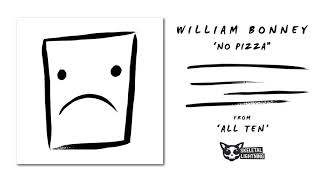
Watch the official No Pizza
music video
A Voice That Feels Cornered
The lyrics are written in the first person, which makes the pain feel immediate and unfiltered. The line Why do I wake up?
is especially important because it turns daily routine into a burden. They are not simply missing someone; they are questioning the value of existing inside this emotional state.
That rawness fits William Bonney’s place in emo and screamo circles, where confession often arrives without polish. The project is closely associated with Jack Senff, who is credited here as the writer. In that context, the song’s blunt language is not just for shock. It reflects a style built around emotional directness.
The Breakup Is Everywhere in the Room
One of the song’s most effective moves is keeping the absent person physically present through objects and sensations. The speaker notices air moving through the room and feels it reaching the bed and clothing. Those details make memory feel invasive.
Into the sheets and clothes that smell like you
This short image explains a lot. The relationship may be over, but the other person still lingers in the most intimate parts of the room. Smell is especially powerful because it can trigger memory fast and without warning. The speaker is not choosing to remember. Their environment remembers for them.
Storms, Sinking, and Other Emotional Symbols
The weather imagery does more than set a mood. It gives shape to emotional instability. Rain and grey skies suggest a world without relief, while the idea that the ship has sunk
broadens the damage. Now the feeling is not just personal sadness; it becomes disaster.
That sinking image matters because it shifts the song from private hurt to total collapse. A breakup can feel like one part of life ending. Here, it sounds like the whole structure has gone under.
Three motifs drive that meaning:
- Weather: depression that hangs over everything
- Open spaces: vulnerability and exposure
- Bed and clothes: intimacy turned into evidence of loss
Together, these details make the song feel boxed in and flooded at the same time.
How the Sound Carries the Meaning
Even without dense storytelling, the performance helps explain the meaning of No Pizza William Bonney. The band’s style, often discussed in DIY emo spaces like Discogs and Rate Your Music, leans raw, urgent, and emotionally frayed rather than polished or distant.
That matters here. A cleaner arrangement might have softened the lyrics. Instead, the rough edges support the sense that these thoughts are spilling out in real time. In songs like this, volume, strain, and imperfect texture can act like emotional proof. They tell listeners that the speaker is not reflecting calmly; they are barely holding themselves together.
Interpretation: The minimal, abrasive feel mirrors insomnia and panic. The song does not sound like healing. It sounds like someone stuck inside the worst hour of the night.
Is It Only About a Breakup?
A breakup reading is the clearest one, especially because the room still carries traces of the missing person. But there is another possible angle. The song can also be heard as a portrait of mental illness that uses romantic loss as its trigger.
That reading is supported by how often the lyrics return to exhaustion, dread, and routine rather than specific relationship details. The speaker barely narrates what happened between them and the other person. Instead, they describe what it feels like to continue living after emotional collapse.
So the song works on two levels at once:
- It captures the sensory aftermath of a breakup.
- It portrays depression as a climate that will not lift.
Why “No Pizza” Still Connects
Part of the song’s staying power is its refusal to offer a lesson. There is no neat resolution, no revenge, and no late moment of clarity. It stays with discomfort. For listeners who have felt grief turn a room into a trap, that honesty can feel brutally accurate.
The meaning of No Pizza William Bonney, then, is not hidden behind complicated symbolism. It is the sound of someone overwhelmed by loneliness, memory, and the fear that nothing will change. That directness is exactly why the song continues to resonate with emo listeners.
Disclaimer: This interpretation is based on the lyrics, known artist context, and the song’s musical style. As with most emotionally open songs, listeners may reasonably hear different meanings in it.








