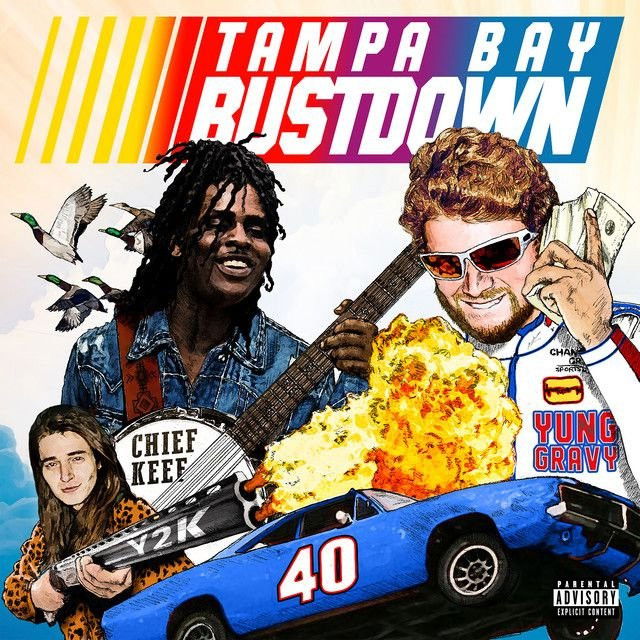
Why ‘Tampa Bay Bustdown’ Is Pure Rap Theater
The meaning of Tampa Bay Bustdown Yung Gravy, Chief Keef, Y2K is less mysterious than the title first suggests. This is not a deep narrative song in the usual sense. Instead, it is a deliberately over-the-top rap performance, where style, attitude, and absurd imagery matter more than a literal plot.
"Tampa Bay Bustdown" - Yung Gravy, Chief Keef, Y2K
Baby, cock the Glock and then I let it spray
Bust it out the Chevrolet
Loading lyrics...
Unable to load lyrics
We're unable to display the lyrics at this time. Please try again later.
Yung Gravy has built a career on mixing comedy rap with real trap polish. He is an American rapper whose catalog often leans on playful character work and retro-pop sampling, while still sitting inside hip-hop and trap traditions. According to widely cited biographical sources, “Tampa Bay Bustdown” appears on Gasanova, released October 2, 2020, and the album reached No. 52 on the Billboard 200. The track also features Chief Keef and Y2K, a lineup that already hints at a blend of humor, swagger, and harder-edged rap energy.
A Florida Title With a Bigger Joke
At its core, the song uses Tampa Bay as a symbol. The place name gives the track a loud, humid, party-ready backdrop. They are not painting a careful portrait of the city. They are using it as a mood board: boats, drinks, hookups, cheap luxury, and reckless confidence.
That is why the hook matters so much. When they repeat phrases like We drunk in Tampa Bay
and getting rich today
, they are building a fantasy of instant pleasure. The point is not realism. The point is the rush of sounding untouchable for three minutes.
Interpretation: “Bustdown” here feels like slang for a flashy prize, a wild night, or a person treated as part of the flex. The title works because it sounds regional, boastful, and slightly ridiculous all at once.
Watch the official Tampa Bay Bustdown
music video
The Song’s Real Subject: Persona Over Plot
The verses move like snapshots rather than scenes. One line jumps to guns, another to trucks, another to fishing, another to women, another to luxury cars. That chaos is the design.
Yung Gravy’s rap persona often thrives on playful contradiction. In this track, he combines country references with trap talk, so images like howdy partner
sit next to darker, more aggressive boasts. He also throws in pop-culture names and Southern details to keep the tone cartoonish. The result is a character who sounds part cowboy, part frat star, part internet comedian, and part rap antihero.
Chief Keef sharpens the mood. His presence brings more menace and less wink. When he leans into lines about being armed or ready, the song temporarily shifts from pure joke to street-rap posture. That tension is important: Gravy’s silliness works better because Chief Keef makes some of the danger sound more real.
Reading the Hook as Satire and Flex
The chorus is built like a chant. They repeat a few striking ideas: weapon imagery, a vehicle, a woman as a target of pursuit, drinking, and money. Even a line like Bust it out the Chevrolet
sounds less like storytelling than scene-setting.
Interpretation: The hook is a parody of excess, but it is also a real flex record. Those two things can exist together. Yung Gravy often makes songs that invite listeners to laugh at the absurdity while still enjoying the confidence.
That dual meaning is the key to the meaning of Tampa Bay Bustdown Yung Gravy, Chief Keef, Y2K. They are not asking the audience to believe every claim. They are asking them to enjoy the performance of believing it for the length of the track.
Southern Images, Flipped for Comedy
One of the smartest things in the song is how often it uses Southern imagery in a knowingly fake way. There are trucks, country stars, fishing, a river baptism, and roughneck clothes. But these details are delivered so fast and so exaggerated that they become costume pieces.
That is especially clear in Yung Gravy’s section, where he mixes blue-collar symbols with luxury and sex jokes. A phrase like baptized in the Chattahoochee
borrows the language of tradition, then bends it into something rowdy and unserious. Mentioning an F-150, steel-toed fashion, and a Garth Brooks show does the same thing. They turn Southern identity into a collage.
Interpretation: The song is partly about American mash-up culture. It blurs red-state imagery, internet humor, trap music, and celebrity swagger into one loud package.
How Y2K’s Beat Sells the Meaning
Production matters here. Y2K is known for bright, meme-aware, modern rap production, and that fits the song perfectly. The beat gives the record bounce instead of dread. Even when the lyrics mention violence or crime, the instrumental keeps the tone feeling playful and exaggerated rather than bleak.
That matters because a darker beat would change the song’s meaning. Here, the drums and tempo support chaos as entertainment. The production tells listeners not to take the song as confession. They should hear it as a glossy, high-energy act.
Why the Track Works
The song works because each artist plays a role:
- Yung Gravy supplies comedy, regional absurdity, and quotable images.
- Chief Keef adds grit and credibility from a drill-rap tradition.
- Y2K keeps the whole thing catchy, bright, and slightly surreal.
Together, they make a track that feels both stupid on purpose and cleverly assembled. That balance is harder than it sounds.
Final Take on the Song’s Meaning
So, what is “Tampa Bay Bustdown” really saying? It celebrates excess as performance. It turns place names, country symbols, threats, and party talk into a playful rap cartoon about being rich, drunk, desired, and impossible to control.
The song is best heard as persona music: not a diary, but a mask. That is why its wildest lines stick. They are not trying to reveal the artists. They are trying to entertain the audience with a version of them turned all the way up.
Disclaimer: This article offers interpretation based on the lyrics, artist context, and production style. Song meanings can vary from listener to listener.








