
Big Sean Won’t Hit Pause: Inside 'Why Would I Stop?'
They don’t write many album openers like this anymore. Why Would I Stop? kicks off Big Sean’s Detroit 2 like a sprint out of the blocks—urgent, focused, and aimed at anyone who doubted him. The result is both a flex and a philosophy session, a crisp answer to the search query many fans type: the meaning of Why Would I Stop? Big Sean.
"Why Would I Stop?" - Big Sean
This what they been waiting on?
Critical, ain't no time left on the clock
Loading lyrics...
Unable to load lyrics
We're unable to display the lyrics at this time. Please try again later.
What the Drive Really Means Here
At its core, the song argues for relentless momentum. Sean lays out a blueprint of self-belief, discipline, and purpose. The hook reframes success as a habit: keep moving, keep building, keep learning. He’s not just celebrating wins; he’s committing to the grind that made them possible.
Interpretation: The title questions the very idea of easing up. He positions ambition as a duty to self, city, and family. When he vows to buy up the block
, it doubles as economic empowerment and cultural stewardship. In that light, Why Would I Stop? reads as a manifesto for staying hungry after you arrive.
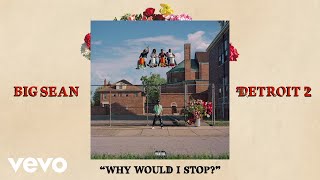
Watch the official Why Would I Stop?
music video
Who’s Talking—and Why the Hook Hits Different
Sean speaks in first person as a competitor addressing critics, peers, and his inner voice. The chorus condenses the attitude into a few lines that sound like a locker‑room chant and a meditation mantra at once:
Why would I stop?
I am unstoppable
I don't jump, I dive in it
This the reason I'm alive
He’s not merely brushing off pressure; he’s finding energy in it. The repetition turns confidence into ritual, something a listener can carry into their own day.
From Locks to Blocks: Detroit-Born Imagery
Sean grounds his bravado in images of hustle and ownership. He says he picked all the locks
and learned to think out the box
, pairing those lines with visions of buying property and building institutions. When he nods to the house that I built
, it’s bigger than a mansion flex—it’s about infrastructure, stability, and passing something down.
Interpretation: The Detroit references sharpen that meaning. He often measures success against home realities: factories, fields, and neighborhoods that raised him. The line about hills and fields (and the grind that replaces scenery) hints that status symbols aren’t the point. What matters is the responsibility that comes with them.
Name-Drops That Map a Lineage
Sean threads himself into hip‑hop history with a roll call of influences and rivals. Mentions of “old Ye,” J Dilla, and Pimp C sketch a sonic family tree: soul-sample chops, Midwestern swing, and Southern swagger. Dropping B.I.G. and Pac isn’t random; it’s a dare to be measured by the highest bar. A Dennis Rodman nod reinforces the idea of stepping away only to return fiercer—a reminder that breaks can be part of a dynasty.
Interpretation: These references aren’t empty clout plays. They stake a claim: if he’s adopted by that lineage, he must work like it. The song becomes a résumé and a promise.
The Beat That Makes the Brag Work
Production matters when the writing is this breathless. Hit-Boy and Rogét Chahayed drive the track with sharp drums, a tense loop, and sub-bass that punches without crowding the vocal. The mix leaves space for fast internal rhymes and emphatic ad‑libs, so each bar lands like a step on pavement.
Sean’s delivery mirrors the thesis. He rushes certain pockets, then snaps into cleaner cadences on the hook. That contrast sells the switch from grind to clarity—from running the play to spiking the ball. The sound is lean on purpose, forcing attention onto the words and turning the hook into a stadium chant.
More Than Flexing: Family, Focus, and Faith
Alongside the bravado, Sean draws boundaries. He rejects chaos in his personal life and centers family and legacy. He talks about adapting instead of complaining—a growth stance that threads across Detroit 2. The line about making the house that I built
standard isn’t just self-congratulation; it’s a pledge to raise the bar at home and in the city.
Interpretation: There’s a spiritual and mental-health undertone. When he claims the the universe respond to what I say
, it’s manifestation talk—aligning words, work, and outcomes. The boast becomes a practice: speak it, then prove it.
Alternate Reads: Mantra vs. Megaphone
- Interpretation 1: It’s a mantra for resilience. The hook reframes fear into fuel, pushing the listener to set their own pace and ignore noise.
- Interpretation 2: It’s competitive theater. The track plays like a pre-season press conference where the star sets expectations and dares the league to stop them.
Both readings work because the writing stands on craft and the beat is engineered for impact. Either way, the title’s question only has one answer.
Takeaway
Why Would I Stop? is less a song than a stance. If you’re looking for the meaning of Why Would I Stop? Big Sean turns a brag into a blueprint: build, adapt, claim your lane, and don’t lift your foot.
Disclaimer: Song meanings are interpretive and may differ from the artist’s stated intent or listeners’ personal readings.







