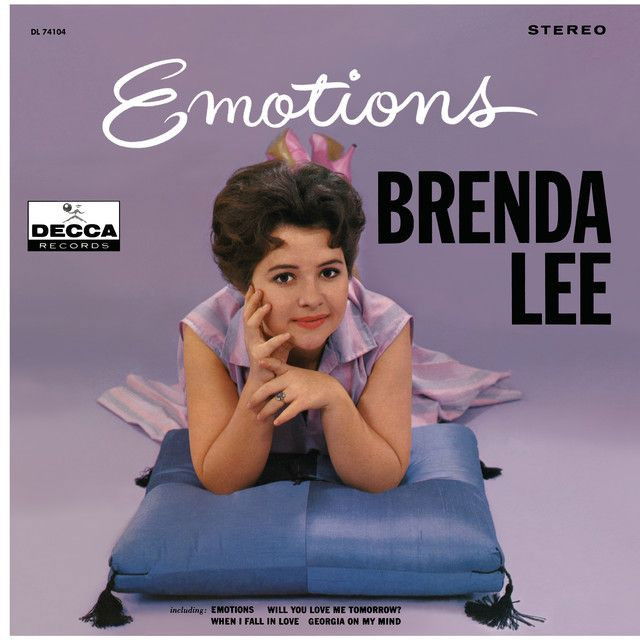
Why “Emotions” by Brenda Lee Still Hurts
Brenda Lee’s “Emotions” sounds simple at first: a singer begs for relief after a breakup. But the real power of the song is how it turns feelings into an enemy. In the meaning of Emotions Brenda Lee, heartbreak is not just sadness. It becomes a force that keeps returning, ruining sleep, memory, and peace of mind.
"Emotions" - Brenda Lee
Oh, don't you know, don't you know you'll be my ruin?
You've got me crying, crying again
Loading lyrics...
Unable to load lyrics
We're unable to display the lyrics at this time. Please try again later.
Recorded during Lee’s early-1960s run of pop hits, the song fits the dramatic, polished style that made her a major crossover star, as documented by the Rock & Roll Hall of Fame and Britannica. Written by Mel Tillis and Ramsey Kearney, “Emotions” gives Lee a lyric built on direct language and repeated distress rather than complex storytelling. That is why it lands so quickly.
The Heart of the Song Is a Fight With Feeling
At its core, the song is about someone who cannot stop reliving a bad romantic choice. Instead of speaking only to an ex-lover, the singer addresses their own feelings as if those feelings were a person. That choice matters. It shows that the breakup is over, but the suffering is not.
Very early, the song asks, what are you doin’?
The line sounds almost innocent, but the next thought makes the conflict sharper: these emotions will be my ruin
. In plain terms, the singer feels overwhelmed by grief and thinks memory itself is causing harm.
Interpretation: This is what gives the song its unusual sting. Many breakup songs blame another person. “Emotions” also blames the mind for refusing to let go.

Watch the official Emotions
music video
A Narrator Trapped Between Memory and Recovery
The lyric keeps circling one basic problem: the singer wants to forget, but cannot. They admit they are still crying and still lonely. They also say they are forced to remember what they most want erased.
That tension is summed up in the plea to forget a mistake
. The word matters because it hints at regret, not only loss. This was not simply a romance that ended. It may have been a relationship the singer now believes they should never have entered.
Why Personifying “Emotions” Works
By talking to emotions like a person, the song turns inner pain into a visible opponent. That makes abstract suffering easy to understand. Listeners do not need a detailed plot. They hear someone bargaining with their own heart and losing.
Emotions, ah, give me a break
Let me forget that I made a mistake
This is the song’s emotional center. The speaker is not asking for reunion. They are asking for release.
How the Verses Build the Song’s Meaning
The song moves in a tight loop, and that loop mirrors obsessive thought. Each section adds a new effect of heartbreak:
- First, feelings return and restart the crying.
- Next, memory becomes torture because the past will not stay buried.
- Then the pain spreads into day and night, suggesting total mental takeover.
- Finally, the singer begs to be set free, as if trapped inside their own mind.
The day-night contrast is especially strong. When the lyric says emotions torture my nights
, it suggests there is no safe time to recover. Day brings worry; night brings dreams that go wrong. Even sleep cannot heal them.
Interpretation: This pattern makes the song feel less like a story with progress and more like a cycle of rumination. That is exactly how fresh heartbreak often feels.
Brenda Lee’s Voice Sells the Pain
A big part of the meaning of Emotions Brenda Lee comes from performance, not just words. Lee was famous for making youthful vocals sound huge, blending pop control with country feeling and early rock intensity, a quality often noted in biographies of her career from the Country Music Hall of Fame and Grammy.com.
Here, they sing with urgency rather than elegance. The phrasing tightens around the repeated title, and the emotional pressure rises each time the chorus returns. The vocal does not sound detached or reflective. It sounds immediate, like pain happening in real time.
Production and Arrangement
The arrangement supports that mood. The tempo is measured, not frantic, which lets the anguish sit in the open. Soft backing, steady rhythm, and a classic early-pop sheen keep the song from collapsing into chaos. Instead, the neat production frames the mess inside the singer’s head.
That contrast is key: the track sounds controlled, while the narrator does not. The result is dramatic but relatable.
Regret Is Just as Important as Heartbreak
It would be easy to hear “Emotions” as only a song about missing someone. But the lyric points toward something heavier. The singer does not simply want the lover back. They want to stop revisiting the decision that caused the wound.
That is why please set me free
feels bigger than a standard sad-song line. Freedom here means freedom from self-blame, memory, and emotional replay. The enemy is not only absence. It is repetition.
Why the Song Still Connects
The song remains effective because it describes a common experience in very plain words. Almost everyone knows the feeling of wanting to move on while the mind keeps reopening the same hurt. “Emotions” captures that battle without overexplaining it.
For modern listeners, the meaning of Emotions Brenda Lee is clear: heartbreak becomes most painful when it turns inward. The singer is haunted not only by who they lost, but by what they cannot stop feeling.
Final Thought
Brenda Lee’s “Emotions” is a compact, powerful song about being trapped by grief after love goes wrong. Its plain language, personified feelings, and aching vocal make inner turmoil sound immediate and human.
Disclaimer: This interpretation is based on the released lyrics, performance, and available historical context. As with any song, listeners may hear different meanings in it.








