Why ‘SETTL'S PARADISE’els So Uneasy
The meaning of SETTLER'S PARADISE Cautious Clay comes into focus when the sounds sweet but the relationship does not. On the surface, the chorus offers a soft, dreamy picture of comfort and escape. Underneath that, the verses sound restless, defensive, and emotionally split. The result is a song about a romance that looks easy from a distance but feels unstable from inside.
"SETTLER'S PARADISE" - Cautious Clay
Got me lookin' forward to weekdays
They might get the best of me
Loading lyrics...
Unable to load lyrics
We're unable to display the lyrics at this time. Please try again later.
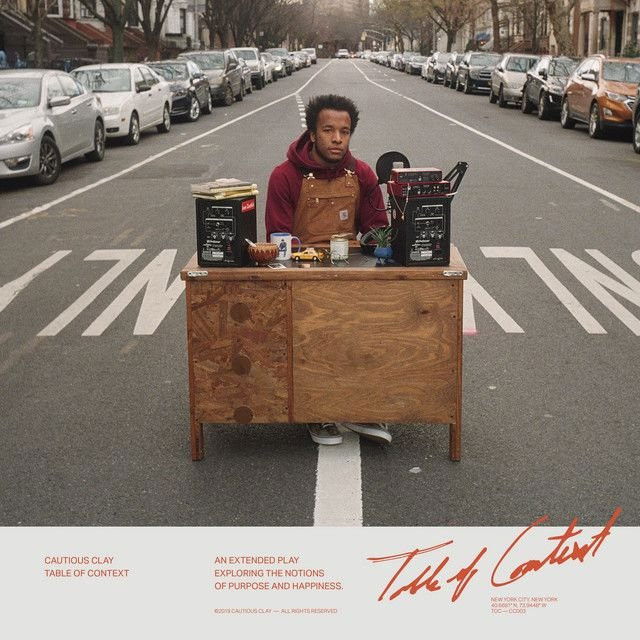
Cautious Clay has built much of his early work around that kind of tension. As EARMILK noted in coverage of Table of Context, the Brooklyn artist often examines relationships and self-awareness through intimate, genre-blurring songs. That frame matters here: “SETTLER'S PARADISE” is less a love song than a study of emotional compromise.
A paradise that sounds rented, not owned
The song’s central idea is simple: paradise is present, but it is incomplete. The hook repeats something like paradise
, which immediately weakens the fantasy. They are not calling this relationship true peace. They are saying it resembles peace, or briefly performs it.
That small phrase does a lot of work. It suggests a life that is attractive on the outside—palm trees, sweetness, calm routines—but fragile in practice. The title itself adds another layer. A “settler” can be someone who claims space without fully belonging to it, or someone who settles for less than what they really want. Interpretation: the song may be using “settler’s paradise” to describe a comfort zone built on emotional half-measures.

Watch the official SETTLER'S PARADISE
music video
The verses tell a different story
If the chorus paints the postcard, the verses reveal the argument happening off camera. The narrator sounds pulled between desire and self-protection. Early on, they admit a mismatch in expectations, paraphrasing a situation where one person expects permanence while the other never promised to stay.
That tension sharpens with lines like pressing all your luck
and feelin' like you're stuck
. Those phrases make the relationship feel transactional and pressured. One person keeps pushing, hoping for reassurance. The other responds with distance and warning.
There is also a recurring push toward separation. When the song lands on on my own
, it feels like the clearest emotional truth in the track. Even while the music drifts into a warm chorus, the speaker keeps returning to independence as a need, not just a mood.
Who is speaking, and to whom?
The narrative voice is first person, but the emotional setup is dialogic. They are speaking to a partner who takes words personally, asks for more than the speaker can give, and may confuse chemistry with commitment.
That is why some of the song feels almost like damage control. The narrator seems to be explaining boundaries after intimacy has already complicated them. A phrase such as take another day
points to resentment about time, energy, and emotional labor. They are not only protecting freedom; they are trying to stop the relationship from taking over their sense of self.
A quick timeline of the emotional plot
- Attraction and closeness create the illusion of ease.
- Mixed signals and expectations lead to conflict.
- The partner pushes for security or clarity.
- The narrator resists being defined by the relationship.
- The chorus returns, offering escape instead of resolution.
Why the chorus feels so bright and sad
The chorus is full of sensory images: seasonal color, treats, drinks, dreamy scenery. It sounds pleasant and light, almost like a mood board. But because the verses are so tense, these details read less like reality and more like decoration.
That contrast is the heart of the song. The line sweet dreams in paradise
suggests a chosen fantasy rather than a stable life. They are not resting in peace; they are selecting a dream that helps them avoid harder truths.
Palm trees, ice creams in paradise
Red leaves, green teas in paradise
This is the article’s clearest example of how the song works. The images are soft and colorful, but they are also oddly assembled. They feel curated, almost too neat. Interpretation: the chorus may be showing how couples build beautiful settings around unresolved problems.
Symbols that deepen the meaning
Several images expand the song beyond a simple breakup story.
Paradise
Paradise usually means arrival, rest, and perfection. Here, it sounds temporary and slightly artificial. It is not heaven; it is a mood.
Color and consumption
The song keeps offering little objects of pleasure—ice cream, tea, changing leaves. These are immediate comforts, not deep solutions. They fit a song about settling for what feels good in the moment.
The caged bird reference
The mention of a caged bird evokes longing, limitation, and the need to sing through confinement. That image recalls a long tradition of writing about restricted freedom. In this song, it connects to emotional entrapment: both people may feel boxed in, even inside something that is supposed to be beautiful.
How Cautious Clay’s sound carries the message
Production matters a lot to the meaning of “SETTLER'S PARADISE.” Cautious Clay’s style often blends R&B, soul, indie pop, and electronic texture. On Table of Context, that approach helps him explore identity and relationship strain without sounding heavy-handed.
Here, the lightness of the arrangement supports the song’s central contradiction. The groove feels easy enough to sink into, while the vocal phrasing carries hesitation and emotional friction. That split mirrors the lyric: the setting promises comfort, but the voice keeps resisting it. The music makes paradise sound real enough to want, yet too thin to trust.
The strongest reading of the song
The best reading is that “SETTLER'S PARADISE” is about false ease in a relationship that cannot hold. The speaker is tempted by intimacy, routine, and beauty, but they know the connection asks them to betray something essential in themselves. Paradise, then, is not a destination. It is a compromise.
That is what makes the song memorable. It captures the feeling of staying somewhere emotionally attractive while already knowing it is not home.
Disclaimer: This interpretation is based on the released lyrics, title, and available artist context. As with most songs, listeners may hear different meanings in the same lines.









