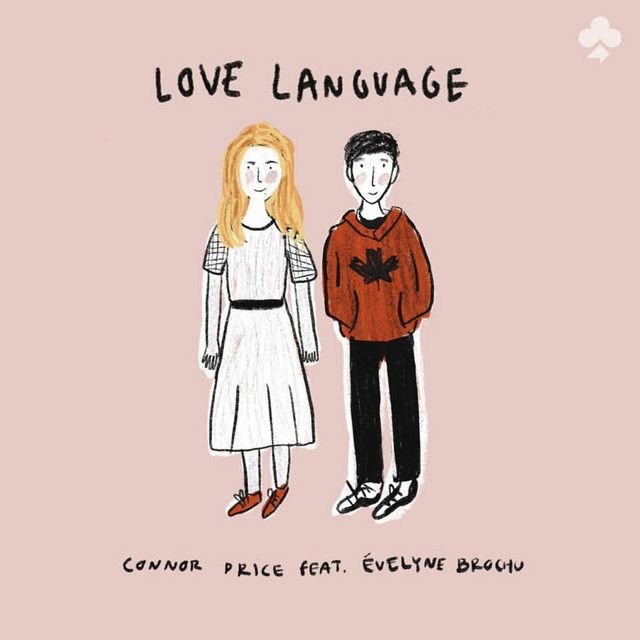
Why 'Love Language' Fears Being Forgotten
The meaning of Love Language Connor Price, Evelyne Brochu centers on a simple but heavy question: what happens to love when distance, death, or time gets in the way? Instead of treating romance as only joy, the song looks at the fear underneath deep attachment. If someone matters enough, they also become someone a person is terrified to lose.
"Love Language" - Connor Price, Evelyne Brochu
Think of me my love when I’m gone
Mon corps est ailleurs, mais mon coeur
Loading lyrics...
Unable to load lyrics
We're unable to display the lyrics at this time. Please try again later.
That gives the track its emotional pull. It is not just a love song. It is a song about wanting to be remembered, wanting to have been truly known, and hoping love can outlast the body.
A Love Song Built on Mortality
At its core, the song imagines separation in the biggest sense possible. One voice worries about being gone and asks the other person to think of me
. That request is not casual. It turns memory into proof that the relationship was real.
The verses show restless thoughts, sleeplessness, and the kind of anxiety that arrives when someone realizes how much they have to lose. The line about being awake and unable to stop thinking suggests that love has moved past flirtation into existential fear. They are not asking, “Do you like me?” They are asking, “Would I still matter if I disappeared?”
Interpretation: That is why the song feels more intimate than many pop-rap love songs. It links romance with mortality, making devotion sound both beautiful and frightening.
Watch the official Love Language
music video
Two Voices, One Promise
A key part of the song’s meaning is its structure. Connor Price’s side expresses fear: would the other person notice, wait, or move on? Evelyne Brochu’s answer softens that panic. She does not dismiss the fear. She meets it with reassurance.
That shift changes the whole song. What starts as anxious love becomes mutual devotion. When the second voice says forgetting would be impossible, the track stops being only about dread and becomes a promise of emotional permanence.
This duet design matters. It lets the listener hear both the insecure inner monologue and the healing response. In story terms, one speaker asks for proof of lasting love, and the other gives it.
The Chorus Turns Memory Into Love
The chorus is the emotional center because it repeats the plea to be remembered. The French lyric mon coeur
and the phrase reste avec toi
add warmth and closeness, even for listeners who do not speak French fluently. The meaning is clear from context: the body may be elsewhere, but the heart stays with the beloved.
Mon corps est ailleurs, mais mon coeur
Reste avec toi, pense à toi
This is the song’s clearest image. Physical absence is treated as weaker than emotional attachment. Even death or distance cannot fully separate two people if love remains active in memory.
For U.S. listeners, the bilingual chorus may also make the song feel more universal. Love sounds bigger here because it crosses languages without losing clarity.
The Most Important Fear: Being Unknown
One of the song’s strongest ideas is not just fear of death, but fear of being only partly understood. A crucial moment comes when the speaker worries they did not reveal enough of themselves. In other words, being forgotten would hurt, but being unseen would hurt too.
That detail deepens the meaning of Love Language Connor Price, Evelyne Brochu. The song is not only asking for remembrance after loss. It is asking for emotional honesty now, while there is still time.
Another key lyric idea is die two times
. The song uses that thought to say people disappear once physically, and then again when nobody speaks their name. In that frame, love becomes an act of keeping someone alive in conversation, memory, and feeling.
How the Sound Carries the Message
Even without unpacking every production credit, the performance style tells a lot. Connor Price delivers his verse with a controlled, conversational tone, which makes the fear sound personal rather than theatrical. Brochu’s softer vocal presence adds comfort and contrast.
The likely effect of the production is intimacy over spectacle. A song like this works because it leaves room for the words to breathe. Instead of pushing intensity with aggression, it lets vulnerability sit at the center. That mirrors the late-night mood in the lyrics: tossing in bed, dreaming, waking, and realizing how fragile love can feel.
The bilingual hook also functions like a musical embrace. Repetition makes the message feel steady, almost like a vow.
A Few Motifs That Hold It Together
Several motifs repeat across the track:
- Sleep and dreaming: These suggest thoughts too strong to suppress.
- Memory: Love is measured by whether someone is still carried in the mind.
- Body and heart: The song separates physical absence from emotional presence.
- Naming and remembrance: To remember someone is to keep their place in the world.
Together, these motifs make the song less about a breakup and more about the limits of human time.
Final Take on the Song’s Meaning
So, what is the meaning of Love Language Connor Price, Evelyne Brochu? It is about the fear that real love creates: the fear of loss, the fear of being forgotten, and the fear of never having fully shown oneself. But it is also about the answer to that fear. The answer is remembrance, honesty, and mutual devotion.
The song argues that love is not only saying “stay.” Sometimes it is saying, “If I cannot stay, carry me with you.” That makes the track tender, uneasy, and deeply human.
Disclaimer: This interpretation is based on the lyrics provided and musical context. As with any song, listeners may hear different meanings in it.









