
Why ‘I Will Survive’ Still Hits So Hard
The meaning of I Will Survive Demi Lovato listeners may search for begins with a simple idea: recovery after someone leaves, then tries to return. Even though this song was famously written by Freddie Perren and Dino Fekaris and first made iconic by Gloria Gaynor, the words still feel immediate because they tell a clean emotional story. They move from shock, to pain, to strength, and finally to firm self-respect.
"I Will Survive" - Demi Lovato
Kept thinkin' I could never live
Without you by my side
Loading lyrics...
Unable to load lyrics
We're unable to display the lyrics at this time. Please try again later.
In that sense, the song is not just about a breakup. It is about refusing to let rejection define a person. That is why it keeps working across generations and voices.
From Panic to Power
At the start, the speaker admits total emotional dependence. The opening feeling is fear, almost paralysis, shown in the famous phrase at first I was afraid
. The song does not hide that weakness. Instead, it makes that honesty the first step toward change.
Then the perspective shifts. After many lonely nights, the speaker sees the relationship more clearly and realizes the other person caused real harm. That is the turning point: pain becomes evidence, and evidence becomes strength. When they say they grew strong
, the line is brief, but it carries the whole arc of survival.
Interpretation: This is why the song feels bigger than revenge. The goal is not to hurt the ex back. The goal is to rebuild the self.
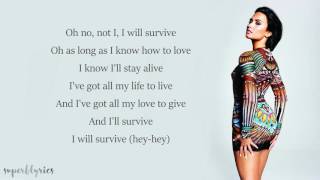
Watch the official I Will Survive
music video
The Doorway Scene Says Everything
One reason the song is so memorable is that it stages its conflict like a scene in a movie. The former partner comes back unexpectedly, hoping for access, sympathy, or control. The speaker is no longer impressed.
That is why the command walk out the door
matters so much. It is not just a rude dismissal. It marks a new boundary. Earlier, the speaker felt they could not live without this person. Now they decide who gets to enter their life.
Go on, now, go, walk out the door
Just turn around now
'Cause you're not welcome anymore
This short moment condenses the song’s message: healing becomes real when it changes behavior. Strength is not only internal. It shows up in choices.
The Chorus Turns Survival Into Identity
The chorus is one of pop music’s clearest declarations of resilience. When the speaker repeats I will survive
, it sounds almost basic on paper. In practice, repetition turns it into a vow.
Just as important is the line about knowing how to love. The song does not say survival comes from bitterness or isolation. It says life continues because the speaker still has the ability to love and to give. That keeps the message from becoming cold.
Interpretation: The chorus argues that emotional openness is not weakness. Real strength is keeping one’s heart alive after being hurt.
More Than a Breakup Anthem
On the surface, this is a breakup song. But its reach is wider than that. People have used it as an anthem for divorce, illness, discrimination, grief, and personal reinvention. The lyrics support that broader reading because they focus less on the details of one relationship and more on the process of reclaiming dignity.
The key image is transformation. The speaker says they are now somebody new
. That phrase matters because survival here is not mere endurance. They do not just remain standing. They become different.
For many listeners, that is the emotional payoff. The song promises that pain can lead to a stronger identity, not only a return to the old one.
How the Sound Carries the Message
Part of the song’s staying power comes from its disco foundation. In Gloria Gaynor’s classic recording, the beat keeps moving forward even when the lyrics describe collapse. That contrast matters. The arrangement turns sorrow into motion.
Strings, steady drums, and a rising vocal performance all help frame survival as something active rather than passive. The groove does not let the speaker stay stuck in self-pity. It pushes them ahead. According to the song’s Wikipedia entry, it was written by Freddie Perren and Dino Fekaris, and its place in late-1970s disco helped carry it into popular culture as a communal anthem.
That history also explains why newer performances, including by singers such as Demi Lovato, can feel natural. Their vocal style often emphasizes grit, recovery, and emotional release, which fits a song built on a climb from fragility to force.
Why It Connects With Demi Lovato Fans
For anyone looking up the meaning of I Will Survive Demi Lovato, part of the interest likely comes from Lovato’s public image. Across their career, they have often been associated with themes of survival, honesty, and personal rebuilding. That makes this song an easy match for their voice and audience, even if the lyrics come from another era.
A singer with a powerhouse delivery can underline the song’s deepest idea: resilience is not neat. It is loud, emotional, and hard-won. In that way, Lovato’s connection to the song is less about changing its meaning and more about intensifying it.
For background on Lovato’s career, their official artist site provides core biographical context.
The Lasting Meaning
So what is the meaning of I Will Survive Demi Lovato listeners should take away? At its core, it is about drawing a line after betrayal and choosing life beyond that wound. The speaker begins frightened, learns from suffering, and ends with dignity intact.
That emotional path is why the song still lasts. It understands that confidence usually comes after fear, not before it. And it insists that survival is more than getting through the day. It is claiming the right to become whole again.
Disclaimer: This interpretation is based on the lyrics, performance context, and public song history. As with any song, listeners may hear personal meanings that go beyond this reading.







