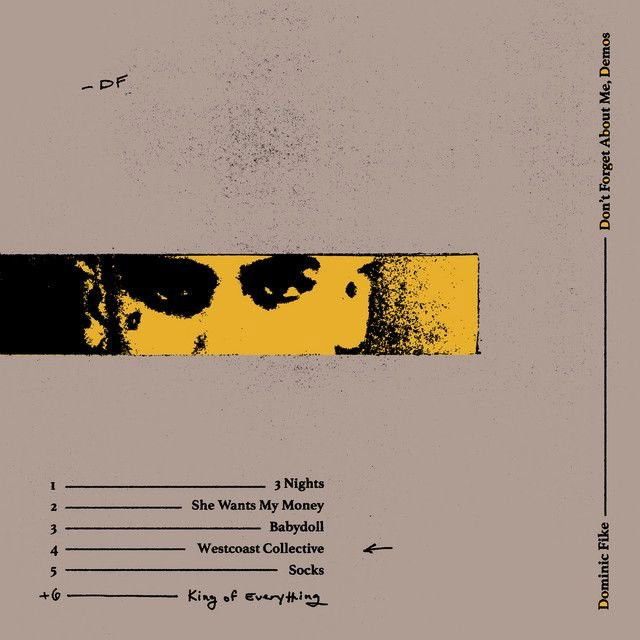
King of Everything by Dominic Fike
A small kingdom with a big feeling
The meaning of King of Everything Dominic Fike starts with a simple idea: being alone can feel like freedom, but it can also reveal how badly someone wants connection. The song turns a private moment into a full inner world. In that space, the narrator can control the rules, the noise, and even their own fantasy version of power.
"King of Everything" - Dominic Fike
whenever I want
I turn it as loud as it goes
Loading lyrics...
Unable to load lyrics
We're unable to display the lyrics at this time. Please try again later.
Dominic Fike first gained attention with songs from his 2018 project Don't Forget About Me, Demos, the release that introduced his loose, melodic style to a wide audience, as noted by outlets like Columbia Records and Billboard. “King of Everything” fits that early sound well: casual on the surface, but emotionally sharper underneath.

Watch the official King of Everything
music video
What the song is really saying
On the surface, the opening is playful. The narrator watches movies alone, turns the volume up, and acts like the house belongs entirely to them. When they say king of everything
, the point is not literal power. It is a fantasy of total control in a tiny, everyday setting.
That fantasy matters because the song quickly shows its limits. The narrator says they make the rules up
, can break them, and even invent authority. Those lines sound funny and childlike, but they also suggest a person who feels powerless in ordinary life. If real control is missing, imagination fills the gap.
Interpretation: This makes the song less about ego than compensation. They are not boasting because they truly feel above everyone else. They are building a world where loneliness feels less lonely.
The secret sadness inside the joke
The clever part of the writing is how the song mixes confidence with isolation. The narrator claims everyone is equal, then immediately puts themselves above that rule. That contradiction gives the song its emotional shape. They want freedom, but they also want to be seen as special.
A short line like nobody's home
does a lot of work. It explains the freedom, but it also explains the emptiness. Their kingdom only exists because no one else is there.
Even the dream image points in the same direction. When the narrator imagines people telling them secrets in sleep, it suggests intimacy that may not exist in waking life. In other words, closeness arrives in fantasy before it arrives in reality.
When the song turns toward another person
A shift from control to dependence
The second half changes the emotional stakes. Instead of focusing only on private power, the song starts dealing with another person. The narrator says they know how someone feels when you're alone
, which broadens the song from self-entertainment into empathy.
That shift is important. Earlier, they ruled their own private universe. Now they respond to someone else's feelings, schedule, and emotional needs. The repeated line take all your time
can sound devoted, needy, or even a little possessive depending on how someone hears it.
Interpretation: This is where the song becomes richer than a quirky bedroom-pop sketch. The fantasy of being king fades once real closeness appears. Love, or the hope of love, asks for surrender instead of control.
A useful way to read the song's story
The song can be understood in three quick beats:
- The narrator is alone and enjoys total freedom.
- They turn that freedom into a fantasy of power.
- They then reveal a need for emotional connection that power cannot solve.
That structure helps explain why the title feels slightly ironic. The narrator may be the ruler of a private room, but not of their own longing.
How the music carries the meaning
Fike's early recordings often blend indie pop, hip-hop looseness, and bedroom recording intimacy, a style widely noted in coverage from NPR and The FADER. “King of Everything” uses that same closeness to make the narrator's thoughts feel unfiltered.
The production is light and unforced. Instead of sounding grand, it sounds homemade and immediate. That matters because a huge, polished arrangement would clash with the song's emotional point. This is not a real empire. It is a bedroom, a phone, a passing thought, and a mood.
The vocal delivery also helps. Fike often sings in a way that feels half-spoken and half-sung, which keeps the song casual. That casual tone lets the sadder parts sneak in without becoming dramatic. The listener hears imagination and vulnerability at the same time.
Two strong interpretations
Reading one: childhood imagination revisited
One strong reading is that the song taps into a childlike feeling of being left alone and pretending the world belongs to them. The lines about rules and self-invented authority support that view. In this reading, the song captures how imagination protects someone from boredom and isolation.
Reading two: loneliness dressed as swagger
Another reading is more emotional. The narrator performs confidence because they do not fully have it. Their little kingdom is a defense against feeling unseen. Once another person appears in the lyrics, the song reveals what they really want: not power, but closeness.
Both readings can be true at once, which is part of why the song lasts.
Why the song still connects
The meaning of King of Everything Dominic Fike stays relatable because it understands a common feeling: people often act most powerful when they are actually trying to protect something tender. The song turns ordinary solitude into a small drama about freedom, fantasy, and need.
In the end, “King of Everything” is not really about ruling the world. It is about ruling a moment, then realizing that a moment is not enough.
Disclaimer: This interpretation is based on the lyrics, recording context, and publicly available artist information. Like most songs, it can support more than one valid reading.









