Why 'Riding With the King' Feels So Big
The meaning of Riding With The King Eric Clapton, B.B. King starts with a simple idea: the song turns blues success into a surreal road trip. It sounds playful on the surface, but underneath, it is about longing, fame, faith, and the strange promise of the American dream.
"Riding With The King" - Eric Clapton, B.B. King
I blew it all at the penny arcade
A hundred dollars on a Kewpie doll
Loading lyrics...
Unable to load lyrics
We're unable to display the lyrics at this time. Please try again later.
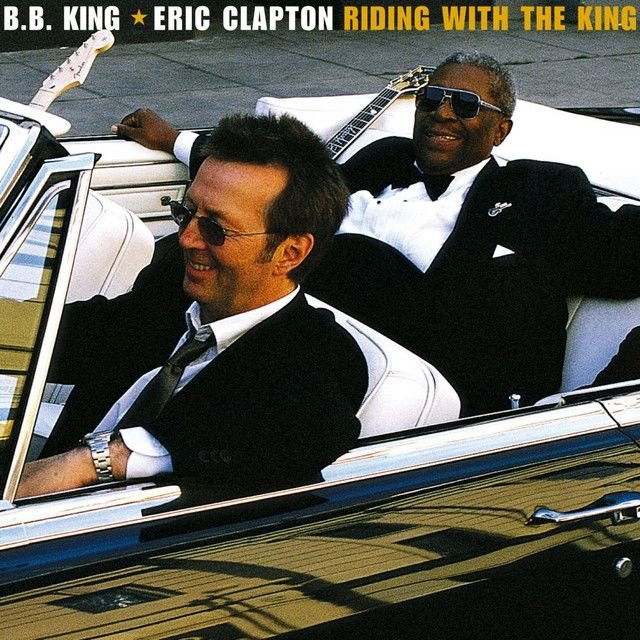
Written by John Hiatt and first released by him in 1983, the song took on a new life when B.B. King and Eric Clapton recorded it as the title track of their 2000 collaborative album, Riding with the King. That album went to No. 1 on Billboard’s Top Blues Albums and later won the Grammy for Best Traditional Blues Album. In this version, the title becomes more than a lyric. It becomes a statement about B.B. King’s status and Clapton’s respect for him.
A Dream, a Joke, and a Myth
The song opens inside a fantasy. The singer dreams of a good job, easy money, and then wastes it on carnival nonsense. That detail matters. Before the song gets grand, it shows how quickly people can chase shiny things and come up empty.
From there, the story gets bigger and stranger. The promised land arrives by airplane, luxury appears for everybody, and the chorus insists they are riding with the king
. In plain terms, the lyric mixes gospel hope, roadside America, and show-business exaggeration.
Interpretation: the “king” can be heard in more than one way. In John Hiatt’s writing, it feels partly like a dream figure, maybe a celebrity savior, maybe Elvis-like royalty, maybe a symbol of escape itself. In the Clapton and B.B. King version, that image naturally shifts toward B.B. King. The title starts to sound like both a fable and a tribute.
Watch the official Riding With The King
music video
What the Verses Say About Wanting More
Each verse adds a new kind of desire. One is about money and attraction. Another is about salvation and healing. Another is about style, music, and legacy. The song keeps moving between earthly rewards and spiritual promises.
That is why lines about a plane to the promised land
sit next to images like a Cadillac and a diamond ring. The song is not trying to separate the sacred from the flashy. It blends them on purpose. In blues and roots music, that mix is common: heaven, hardship, hustling, and humor often live in the same verse.
There is also a sly edge in the promise that everyone gets rewarded. The language sounds too easy, almost like a salesman’s pitch. That gives the song a wink. It knows big promises can be comforting, but also unbelievable.
The Chorus Turns Hype Into Meaning
The hook is catchy because it feels communal. The repeated invitation tells listeners they are not just watching greatness; they are joining the ride. When the song says clap your hands
, it pulls the crowd into the myth.
Interpretation: this is where the song becomes larger than its plot. The chorus is less about literal travel than about access. To be “riding with the king” is to be close to power, glamour, confidence, or musical greatness. It is the fantasy of leaving ordinary life behind and being carried by someone who already knows the road.
That idea becomes even richer in the Clapton and B.B. King version because the performers embody it. Clapton was the famous student of the blues; B.B. King was the master. So the chorus can sound like celebration, gratitude, and career history all at once.
When B.B. King Enters, the Song Changes
One of the smartest parts of this recording is that it does not treat both stars the same way. Reports around the album often noted that Clapton gave B.B. King center stage on much of the project, which fits the spirit of the collaboration. Even when Clapton is present, the song’s emotional gravity leans toward B.B. King.
That matters for the autobiographical-feeling verse that begins with I stepped out of Mississippi
. In context, it lands like a legend telling his own origin story. Whether heard literally or as persona-writing, it mirrors B.B. King’s real journey from Mississippi to world fame. The next image, the blues never lie
, works like the song’s moral center. Flashy details may be exaggerated, but the blues itself stays honest.
How the Sound Sells the Story
Musically, the track keeps the mood loose, warm, and polished. The album was produced by Eric Clapton and Simon Climie, with B.B. King also credited as producer on the album project. The arrangement layers guitars, organ, piano, bass, and steady drums into a groove that feels expensive without losing its blues base.
That polished sound helps the meaning. This is not a raw juke-joint performance. It sounds smooth, almost ceremonial, which matches the song’s talk of mansions, luxury, and arrival. B.B. King’s vocal phrasing gives the words authority, while Clapton’s playing supports rather than crowds him.
Some critics felt the album sounded too clean for deep blues, while others praised the collaboration as triumphant. Both reactions actually fit this song. “Riding With the King” is supposed to feel elevated. It is blues dressed for the big stage.
Why the Song Still Connects
The song lasts because it works on three levels at once:
- It is a funny, dreamlike story.
- It is a blues fable about hope and false promises.
- It is a symbolic passing-of-the-crown moment between Clapton and B.B. King.
For many listeners, the deepest meaning is not hidden in one line. It comes from the contrast between fantasy and truth. The world of the song offers riches, healing, status, and wings. But what feels most believable is the human need underneath all that wanting.
The Last Take on the Title
So, what is the meaning of Riding With The King Eric Clapton, B.B. King? It is about chasing a better life through dream logic, while also honoring the kind of artist who makes that dream feel real. In this version especially, the “king” is both a character and B.B. King himself: a larger-than-life guide through blues, desire, and American myth.
That is why the song feels so joyful and so knowing at the same time. It smiles at fantasy, but it trusts the blues.
Disclaimer: This interpretation mixes documented context with informed reading of the lyrics and performance. Different listeners may hear the song’s symbols in different ways.








