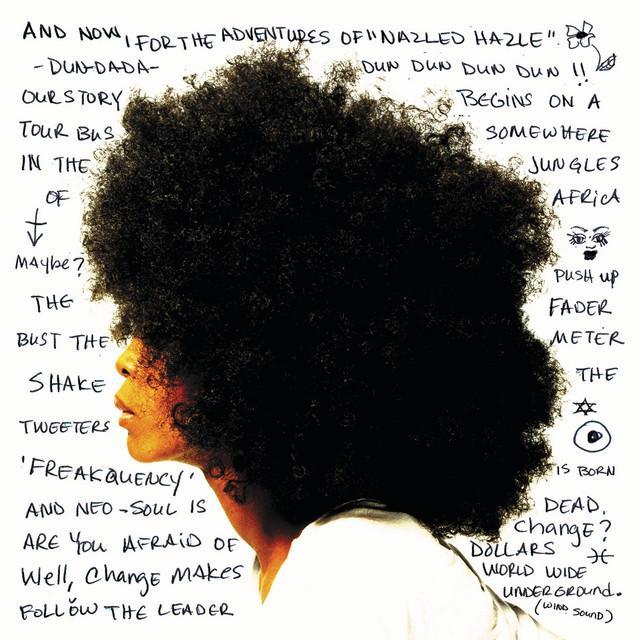
Danger by Erykah Badu
Why This Story Feels So Tense
The meaning of Danger Erykah Badu starts with a simple but painful idea: love cannot protect people from the life they choose. The song follows a woman tied to a man in street crime, and it shows the fear, waiting, and moral damage that come with that bond.
"Danger" - Erykah Badu
The brotha's got this complex occupation
The brotha's got this complex occupation
Loading lyrics...
Unable to load lyrics
We're unable to display the lyrics at this time. Please try again later.
Factually, Danger was released in 2003 as the lead single from Worldwide Underground. It was written and produced by Erykah Badu, James Poyser, Rashad Smith, and R.C. Williams. It is also widely understood as a sequel to Badu's earlier song Otherside of the Game, moving that relationship into a darker stage after legal trouble and rising danger.
That context matters. Instead of a fresh romance story, this song sounds like the next chapter of a choice that was already risky years before.

Watch the official Danger
music video
A Domestic Scene Turned Into a Crime Drama
At first, the song frames danger through ordinary details. The narrator is at home with a child, walking the floor and waiting for her man. She is loyal, tired, and still trying to hold herself together. When they sing about staying up all night and keeping their make-up on
, the point is not glamour. It suggests endurance, ritual, and a need to stay ready for whatever comes next.
This is one of Badu's sharpest moves as a writer. They place motherhood and romance inside a world shaped by weapons, drugs, and police pressure. The result is a split emotional life: tenderness in one room, panic in the next.
Loyalty Has a Cost
The woman is not shown as naive. She knows the stakes. The song mentions hidden cash, a weapon, and plans to run if the police arrive. Phrases like box of money
and keep the car runnin'
turn the home into a survival space.
Interpretation: Badu seems less interested in judging the woman than in showing how crime infects everyday life. Love becomes labor. Safety becomes strategy.
The Hook Says the Neighborhood Is Trapped
The chorus is blunt and repetitive, which is exactly why it works. Short phrases such as block on lock
and block stay hot
create the feeling of a closed system. The street is watched, armed, and always near explosion.
Repetition matters here. The hook does not move the story forward much, but it deepens the pressure. It sounds like a rule everyone already knows. In that sense, the chorus is not just description. It is social atmosphere.
DangerYou're in dangerNo hard feelings right or wrong
Those lines widen the song beyond one household. The warning starts to sound universal, almost like the neighborhood itself is speaking.
Guilt, Not Just Fear, Enters the Picture
One of the song's strongest turns comes later, when it shifts from practical danger to psychological danger. The lyrics suggest that the money being made leaves the man anxious and unable to rest. The issue is no longer only getting caught. It is also what violence does to the mind.
When the song refers to lives taken and love forsaken, it points to moral erosion. Street success is not presented as power without consequences. It creates paranoia, insomnia, and spiritual damage.
Interpretation: This is where the meaning of Danger Erykah Badu gets deeper than a crime tale. The song argues that danger lives inside people too. The outside threats are real, but so are shame, memory, and fear.
How the Music Carries the Meaning
The production helps tell that story. Built from a slow, thick groove, the track leans on repetition, low-end weight, and a hypnotic loop. That sound feels circular, almost stuck, which fits a life where the same choices keep repeating.
Badu's vocal approach is key. They do not oversing the material. Instead, the delivery is cool, observant, and a little distant, as if calm is the only way to survive panic. That restraint makes the song more unsettling. Rather than exploding, it simmers.
The connection to Otherside of the Game also matters musically and thematically. That earlier song had warmth and conflict, but “Danger” feels heavier, more resigned. The relationship has aged, and so has the risk.
Artist Context and Reception
By 2003, Badu was already known for mixing neo-soul with sharper social observation. Worldwide Underground pushed further into loose, groove-based songs and ensemble energy. In that setting, “Danger” stood out because it wrapped a street narrative inside Badu's distinctive blend of soul, hip-hop, and lived-in storytelling.
Commercially, the song reached No. 82 on the Billboard Hot 100 and No. 27 on the Hot R&B/Hip-Hop Songs chart, according to chart data summarized by Wikipedia. Those numbers do not make it one of their biggest pop hits, but the song has had strong staying power in live performance and fan discussion.
The Best Way to Read the Ending
So what is “Danger” really about? At its core, it is about devotion under pressure and the way illegal hustle distorts love, home, and identity. The woman waits because she cares, but the song never pretends that care can fix the system around her.
A second reading is also possible. Interpretation: the title may refer not only to the man being in danger, but to everyone near him—the partner, the child, and even his own conscience. In that reading, danger is contagious.
That is why the song lingers. It does not offer escape, only clarity. It sees the romance, the fear, and the damage at once.
Disclaimer: This interpretation is based on the song's lyrics, sound, and documented context. As with any art, listeners may hear different meanings.








