
Why 'See The Light' by Hillsong Live Hits So Hard
The meaning of See The Light Hillsong Live centers on spiritual awakening. The song is a short, direct worship anthem about moving from guilt and fear into freedom, hope, and praise through Jesus. Rather than telling a complex story, it gives listeners a before-and-after testimony: once lost, now changed.
"See The Light" - Hillsong Live
Remember this
He took my sin
Loading lyrics...
Unable to load lyrics
We're unable to display the lyrics at this time. Please try again later.
Hillsong Worship released the song on the 2016 live album Let There Be Light, a project credited to the church’s global worship team and released through Hillsong Music and Capitol CMG distribution. Song credits commonly list Reuben Morgan and Ben Fielding as writers, two of the best-known names in modern worship songwriting. Those facts matter because both writers often build songs around simple, congregational lines that are easy to sing and easy to remember.
A Song Built Around Rescue, Not Self-Improvement
At its core, the song says human effort is not the answer. The opening lines frame the singer as someone who must remember what God has done, not what they have achieved. That is why the song begins with a command to the inner self: Arise my soul
. It sounds like a pep talk, but the point is theological, not motivational.
The next idea is about forgiveness and burial of the past. When the song says sin is gone, it presents salvation as complete, not partial. In plain terms, the old life is not being cleaned up a little; it is being replaced. That is why one of the key phrases is He buried it
. The image suggests finality. Buried things are meant to stay in the ground.
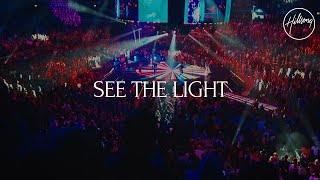
Watch the official See The Light
music video
The Central Message in the Chorus
The chorus gives the song’s biggest claim: identity has changed. Instead of saying they have become stronger on their own, the singer says No longer I who live
. That line echoes the New Testament idea that a believer’s life is now shaped by Christ rather than ego or shame.
This is the heart of the meaning of See The Light Hillsong Live. The “light” is not just positive thinking or emotional relief. It stands for spiritual sight. The singer was once spiritually numb, then awakened to truth. The title phrase lands because it describes both understanding and renewal.
For I was dead in sin
But I woke up to see the light
That two-line turn is the song’s whole testimony in miniature. First comes death, then awakening. First darkness, then sight. The wording is simple enough for a congregation, but the contrast gives it force.
How the Verses Connect to the Bigger Themes
Each verse adds a layer to the same testimony. One section rejects personal pride by saying the singer will not brag about their own goodness. Instead, the focus stays on the cross. In other words, the song teaches humility. The rescue belongs to God, so the glory does too.
Another section shifts from guilt to courage. Fear and death are named as powers that once held control, but the song now treats them as defeated. That move gives the track emotional lift. It is not only about pardon for the past; it is also about freedom in the present.
Three themes working together
- Salvation: sin is forgiven and the old life is gone.
- New identity: the self is remade through Christ.
- Victory over fear: death and anxiety no longer rule.
These themes are common in worship music, but this song presents them in especially compact form. It wastes almost no words.
Why the Repetition Matters in Worship
A casual listener may notice how often the song repeats All of this for your glory
. On the page, that can seem simple. In a worship setting, repetition works like emphasis and meditation at the same time.
Interpretation: the repeated line acts as the song’s surrender point. After telling a personal story of rescue, the singer turns outward and upward. The message becomes: this changed life is not meant to spotlight the person who was saved. It is meant to point back to God.
That is an important shift. The song starts with “my soul” and “my sin,” but it ends in worship. Personal testimony becomes collective praise.
How the Sound Carries the Meaning
Because this is a Hillsong Live recording, production matters almost as much as the lyrics. The arrangement follows a familiar worship arc: steady opening, rising drums, layered guitars and keys, then a strong communal chorus. That shape mirrors the message of awakening.
The verses feel restrained, which fits the reflective content. Then the chorus opens up musically, making the phrase about seeing light feel larger than the room. The repeated bridge pushes even further, inviting a congregation to move from listening to declaring.
This is one reason the song has lasted in churches. It is designed not just to be heard but to be sung together. The simple melody and repeated lines help a crowd join in quickly, which turns the song’s theology into a shared experience.
Artist Context and Why It Fits Hillsong
Hillsong’s worship catalog often focuses on accessible biblical language, emotional clarity, and big live arrangements. “See The Light” fits that pattern perfectly. Reuben Morgan and Ben Fielding have both written songs that balance doctrine with singable hooks, and this track is a textbook example of that skill.
It also arrived during a period when Hillsong was leaning hard into songs of victory, grace, and identity. In that context, “See The Light” feels less like an outlier and more like a summary statement: grace changes who they are, and worship is the natural response.
One Clear Takeaway
The meaning of See The Light Hillsong Live is about being spiritually awakened by grace and then giving the credit back to God. Its language is plain, but that simplicity is the point. The song wants listeners to remember, confess, and celebrate.
Interpretation: listeners do not need to share the singer’s exact church language to understand why the song connects. It turns heavy ideas like guilt, fear, and death into a hopeful before-and-after story.
Disclaimer: This interpretation is based on the song’s lyrics, performance style, and known worship context. As with any song, listeners may connect with it in different personal or spiritual ways.








