‘Too Blind to See?’ Inside Can I Play With Madness
Iron Maiden’s 1988 single fires off a bold question and a brighter sound than many of their earlier epics. Behind the speed and the chant-along hook sits a serious doubt: who deserves your trust when you’re desperate for answers?
"Can I Play With Madness" - Iron Maiden
Give me the sense to wonder
To wonder if I'm free
Loading lyrics...
Unable to load lyrics
We're unable to display the lyrics at this time. Please try again later.
A Battle Between Doubt and Dogma
At its core, the meaning of Can I Play With Madness Iron Maiden fans love to debate is skepticism. A young narrator hunts for certainty, only to meet a prophet who offers threats, not truth. The song pits personal agency against authority.
Interpretation: “playing with madness” isn’t glorifying instability. It’s testing boundaries—flirting with chaos to spark insight—without surrendering judgment. The lyric’s moral lands on self-reliance rather than blind belief.
Watch the official Can I Play With Madness
music video
Who Speaks, and Who Gets Judged
The voice is first person: a seeker asking for a sense of wonder
and the strength to stand tall. They want freedom from fear and conformity. Their impulse to break down the walls
signals rebellion against voices that gatekeep knowledge.
The prophet embodies gatekeeping. He claims authority but offers only insults and doom. The power flips as the narrator realizes that a title—prophet, expert, elder—doesn’t equal truth.
What Actually Happens, Beat by Beat
- The narrator asks for purpose and identity.
- They consult a seer with a
crystal ball
but seeno vision there at all
. - Confrontation follows; the elder warns of punishment and fire.
- The chorus returns like a dare: Will you risk confusion to learn something real, or let someone else define reality for you?
This crisp story fits the single’s 3:31 runtime: set-up, clash, fallout. The takeaway is that critical thinking beats borrowed certainty.
The Chorus as a Dare, Not a Diagnosis
Can I play with madness? The prophet stared at his crystal ball
There’s no vision there at all
The hook is a loop of self-testing. Interpretation: The plea isn’t for permission to lose one’s mind—it’s asking whether bold inquiry is allowed in a world policed by “prophets.” Each repeat hardens the narrator’s resolve.
Symbols You Can Hear
Iron Maiden tie imagery to sound. The bright major-key tilt and gang-vocal refrain sharpen the irony: a joyous charge toward an uneasy truth. Adrian Smith’s melodic leads and subtle synth sheen (a hallmark of the Seventh Son era) make the chorus stick. Bruce Dickinson’s phrasing vaults between urgency and mockery, especially when echoing the prophet’s put-downs like too blind to see
.
Martin Birch’s production keeps Nicko McBrain’s drums snappy and Steve Harris’s bass athletic, framing a pop-length blast without losing heft. It’s a gateway Maiden track—immediate but threaded with the band’s epic instincts.
Album Context that Changes the Frame
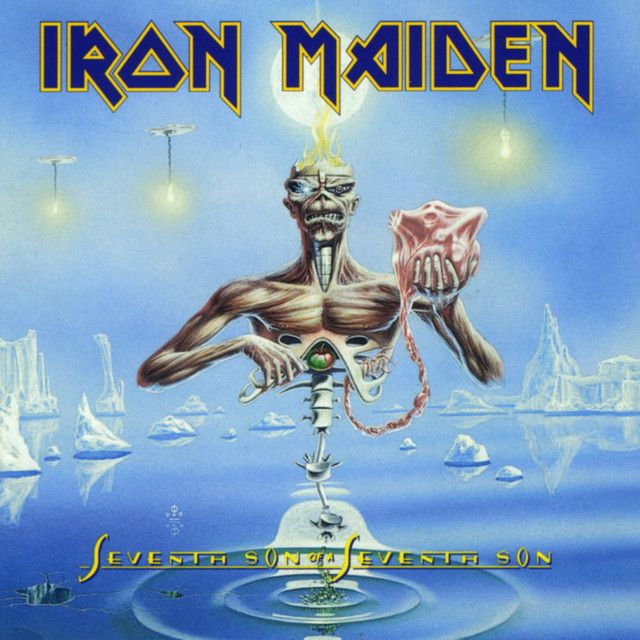
Seventh Son of a Seventh Son tracks clairvoyance, fate, and the cost of knowing. As the album’s first single (released March 14, 1988), this song introduces the prophecy theme but twists it: not every vision is valid, and not every visionary is honest. It climbed to No. 3 in the UK, proof that Maiden could merge philosophy with hooks.
The music video’s comic edge—featuring Monty Python’s Graham Chapman as a cranky art teacher—mirrors the lyric’s satire of self-serious authority. Even when the tone lightens, the critique holds: puffed-up experts can still be wrong.
Alternate Takes Worth Considering
- Interpretation: A con-artist prophet. The line
no vision there at all
suggests the seer has nothing to offer. The insults cover up a scam. - Interpretation: Inner conflict, not an external villain. The “prophet” could be the narrator’s fear voice, lashing out when challenged.
- Interpretation: Religious dogma vs. personal belief. References to a
lake of fire
echo hellfire preaching. The narrator rejects fear-based control while still searching for meaning.
Each view supports the same core: keep your agency when answers feel scarce.
How the Sound Sells the Story
The pace feels like a sprint toward clarity. Riff-and-run verses slam into a sky-opening chorus, as if doubt condenses and then bursts. Maiden’s twin-guitar language sells that turn from tension to declaration.
The arrangement trims any fat common to prog epics, fitting its parable into radio length without losing bite. That efficiency underscores the message: you don’t need a robe or a long sermon to tell truth from noise.
Takeaway for Modern Listeners
The song urges a healthy test: consult ideas, not idols. Ask hard questions. And when someone claims exclusive access to the future, remember the narrator who saw no vision there at all
—and chose to think for themselves.
Interpretation disclaimer: Meanings are subjective and can vary by listener. This analysis blends known context with informed interpretation.