
Why James Brown's 'I Feel Good' Still Hits
The meaning of I Got You (I Feel Good) James Brown is simple on the surface and powerful underneath: love makes them feel alive. James Brown does not build this song through complex storytelling. Instead, they turn a few direct ideas into a full emotional event. That is why the record still sounds fresh nearly sixty years later.
"I Got You (I Feel Good)" - James Brown
I feel good, I knew that I would, now
So good, so good, I got you
Loading lyrics...
Unable to load lyrics
We're unable to display the lyrics at this time. Please try again later.
First released as a hit single in 1965, the song became Brown's highest-charting entry on the US Billboard Hot 100, peaking at No. 3, while also spending six non-consecutive weeks at No. 1 on the R&B chart. It was later inducted into the Grammy Hall of Fame in 2013. Those facts help explain its reach, but the feeling in the record explains its staying power.
The Big Idea Behind the Joy
At heart, the song is about what happens when romantic connection becomes emotional energy. Brown's singer is not quietly grateful. They are overflowing. The repeated hook, built around I feel good
and I got you
, frames love as a source of total uplift.
That matters because the lyrics never describe a troubled relationship, a breakup, or even much backstory. They stay in the present tense of pleasure. The singer has someone, and that fact changes their body, mood, and sense of self.
Interpretation: the song is not only about being in love. It is also about feeling transformed by love. Brown presents affection as something physical, almost electric.
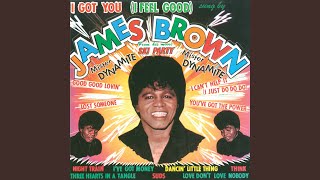
Watch the official I Got You (I Feel Good)
music video
A Love Song Told Through Motion
The verses are brief, but they show how the song works. When the singer says when I hold you
, the message is that touch creates certainty. They suddenly feel safe, strong, and incapable of failure.
Another key image is sugar and spice
. On paper, it is a small phrase. In performance, it becomes a quick, bright way to say that this relationship feels sweet, exciting, and a little overwhelming. The song does not need elaborate poetry because its emotional claim is so direct.
When I hold you in my arms
I know that I can't do no wrong
This short moment is important because it links romance to confidence. The singer is not only happy with someone else. They feel better about themselves because of that bond.
Why Repetition Is the Whole Point
Some listeners might hear the song's few lines and think it is lyrically thin. But the repetition is part of the design. Brown uses recurring phrases like so good
and I feel nice
to make emotion feel immediate rather than explained.
This is one reason the track became such a cultural staple. The words are easy to remember, but they also act like percussion. According to reference coverage of the song's musical structure, it draws on a twelve-bar blues frame while pushing Brown's signature emphasis on the first beat, often called being "on the one." That means the lyric and groove hit together, turning simple language into a rhythmic weapon.
Interpretation: the song says joy can be basic without being shallow. Sometimes happiness is just a shout, a stomp, and a repeated truth.
The Sound That Sells the Meaning
The production does a huge share of the storytelling. This is a brass-heavy recording, with sharp horn punches, a driving backbeat, guitar, bass, drums, and a notable sax presence including Maceo Parker. Brown's vocal is not calm or polished in a soft pop sense. It is explosive.
Those famous cries at the opening and close matter as much as any lyric. They make the song feel less like a statement and more like a physical release. Brown sounds like they cannot contain the feeling, which perfectly matches the song's message.
The arrangement also avoids softness. Even though this is a love song, it does not float. It struts. That gives the record its special balance: tenderness in meaning, force in delivery.
Artist Context Makes the Song Bigger
Part of the meaning of I Got You (I Feel Good) James Brown comes from where it sits in Brown's career. The song grew from an earlier Brown composition, "I Found You," recorded by Yvonne Fair in 1962. Brown then cut an earlier version of "I Got You" in 1964 before re-recording the now-famous single version in 1965 after label conflict and release complications.
That history matters because the final hit sounds refined, sharpened, and fully claimed. Brown had already been building their style, and this song became one of the clearest examples of how they could merge R&B, blues structure, and early funk energy into something instantly recognizable.
In other words, this is not just a catchy love song. It is also a statement of artistic control.
More Than Happiness, Less Than Innocence
There is another layer worth noting. Although the song feels pure and carefree, it is not childish. The confidence in the lyrics carries a sensual charge. The joy comes from closeness, touch, and possession, though the tone remains playful rather than heavy.
Interpretation: that mix helps explain the record's wide appeal. It feels romantic enough for pop audiences, gritty enough for soul fans, and rhythmic enough to point toward funk. The song can work in films, sports arenas, dance floors, and commercials because its emotion is immediate and universal.
Why It Endures
The song lasts because it does one thing almost perfectly: it turns a simple romantic idea into a full-body performance. Brown does not ask listeners to decode hidden symbols. They ask them to feel the burst of being changed by love.
That is why this track remains Brown's signature for many listeners. It captures the exact point where joy becomes rhythm, rhythm becomes identity, and identity becomes a classic.
Disclaimer: This article offers interpretation based on the lyrics, performance, and known historical context. Meanings can vary from listener to listener.








