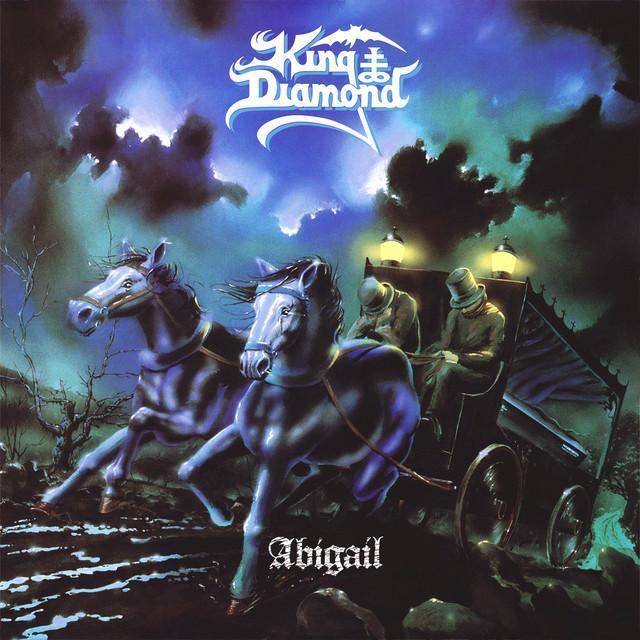
Black Horsemen by King Diamond
Why This Ending Matters So Much
The meaning of Black Horsemen King Diamond becomes clearest when they treat the song as the last chapter of a horror story, not just a standalone metal track. It closes Abigail, King Diamond’s 1987 concept album, which is widely known as the band’s first full narrative record and one of heavy metal’s most famous horror albums. Factually, Abigail was released in 1987 and produced by King Diamond, with a lineup that included Andy LaRocque, Michael Denner, Timi Hansen, and Mikkey Dee.
"Black Horsemen" - King Diamond
Miriam in the mood, Jonathan was scared
Gazing into the dark, Jonathan saw the star
Loading lyrics...
Unable to load lyrics
We're unable to display the lyrics at this time. Please try again later.
In simple terms, the song is about evil being born again and a desperate attempt to contain it. By the time this finale begins, Miriam is possessed, Jonathan is doomed, and Abigail’s spirit is no longer only a threat in the house. It has become flesh.
Watch the official Black Horsemen
music video
The Story Reaches Its Darkest Point
A murder, a birth, and a cursed return
The song opens at the mansion stairs, where fear and possession meet. Jonathan sees danger too late, and Miriam, under Abigail’s force, sends him to his death. That moment is crucial because the album has been building toward a reversal: the couple came to the mansion as heirs, but now the house claims them.
The lyrics then turn to childbirth and death. Miriam’s labor is not presented as a natural event. It is framed as a supernatural invasion, summed up by the phrase the second coming
. The song uses religious language in a twisted way, making Abigail feel like an anti-sacred rebirth.
One of the most chilling details is Miriam’s final vision of yellow eyes
. Paraphrased, that image tells listeners the baby is not innocent. It seals the song’s main horror idea: birth here is not hope. It is the return of a buried evil.
What the Black Horsemen Symbolize
The title figures arrive late, but they carry huge meaning. In the story, they ride in from beyond
, which suggests they are more than human riders. They feel like judges, undertakers, and ritual guardians all at once.
Interpretation: the horsemen symbolize fate finally catching up with the family curse. Earlier in the album, warnings were ignored. Here, those warnings become action. They do not debate morality or show pity. They simply complete a grim duty.
Their role also gives the song a mythic scale. Instead of ending as a private family tragedy, it becomes a cosmic cleanup operation. The mansion’s evil is so old and so powerful that it requires supernatural servants to drag it back into the ground.
How the Lyrics Build the Horror
King Diamond writes this finale like a short gothic film. The lines move quickly from stairs, to labor, to ghostly memory, to ritual removal. That fast motion makes the song feel breathless, as if the curse is unfolding too fast for anyone to stop.
A few short phrases do a lot of work. sacred night
turns the scene into a mock religious event. soul of Miriam
reminds listeners that a real person is trapped inside the nightmare. And when the horsemen find Abigail in the coffin, the image is intentionally revolting because it shows evil feeding on itself to survive.
Take her, and bring her
To the chapel in the forest
That brief command changes the mood from panic to ritual. The song is no longer about shock alone. It becomes about containment, burial, and the fear that old evil needs formal ceremony to be restrained.
Sound, Performance, and Atmosphere
The meaning of Black Horsemen King Diamond is strengthened by the music’s theatrical design. Abigail was recorded in the analog era on 24-track tape, and King Diamond has said the album’s layered mix took painstaking manual work. That matters because this finale sounds stacked and dramatic, not loose or accidental.
The guitars help tell the story. The twin-lead playing creates a haunted, noble feeling, while the rhythm section drives the ending forward like a chase scene. Mikkey Dee’s drumming adds urgency, but the band never loses clarity. They make space for King Diamond’s voice, which shifts between narration, character acting, and near-scream hysteria.
That theatrical singing style is essential. They do not hear one neutral narrator. They hear fear, command, grief, and demonic triumph competing in the same track. This is one reason Abigail is often praised as a horror-metal landmark rather than just a heavy metal album with spooky words.
Artist Context Makes the Song Richer
King Diamond told Billboard that much of the Abigail story came to him after a violent thunderstorm, and he linked key imagery to dreamlike visions, including the horsemen and a child’s coffin. That background helps explain why the song feels so visual and uncanny. It was built from nightmare logic.
It also fits King Diamond’s larger artistic goal. He has described Abigail as an early pure horror-metal album, and this closing track may be the strongest proof of that claim. Everything in it serves atmosphere and story: the voices, the imagery, the pacing, and the sense of cursed repetition.
Final Meaning and Best Reading
Interpretation: the best reading is that “Black Horsemen” is about the failure to escape inherited evil. Jonathan and Miriam do not simply die because of bad luck. They step into a bloodline, a house, and a history already poisoned. Abigail’s rebirth shows that buried violence returns unless it is confronted.
At the same time, the ending is not fully reassuring. The horsemen remove Abigail, but the song does not sound like clean victory. It sounds like temporary control. Evil is boxed up, carried away, and hidden, yet still powerful enough to demand ceremony.
That is why the track lingers. It ends the album, but it does not offer peace. It offers a final image of horror managed, not erased.
Disclaimer: This interpretation separates established album plot from critical reading. As with most narrative songs, some meanings remain open to listener interpretation.








