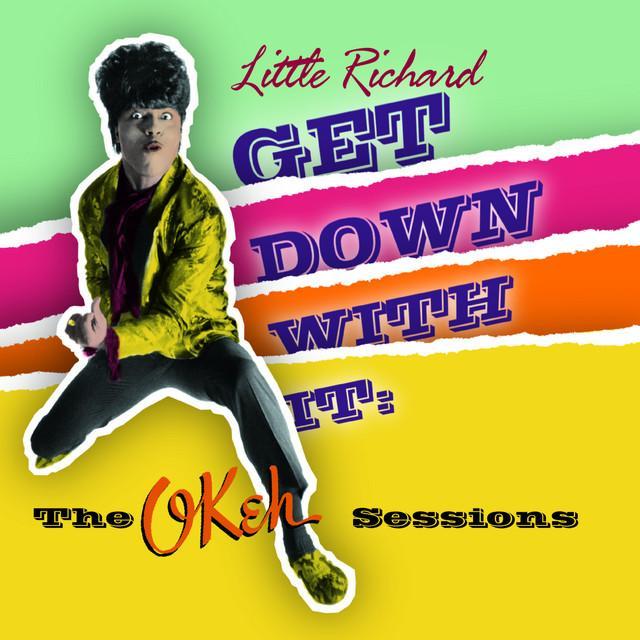
Get Down with It by Little Richard
Why This Song Hits So Fast
The meaning of Get Down with It Little Richard starts with movement. This is not a song that slowly explains itself. It bursts in like a stage command, asking people to loosen up, stop watching, and join the action.
"Get Down with It" - Little Richard
Let your hair down
If you got on a wig like some people think I got on
Loading lyrics...
Unable to load lyrics
We're unable to display the lyrics at this time. Please try again later.
Little Richard built his reputation on explosive performances, wild charisma, and a sound that helped shape early rock and roll. In that context, this song feels less like a private confession and more like a public event. They use the lyric to turn the room into part of the performance.
Watch the official Get Down with It
music video
The Core Meaning: Joy as a Group Act
At the simplest level, the song is about dancing, noise, and letting go. When they urge the crowd to let your hair down
, the point is not fashion. It is release. The track invites people to drop their guard and enjoy themselves without embarrassment.
That invitation keeps expanding. Commands to clap, snap, stomp, and raise hands make the song feel communal. Rather than focus on romance or heartbreak, Little Richard centers shared energy. Everyone is meant to join, not just listen.
Interpretation: The song suggests that freedom is physical. Moving the body becomes a way to break social stiffness and turn a crowd into a community.
A Performer in Full Control
One of the most revealing parts comes at the start, when Little Richard jokes about hair and image. The line about a wig, followed by the playful challenge to take it off
, is comic and slightly teasing. It works like stage banter.
This matters because Little Richard was famous for turning performance into spectacle. Their persona was bold, funny, and a little confrontational in the best way. The opening joke establishes authority: they are not shy, and the audience should not be shy either.
That humor also fits their larger career. As the Rock & Roll Hall notes, Little Richard was one of rock’s foundational figures, and that larger-than-life personality was central to the music’s impact.
How the Lyrics Build a Crowd
The lyric does not develop in a story-like way. Instead, it works in stages, almost like a live set.
First, they break the ice
The opening lines use humor and direct address. Little Richard talks to the room, not above it.
Then, they set the rule
The repeated call to get down with it
becomes the song’s mission statement. Everyone is supposed to participate.
Everybody clap your hands
Everybody, everywhere
This short moment shows how the song widens its reach. The music is not for a select group. It is for the whole room, maybe even the whole world.
Finally, they push the energy higher
Later prompts like stomp your feet
and snap your finger
keep adding motion. The song keeps finding new ways to make rhythm visible in the body.
What the Hook Really Means
The chorus phrase is simple, but that simplicity is the point. Saying it’s alright
over and over reassures the listener that this release is allowed. The song gives permission to be loud, playful, and fully present.
That line also carries emotional weight. In many dance songs, the party itself is the message. Here, the repeated reassurance feels almost therapeutic. If daily life is rigid or stressful, the song offers a temporary space where joy takes over.
Interpretation: The hook is not just filler. It is the emotional key, turning dance into relief.
Sound, Groove, and Stage Energy
The production helps explain the song’s meaning as much as the words do. The beat is direct and physical. Repetition is used as fuel, not laziness. Each vocal cue lands like a prompt from a bandleader.
Little Richard’s voice is the main instrument. They shout, stretch syllables, and toss in ecstatic sounds that feel half-sung and half-spoken. That delivery matters because it makes the song feel live even on record. Listeners are not just hearing a tune; they are hearing an event.
Instrumentally, the groove supports collective motion. The rhythm section locks into a steady pulse while the vocal rides on top, steering the room. That design matches Little Richard’s broader catalog, much of which the Britannica profile describes as central to the energy of early rock and roll.
A Deeper Reading Beneath the Fun
On the surface, this is a party record. That reading is fully valid. But there is another layer worth noting.
Little Richard was an artist whose image, voice, and performance style challenged neat social expectations. In that light, a song built around public freedom can feel bigger than dancing. It becomes a celebration of self-display, boldness, and refusing restraint.
Interpretation: The repeated calls for movement may also reflect a deeper insistence on visibility. They are not asking people to blend in. They are asking them to show up.
Why the Song Still Works
The meaning of Get Down with It Little Richard lasts because it is easy to feel. The track does not depend on complex poetry. Its power comes from command, rhythm, and personality.
That is also why the song fits Little Richard so well. They were never only selling melody. They were selling ignition. This track captures that gift by turning a simple dance command into a full statement of freedom, noise, and shared delight.
In the end, the song says that joy grows when people do it together. That is why it still feels alive.
Disclaimer: This interpretation separates factual context from critical reading. As with many performance-driven songs, meaning can vary by listener.







