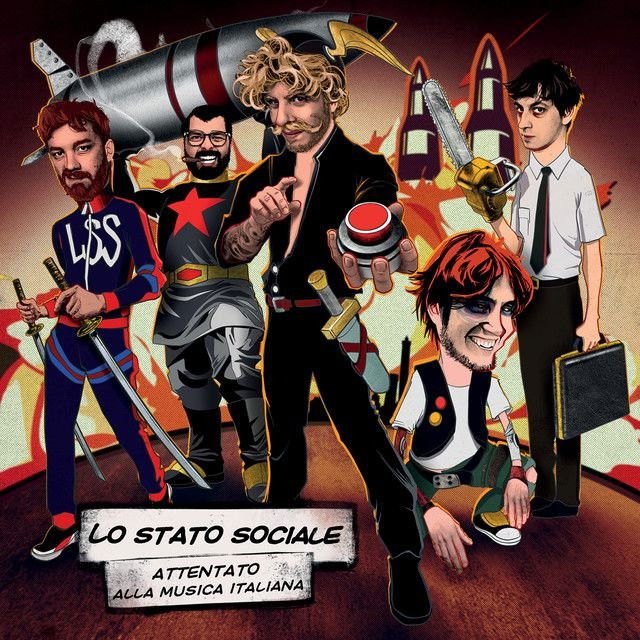
Why “Combat Pop” Turns Satire Into a Pop Anthem
The meaning of Combat pop (ALBI #1) Lo stato sociale starts with a joke and ends with a challenge. On the surface, the song is bright, catchy, and easy to sing. Underneath, it is a sharp satire about what happens when rebellion becomes fashion, pop becomes advertising, and public style matters more than real conviction.
"Combat pop (ALBI #1)" - Lo stato sociale
Questo è combat pop
O era combat rock? Boh
Loading lyrics...
Unable to load lyrics
We're unable to display the lyrics at this time. Please try again later.
Lo Stato Sociale have long mixed humor, social observation, and pop energy. They became widely known outside Italy after Sanremo 2018, where their playful but pointed approach reached a huge audience. “Combat Pop” fits that identity well: it sounds fun, but it keeps asking what culture is still for.
The Song’s Core Idea: Rebellion for Sale
At the center, the track presents a world where everything edgy has already been packaged. The title phrase questo è combat pop
is the key clue. They are not offering a true protest song in the old sense. They are naming a hybrid: music that borrows the pose of resistance while living comfortably inside mainstream pop.
That is why the song keeps circling back to the question ma che senso ha?
In English, that means something like “what’s the point?” The chorus is not just cynical. It is an audit of modern culture: if people want more, pay more, and feel less, then what exactly are they buying?
Interpretation: the song argues that today’s pop world can absorb almost any anti-establishment message and sell it back as lifestyle. Rebellion survives as image, not action.

Watch the official Combat pop (ALBI #1)
music video
The Verses Mock Style, Taste, and Fake Authenticity
The opening lines set the tone by playing with references to punk history and coolness. The mention of Clash-like militancy is quickly undercut by confusion and shrugging. That joke matters. It suggests that even iconic rebellion is now just another style marker, half remembered and lightly worn.
From there, the lyrics move through social rituals: dressing well, smiling, shaking hands, and treating emotional disappointment with polish. Even a breakup or personal failure becomes something to handle “with style.” The song mocks a culture where appearance is more important than truth.
A later verse pushes this further. It pokes at the suffering singer-songwriter, the tattooed image of authenticity, and the predictability of politics. The point is not that art, pain, or symbols are fake in themselves. The point is that they have become standardized. Everyone knows the look already.
A Chorus That Sounds Big on Purpose
Musically, “Combat Pop” is built like the very thing it criticizes. It has a clean, punchy pop arrangement, a fast pulse, and a chorus designed for group singing. That is not a contradiction by accident. It is the joke.
When they sing mica rock'n'roll
, they reject the old myth that rock automatically equals truth. Instead, they use polished pop as their delivery system. The song’s bouncy rhythm and chant-like hook make the critique feel communal, almost festive.
This matters because the production turns the listener into part of the problem. The track is so catchy that people can enjoy the package even while hearing the warning. In other words, the sound performs the song’s argument.
The Sharpest Section Comes Near the End
The bridge is where the social critique becomes explicit. The song says there is no longer a clear musical language for being outside the system, fighting with parents, or making revolution. That does not mean earlier music really changed everything. It means the old symbols of resistance no longer carry the same force.
Non c'è più il punk
Il rock
non si fanno rivoluzioni
Those short phrases sum up the song’s bleak comedy. Punk, rock, and the “serious” protest song all appear as weakened forms. Even television culture gets folded in, suggesting that mainstream entertainment now frames public feeling more effectively than political music does.
Interpretation: this is not a claim that music is useless. It is a claim that music alone cannot deliver the moral weight people once projected onto it.
Symbols and Motifs in “Combat Pop”
Several recurring ideas help explain the meaning of Combat pop (ALBI #1) Lo stato sociale:
- Clothes and style: These stand for public identity. Dressing like a rebel is easier than risking anything.
- Advertising: The line about making pop songs to sell ads cuts to the center. Culture can become marketing.
- Funerals and breakups: Personal drama is treated as performance, showing how pain can be stylized.
- Punk and rock references: These work as ghost symbols of older authenticity.
- Monthly hits and manners: These point to disposable trends and social conformity.
Together, these motifs create a world where individuality is always close to becoming a costume.
Artist Context Helps the Meaning Land
Lo Stato Sociale are known for blending indie pop with irony and social commentary, including on their official site. That background matters. “Combat Pop” is not a random attack on pop music from outsiders who hate hooks. They clearly understand the pleasures of pop and use them well.
That is why the song feels smarter than a simple “old music was better” complaint. They are not praising some pure past. They are showing how every era creates its own fashionable rebellion, and how quickly those symbols get emptied out.
Final Meaning: A Danceable Identity Crisis
In the end, “Combat Pop” is about cultural exhaustion dressed as a singalong. It asks what remains of protest when image, commerce, and self-branding shape everything. The answer is not hopeful, but it is not fully hopeless either. By making the critique so catchy, Lo Stato Sociale prove that self-awareness can still cut through.
The song’s real target is not pop itself. It is empty posture: looking radical, sounding sincere, and still serving the same market logic underneath.
That is the lasting meaning of “Combat Pop”: they turn a fun chorus into a question about art, authenticity, and whether modern rebellion is now just another product.
Disclaimer: This interpretation is based on the lyrics, musical context, and publicly available artist background. Like most satire, the song can support more than one reading.







