
Why "Man of Your Word" Feels So Certain
For listeners searching for the meaning of Man of Your Word Maverick City Music, Chandler Moore, KJ Scriven, the core idea is simple: the song is about trusting God because His promises are dependable. Rather than building its message on complex storytelling, it repeats one bold claim until it sinks in emotionally and spiritually.
"Man of Your Word" - Maverick City Music, Chandler Moore ft. KJ Scriven
You're a man of Your word, yeah
Yeah
Loading lyrics...
Unable to load lyrics
We're unable to display the lyrics at this time. Please try again later.
That approach fits Maverick City Music’s worship style. Their songs often feel less like polished pop narratives and more like live, shared declarations of faith. Here, the message is not just that God can act, but that they believe He will because He is consistent.
The Song’s Core Message Is Trust
At its center, the song says that faith grows from God’s character. Early lines connect belief with change: impossible things can open up, and burdens can break when people receive what God says. The short phrase all things are possible
frames the song’s hope, but the reason for that hope is even more important.
The chorus gives that reason in direct language: If You said it, we believe it
. The song does not present belief as wishful thinking. It presents belief as a response to a trustworthy speaker. That is why the title phrase, man of Your word
, matters so much. It is a worshipful way of saying God is faithful to what He has spoken.
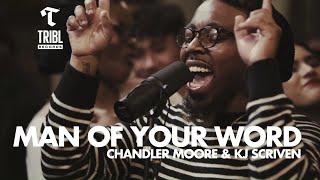
Watch the official Man of Your Word
music video
How the Verses Build Confidence
The first sections move from possibility to promise. They mention broken chains and fulfilled words, which places the song in a classic gospel and worship tradition: freedom follows truth, and trust follows remembrance.
Then the writing gets more personal. The line finish what You started
shifts the focus from big theological truth to daily life. The song suggests that God is not only powerful in general; He is also active in individual stories.
That idea becomes even clearer with the statement that God has never failed before and will not begin now. In plain terms, the singers are arguing from past faithfulness to present confidence. Because God was steady in the past, they believe He will stay steady in their pain, delay, and uncertainty.
The Most Important Turn Happens Near the End
One of the song’s strongest moves is the shift from promises to identity. After repeating trust in what God says, the song starts applying that truth to the self. The repeated phrase I am who You say I am
changes the emotional center.
This matters because it shows that God’s word is not only about miracles or outcomes. It is also about worth, belonging, and freedom. Interpretation: this section suggests that many listeners do not only need help with circumstances; they need their self-understanding repaired.
That is why the ending lands so powerfully. The song moves from “God keeps promises” to “therefore they can live differently.” If God’s word is true, then shame, fear, and old labels do not get the final say.
Why Repetition Is the Point, Not a Flaw
Some listeners may notice how often the chorus returns. In a pop song, that might feel excessive. In worship music, it serves a different purpose.
Repetition turns a statement into a communal confession. It gives a room of people time to move from hearing a line to meaning it. The song’s many returns to the same idea mirror how trust is often built in real life: not through one dramatic sentence, but through saying the truth again until the heart catches up.
Your Word is written in stone
It’s a thing that we can always count on
Those lines make the theology even more direct. The image of something fixed and solid reinforces the song’s central claim that God’s word is stable, not changeable.
How the Sound Carries the Meaning
Musically, the song supports its message through a gradual build. It begins with spacious affirmation, then grows into a fuller group sound. That shift makes the theme of confidence feel embodied: the music starts with conviction and expands into celebration.
The live worship feel is crucial. Ad-libs, call-and-response moments, and layered vocals make the song sound shared rather than solitary. Chandler Moore’s vocal style, in particular, often mixes urgency with warmth, which helps the lyrics feel both personal and collective.
The groove also matters. Instead of sounding tense or fearful, the arrangement leans into steady rhythm and uplift. That gives the message emotional proof. The production says, in effect, that trust can sound secure even before circumstances change.
Artist Context Helps Explain the Song
Maverick City Music became known for worship that blends CCM, gospel, and spontaneous live expression, a style reflected across their releases and live performances. Chandler Moore has been one of the collective’s most recognizable voices, and KJ Scriven’s presence fits the group’s collaborative approach. Based on the provided credits, the song was written by Chandler Moore, Jonathan Jay, Nathan Jess, and Tony Brown.
That background matters because the song is designed less as private poetry and more as a church declaration. It is meant to be sung together, repeated together, and believed together.
Final Take on the Meaning
The meaning of Man of Your Word Maverick City Music, Chandler Moore, KJ Scriven is about trust rooted in God’s reliability. The song says belief becomes possible when people see God as consistent, present, and truthful.
Interpretation: its deepest message may be that faith is not denial of pain. It is a decision to let God’s promises speak louder than fear, delay, or self-doubt.
Disclaimer: This interpretation is based on the song’s lyrics, performance style, and artist context. As with all worship music, listeners may connect with its meaning in different personal or spiritual ways.








