
traitor by Olivia Rodrigo
Olivia Rodrigo’s “traitor” captures a very specific heartbreak: when someone doesn’t technically cheat but still breaks your trust. For U.S. listeners searching for the meaning of traitor Olivia Rodrigo, this track is a blueprint for naming emotional betrayal—how fast moving on can feel like a knife twist.
"traitor" - Olivia Rodrigo
Ah-ah-ah-ah-ah
Brown guilty eyes and little white lies
Loading lyrics...
Unable to load lyrics
We're unable to display the lyrics at this time. Please try again later.
Betrayal Without Cheating: The Core Message
At its center, the song argues that loyalty isn’t only about rules—it’s about timing, honesty, and emotional clarity. Rodrigo frames the hurt as the space between little white lies
and the moment an ex “goes official” with someone new.
Interpretation: The line Guess you didn’t cheat
sets up the song’s thesis. The narrator concedes the technicality but insists the conduct—talking, flirting, building a connection—crossed a moral line. When she sings you betrayed me
, she is naming a breach of trust, not just a broken relationship.
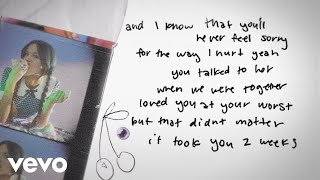
Watch the official traitor
music video
Voices and Viewpoint: A Direct Address
The narrator speaks in first person to a specific “you.” The address is intimate, with details like you ran to her
making the confrontation feel immediate. She contrasts her faithfulness—remembering promises like you gave me your word
—with the other person’s speed in moving on.
Interpretation: By talking directly to the ex rather than to the listener, Rodrigo pulls the audience into a private reckoning. We are witnesses to the case she’s building, which makes each detail land harder.
A Breakup Timeline in Three Beats
- Suspicion and denial: The narrator notices cracks—half-truths, dodged questions—yet stays to “keep” the relationship.
- The split and the sprint: Soon after the breakup, the ex and the other person are seen together. The speed of it reframes earlier “friendship” as something more.
- Aftermath and public display: The ex shows off the new relationship, which deepens the hurt and confirms the narrator’s fears.
These beats support the moral calculus: quick transitions can imply an overlap of emotion, if not action, and that overlap is what feels like treason.
The Hook’s Moral Logic
The chorus functions like a verdict. It balances empathy with indictment, admitting there was no “proof” of cheating but asserting that the intent and timing still broke trust.
God, I wish that you had thought this through Before I went and fell in love with you
This short confession raises the stakes. Interpretation: She isn’t only angry; she’s grieving the version of the relationship she believed in and the future she imagined.
Images, Symbols, And Clues
- Eyes and lies: Opening images of “guilty eyes” set a mood of intuition versus denial. The narrator knew something was off but muted her instincts.
- Trophy and display: Showing the new partner around like a “trophy” suggests status more than intimacy, intensifying the narrator’s sense of being replaced.
- Two weeks: The compressed timeline is a symbol for emotional overlap. It’s not the number itself, but what it implies—feelings were likely in motion before the breakup.
Interpretation: The song also hints at gaslighting. When the narrator is told she’s “paranoid,” it reframes the ex’s earlier reassurance as manipulation.
Production Choices That Mirror The Pain
“traitor,” co-written with and produced by Daniel Nigro, rides a soft, moody palette—fingerpicked and strummed guitars, airy synth pads, and understated percussion. The arrangement starts hushed, like a secret, and adds layers as the accusation builds. Stacked harmonies bloom on the chorus, widening the space around key lines and making them feel both intimate and anthemic.
The bridge shifts into a pop-rock swell, raising the emotional temperature without breaking the song’s restraint. Interpretation: That lift mirrors the narrator’s breaking point—the moment private suspicion turns into public clarity. Rodrigo has said she wrote much of the song on her bedroom floor in Salt Lake City, which fits the confessional tone: it feels diaristic but crafted.
Other Ways To Hear It
- Emotional infidelity frame: Some listeners read the song as a study in emotional cheating—where the betrayal is about investment, not acts. The evidence is in the secrecy and speed.
- Coming-of-age lens: Others hear a lesson in boundary-setting. The narrator learns to trust her own read of situations and to name what happened, even if others hide behind technicalities.
Interpretation: The power of “traitor” is its gray area. Because it never names explicit cheating, it lets listeners project their own almost-betrayal stories onto it.
Why It Resonated
Released May 21, 2021 on Rodrigo’s debut album SOUR, “traitor” quickly became a fan favorite and peaked at No. 9 on the Billboard Hot 100. Those milestones underscore why the song connected: it gives language to a common but slippery feeling—being replaced so fast it rewrites the past.
For anyone parsing the meaning of traitor Olivia Rodrigo today, the takeaway is clear: loyalty isn’t only about lines you don’t cross. It’s about honesty in the lead-up, the dignity of timing, and owning how actions—even technically defensible ones—affect someone else.
Disclaimer: Song interpretations are subjective. This article presents one informed reading based on publicly available information and the text of the recording.








