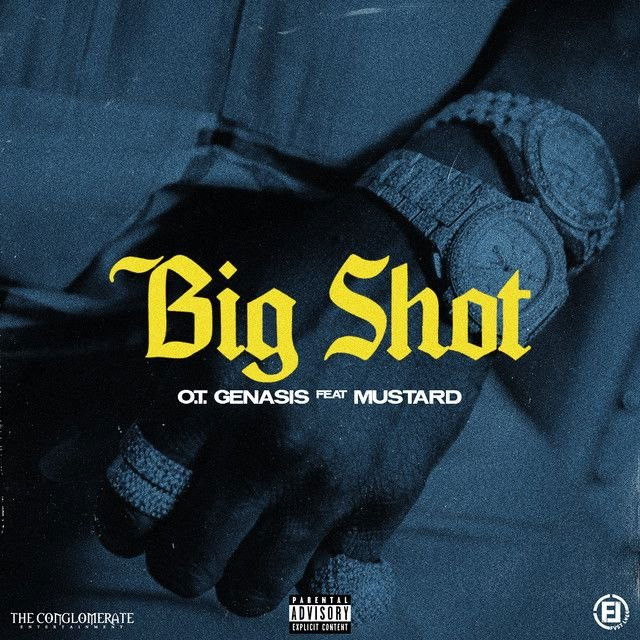
Why “Big Shot” Is Pure Victory-Lap Rap
The meaning of Big Shot O.T. Genasis, Mustard is not hidden under layers of mystery. The song works as a loud, direct statement of status. They present success as something visible, physical, and impossible to ignore: jewelry, cash, cars, reputation, and the confidence to talk like a winner.
"Big Shot" - O.T. Genasis ft. Mustard
Big shot, Mr. Big shot (shot)
Mr. Big shot, Mr. Big shot (shot)
Loading lyrics...
Unable to load lyrics
We're unable to display the lyrics at this time. Please try again later.
More than that, the track sounds like a comeback speech. O.T. Genasis frames himself as someone critics counted out, then answers that doubt by repeating his power in the hook. Mustard’s beat gives that message a hard, stripped-down stage, turning the record into a celebration of survival, flexing, and neighborhood credibility.
The Core Idea Behind “Big Shot”
At its center, “Big Shot” is a rap anthem about being seen as important after proving people wrong. The repeated title phrase Mr. Big shot
is not subtle. It turns the whole song into self-coronation.
That matters because the verses keep linking wealth to proof. They mention products, money, and social signals not just to brag, but to show they have moved beyond doubt. When the song says Rollies, no tick-tocks
, the point is not just watches. It is authenticity versus imitation, permanence versus cheap trendiness.
Interpretation: the song treats material success like evidence in a case. If people questioned their place, the answer is now visible everywhere.
Watch the official Big Shot
music video
How the Hook Turns Bragging Into a Persona
The chorus is simple, repetitive, and very effective. By cycling through Big shot
and a short list of status symbols, the track builds a larger-than-life identity instead of telling a deep story.
That repetition matters because it feels like branding. They are not merely describing a good week. They are building an image the listener can remember in seconds. In that sense, the hook acts like a slogan.
There is also a street-business edge in got OG, got ziplocks
. Even without unpacking every term literally, the line helps create a hustler persona rooted in supply, movement, and readiness. The hook says this person is equipped, connected, and operating at scale.
The Verses: Proof, Threats, and Payback
The verses expand the song’s world in three clear ways:
- Luxury as proof — watches, chains, designer details, and expensive car interiors show visible success.
- Aggression as protection — threats and hard talk make sure the flex does not sound soft.
- Comeback energy — they answer doubters directly and insist they are still on top.
A key line is they thought that I was done
. That phrase gives the record its emotional spine. Under all the money talk, there is irritation. They remember being doubted, and the song turns that memory into fuel.
Another strong moment is the claim of going platinum back to back
. Even if listeners hear it as swagger first, the purpose is clear: they want the audience to see success as repeatable, not accidental. The song rejects the idea of a one-hit fluke.
Street Credibility Meets Celebrity Display
One reason the song hits hard is the way it mixes block-level identity with star-level luxury. They call themselves a block boy, but they also describe high-end details and expensive habits. That combination is central to the meaning of Big Shot O.T. Genasis, Mustard.
They are saying success did not erase where they came from. Instead, fame becomes an extension of the same toughness and hustle. The scarf, the car, the tipping, and the public image all serve one purpose: they make status feel local and personal, not corporate.
Interpretation: this is part of why the song sounds convincing to fans of West Coast rap. It connects neighborhood identity to mainstream visibility without softening either side.
Why Mustard’s Beat Matters So Much
Mustard’s producer tag instantly sets the tone, and the beat does the rest. His style is known for lean drums, strong bounce, and lots of room for the rapper’s voice, a sound widely associated with West Coast club rap and radio crossover (AllMusic; Rolling Stone).
In “Big Shot,” that space is important. The instrumental does not crowd the lyrics with too many melodic ideas. Instead, it leaves room for each boast to land like a punchline. The repetition in the hook feels bigger because the production is so uncluttered.
The beat also supports the song’s emotional logic. This is not a reflective instrumental. It is crisp, muscular, and built for movement. That makes the flexing feel communal, like a record meant for cars, parties, and public display.
Artist Context Helps Explain the Attitude
O.T. Genasis built a reputation on high-energy singles such as “CoCo” and “Cut It,” songs that leaned into bold hooks and immediate personality (Billboard). Mustard, meanwhile, became one of the defining producers of modern West Coast rap through hits for multiple artists (Grammy.com).
That context helps explain why “Big Shot” is so direct. These are artists who know how to make records that hit fast. They are less interested in subtle confession than in impact.
So when the song stacks boasts, insults, and declarations of wealth, it is doing exactly what this partnership does best: turning attitude into a catchy, repeatable event.
The Best Way to Read the Song
The smartest way to hear “Big Shot” is as a victory lap, not a confession. Its main goal is to project dominance. The money, the threats, and the repeated title all serve that mission.
At the same time, the song gains a little extra depth from its defensive edge. They are not only celebrating. They are answering people who doubted their staying power. That tension makes the record more than empty bragging.
Final Take
The meaning of Big Shot O.T. Genasis, Mustard comes down to status after skepticism. It is a loud, efficient anthem about proving they still matter, using luxury, toughness, and repetition as evidence.
This reading is an interpretation based on the lyrics, performance, and artist context. Different listeners may hear different shades of humor, menace, or self-mythmaking in the song.








