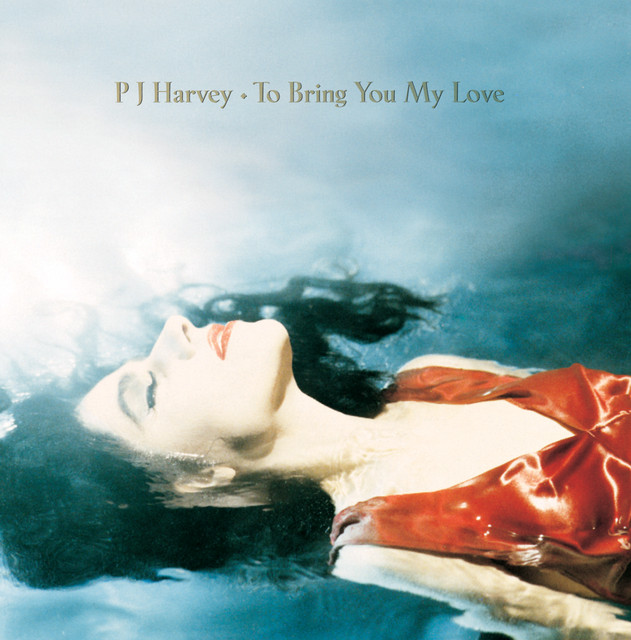
Down By The Water by PJ Harvey
A murder ballad dressed as art rock
The meaning of Down By The Water PJ Harvey starts with a blunt fact: the song presents one of PJ Harvey’s darkest narrators. Released in 1995 as the lead single from To Bring You My Love, it marked a major shift in her sound and became a breakthrough in the United States, reaching No. 2 on Billboard’s Modern Rock chart while also earning a Grammy nomination for Best Female Rock Vocal Performance.[1][2]
"Down By The Water" - PJ Harvey
Under the bridge
To that little girl
Loading lyrics...
Unable to load lyrics
We're unable to display the lyrics at this time. Please try again later.
What makes the song last, though, is not just the shock of its plot. It is the way Harvey turns a violent story into something eerie, theatrical, and emotionally hard to pin down. The narrator sounds guilty, unstable, and strangely detached at once.
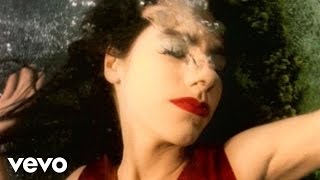
Watch the official Down By The Water
music video
What the lyrics appear to say
On the surface, the song tells a murder-ballad story. The speaker seems to describe losing themselves around a child, then taking that child down by the water
and causing her death. Later, the song brings in religious panic with Oh help me Jesus
, which makes the act sound both confessed and impossible to undo.
One of the most chilling turns is the line about my lovely daughter
. That phrase gives the story its emotional core. The speaker is not talking about a stranger. They are tied to the victim by family, love, and possession.
Interpretation: Many listeners read the song as a parent confessing to drowning a daughter. That reading fits the plain narrative. But Harvey herself has warned against taking her characters as autobiography, telling Spin that some critics heard the song literally and assumed she had done what the character does.[3]
The voice is the real horror
The most unsettling part of the song may be the gap between what happens and how it is told. The voice does not explode in dramatic detail. Instead, it circles the event through fragments, repetition, and a numb kind of moan. That makes the narrator feel unreliable.
Possession, love, and cruelty collide
Early lines mix affection with control. The child is described as deeply meaningful, yet the language quickly twists toward blame and humiliation. When the narrator uses No more
, it sounds like rejection, refusal, or a snapped bond. Love turns into rage almost instantly.
Interpretation: This is why the song can feel like it is about more than a crime. It may also be about possessive love becoming destructive. The narrator cannot accept separation, so they turn intimacy into violence.
Water, bridge, daughter: the song’s symbols
Harvey packs the track with old murder-ballad images. Water is the biggest one. In folk and blues traditions, rivers often stand for burial, guilt, memory, or judgment. Here, water hides the body, but it also keeps the crime alive. The title itself returns the listener to the scene again and again.
The bridge image matters too. A bridge is a crossing point, a threshold. In the song, it suggests the moment the speaker moves from longing into irreversible action.
Then there is the daughter figure. She is not developed as a character because the song is not really interested in her point of view. That absence is deliberate and painful. Everything is filtered through the damaged mind of the narrator.
Little fish, big fish
gimme my daughter
That brief coda, adapted from older folk-blues material often linked to “Salty Dog Blues,” sounds almost like a playground chant.[1][2] By ending with that childish rhythm, Harvey makes the song even more disturbing.
How the sound carries the meaning
The production is crucial to understanding why the song hits so hard. Harvey co-produced it with Flood and John Parish for To Bring You My Love.[2] Instead of the leaner attack of her early trio records, this track uses a heavy organ pulse, clipped percussion, and strings to build a thick, swampy mood.
The organ feels almost funereal. The beat moves with a slow stalk rather than a rush. And the strings do not make the song warmer; they make it grander and more haunted. That fuller arrangement was part of Harvey’s broader stylistic move into a more produced, theatrical sound.[1][2]
Her vocal performance matters just as much. She slides from a near-chant into a whisper, then into something cracked and pleading. The final refrain sounds less like explanation than obsession. The narrator is trapped in a loop.
Why the song was such a turning point
“Down by the Water” helped push Harvey from acclaimed cult artist toward mainstream visibility in the US. MTV rotated the video heavily, and the song introduced many listeners to the heightened, character-based storytelling of the To Bring You My Love era.[1][2]
The Maria Mochnacz-directed video amplified that effect with water imagery, stylized glamour, and Harvey’s famous self-description of the look as Joan Crawford on acid
.[1][2] That image mattered because it fit the song’s method: beauty wrapped around menace.
A final reading of the meaning
So, what is the meaning of Down By The Water PJ Harvey? Factually, it is a 1995 PJ Harvey song written by Polly Jean Harvey that uses a murder-ballad frame and striking production to tell a story of maternal violence, guilt, and psychic fracture.[1][2]
Interpretation: The deeper subject may be the horror of love turned possessive. The song is terrifying not only because a child dies, but because the voice still sounds attached, wounded, and self-justifying. Harvey leaves listeners inside that broken mind without giving easy moral distance.
That is why the song still feels alive. It is not just dark. It is intimate in a way that makes darkness hard to escape.
Disclaimer: This article offers interpretation based on the song’s lyrics, recording context, and public comments from PJ Harvey. Song meaning can remain open, and different listeners may hear it differently.








